
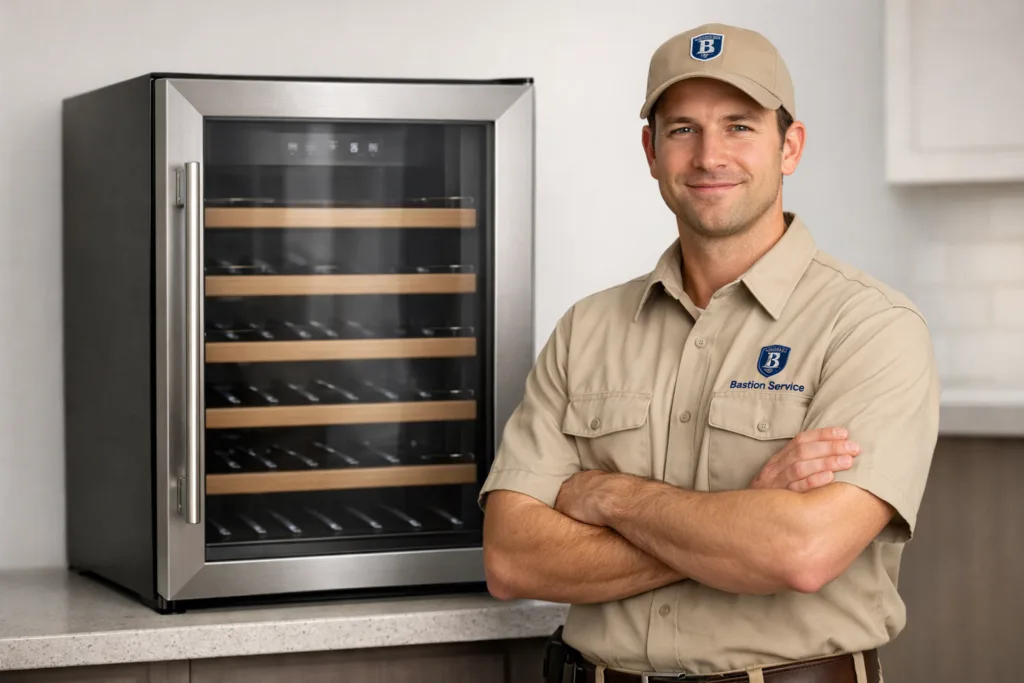




An EdgeStar wine cooler that starts running warm, sweating inside, or sounding different can affect both storage conditions and the longevity of the appliance. Because wine coolers rely on steady, controlled temperatures, even a minor issue can become noticeable before the unit completely fails. The most effective approach is to match the symptom pattern to the likely system involved, then confirm the fault before deciding on repair.
Related EdgeStar and wine cooler service paths in Cheviot Hills include EdgeStar Appliance Repair in Cheviot Hills, Wine Cooler Repair in Cheviot Hills, and EdgeStar Refrigerator Repair in Cheviot Hills.
What EdgeStar wine cooler symptoms usually mean
Wine coolers often show early warning signs before a full breakdown. A temperature problem may not come from the same source as moisture buildup, and unusual noise does not always mean the compressor is failing. Looking at how the unit behaves day to day helps narrow down the cause and avoid unnecessary guesswork.
Not cooling or running warmer than expected
If bottles feel warmer than the display indicates, or the cabinet never seems to reach the selected setting, the issue may involve airflow, sensing, controls, or the refrigeration system itself. Common causes include a weak evaporator fan, blocked internal vents, sensor trouble, dirty condenser areas, or a compressor that is struggling to cycle correctly.
Warm storage is especially important to address if the cooler runs for long periods without recovering. Constant operation can put extra strain on electrical and cooling components, turning a smaller issue into a more expensive one.
Temperature swings or uneven cooling
When the top section feels warmer than the bottom, or temperatures fluctuate from one day to the next, the problem may be related to air circulation, door sealing, thermostat accuracy, or a control fault. Uneven cooling is often overlooked because the appliance still appears to be working, but unstable conditions can be just as damaging as a complete loss of cooling.
- Frequent cycling on and off may point to sensor or control issues.
- Long run times with poor cooling may suggest airflow or sealed-system trouble.
- One area cooling properly while another does not can indicate fan or vent problems.
Condensation, water, or excess humidity inside
Moisture inside an EdgeStar wine cooler is often linked to warm air entering the cabinet. That can happen because of a worn door gasket, slight door misalignment, leveling issues, or a drain-related problem. In some homes, repeated door openings can also add humidity that the unit struggles to manage.
If you notice water under shelves, fogging on the glass, or persistent condensation near the door, it is a good idea to have the cooler checked. Ongoing moisture can damage labels, create odors, and make the appliance work harder than it should.
Buzzing, rattling, clicking, or louder fan noise
Some low operating sound is normal, especially when a wine cooler cycles on. What usually signals a problem is a change in sound. A new rattle may come from loose hardware or vibration against surrounding cabinetry. Buzzing can point to a fan issue or compressor-related strain. Repeated clicking may indicate difficulty starting or a control problem interrupting normal operation.
In a quiet kitchen, dining room, or home bar, these changes are often easy to hear. The key is whether the sound is new, more frequent, or paired with weak cooling.
Display or control panel problems
If the control panel is blank, flashing, unresponsive, or failing to hold settings, the fault may involve the interface, wiring, sensor input, or main control board. These issues can look cosmetic at first, but they often affect temperature regulation. If the display reading no longer seems to match the actual cabinet temperature, the cooler should not be assumed to be operating correctly.
Signs the problem is getting worse
Some households wait because the wine cooler still runs, but partial function does not mean the appliance is healthy. Service is worth scheduling when you notice any of the following:
- The unit runs almost constantly
- Cooling returns only briefly after resetting the controls
- The cabinet is warmer after grocery loading than it used to be
- There is recurring condensation even after cleaning the seal area
- Noise is increasing over time
- The cooler trips power or shuts down unexpectedly
These patterns usually mean the underlying fault is becoming more severe or is starting to affect additional components.
Simple checks homeowners can make first
Before scheduling repair, a few basic checks can help rule out non-mechanical causes:
- Make sure the door closes fully and the gasket is not twisted or torn.
- Confirm bottles or shelves are not blocking interior airflow.
- Check whether the cooler is level and stable.
- Look for dust buildup around condenser areas if accessible.
- Compare the displayed temperature with how the cabinet actually feels.
If these checks do not change the behavior, the next step is professional diagnosis. That is especially true when the cooler is still powered on but not maintaining stable conditions.
Repair or replacement for an EdgeStar wine cooler
Whether repair makes sense usually depends on the failed part, the unit’s age, and the overall condition of the cabinet and cooling system. Many problems are repairable when the issue is limited to a fan motor, sensor, gasket, switch, or control-related component. Replacement becomes a more serious consideration when there is major sealed-system failure, repeated breakdowns, or repair cost approaching the value of a similar new unit.
For homeowners in Cheviot Hills, the best decision usually comes after the actual fault is identified. Once the cause is confirmed, it becomes easier to weigh cost, expected reliability, and whether the appliance still fits your household needs.
When to stop using the cooler
It is smart to limit use if the cabinet is clearly not holding temperature, if the cooler is making sharp clicking or grinding sounds, or if moisture buildup is becoming heavy. Continued operation under those conditions can increase wear and may reduce the chance of a straightforward repair. If the unit is still partially cooling, keep the door closed as much as possible and avoid overloading it until the issue is evaluated.
EdgeStar wine cooler repair for homes in Cheviot Hills
Residential wine cooler problems are easiest to solve when the symptoms are evaluated in context rather than treated as a generic cooling issue. Whether the concern is fluctuating temperature, fan noise, control trouble, or condensation, the goal is to determine which system is failing and whether the repair path is worthwhile. For households in Cheviot Hills, that means a repair recommendation based on how the cooler is actually performing, not just on the fact that it is no longer working as expected.


