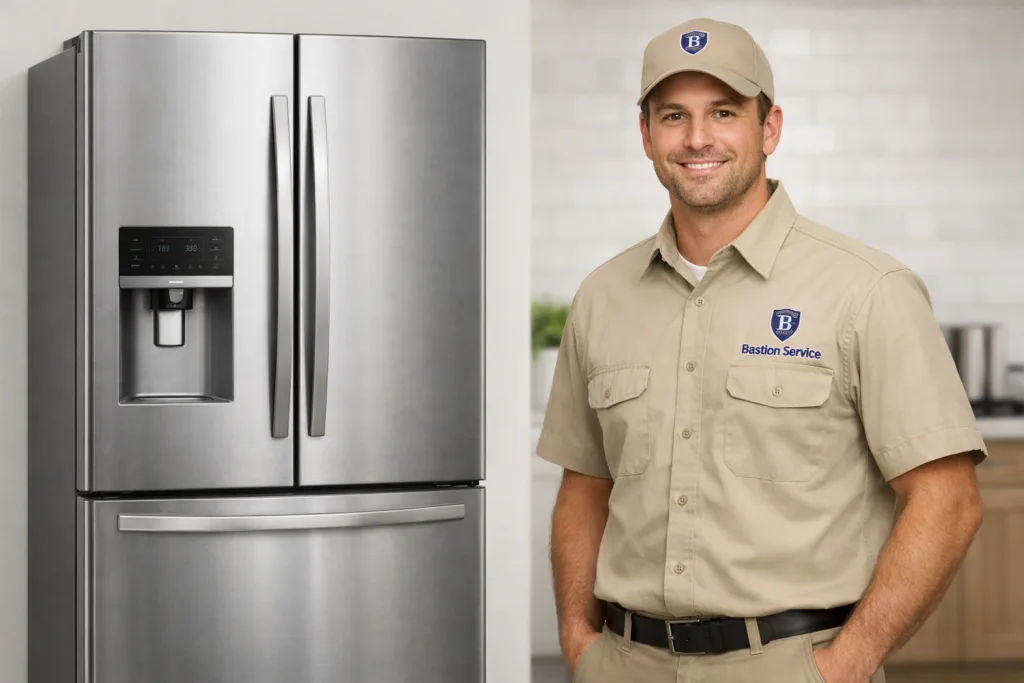
Refrigerator problems rarely stay small for long. A little warmth in the fresh food section, a patch of frost near the back panel, or a puddle under the door can all be early signs of a larger cooling or airflow issue. With Electrolux units, symptom patterns matter because the same complaint can come from very different causes, including fan trouble, defrost failure, sensor issues, drainage blockage, door sealing problems, or strain in the cooling system.
What common Electrolux refrigerator symptoms can mean
One of the most frequent complaints is poor or uneven cooling. If the freezer still feels somewhat cold while the refrigerator compartment is warming up, the issue may involve restricted air movement, an evaporator fan problem, frost buildup behind the panel, or a control issue affecting how cold air is distributed. If both sections are warming, the failure may be broader and could involve the condenser side, compressor operation, or an electrical fault.
Water leaks are another common concern in Culver City homes. Moisture under the refrigerator, droplets inside drawers, or water collecting under shelves can point to a clogged defrost drain, condensation from poor sealing, or ice melting where it should not. These leaks are easy to dismiss at first, but repeated moisture can damage flooring and cabinetry around the appliance.
Frost also deserves attention. A little ice in one area may not seem urgent, but repeated frost on the freezer wall, around drawer rails, or near vents usually means the refrigerator is not regulating temperature and airflow correctly. In many cases, the visible ice is only the result of an underlying defrost or gasket problem.
Noises can provide important clues as well. A steady hum is normal, but repeated clicking, loud buzzing, rattling, scraping, or fan noise that comes and goes may indicate failing moving parts, loose components, or a system that is struggling to start and cycle normally.
Symptom-based signs homeowners should not ignore
Fresh food is warming before the freezer fully fails
This is a common pattern with refrigerator airflow and defrost problems. Homeowners often notice milk spoiling faster, produce softening early, or leftovers not staying consistently cold even though the freezer still seems partly functional. That usually means the unit needs attention before cooling drops further.
Freezer frost keeps coming back
If frost returns soon after being cleared, the issue is likely not just excess humidity. Recurring ice can block vents, interfere with fan blades, and reduce the refrigerator’s ability to move cold air where it belongs. Over time, that can turn a frost complaint into a full cooling complaint.
The refrigerator runs too long or seems to never stop
An Electrolux refrigerator that runs constantly may be compensating for heat entering through a bad seal, dirty condenser components, sensor inaccuracy, poor airflow, or declining system efficiency. Continuous running increases wear and often shows up before a complete loss of cooling.
Puddles or moisture keep returning
Repeated leaking usually means more than a one-time spill. If water keeps appearing under the unit or inside the compartments, it is worth checking the appliance before moisture creates secondary damage around the kitchen.
The ice maker stops, leaks, or makes weak batches
Ice maker problems are sometimes caused by the ice maker assembly itself, but they can also be tied to temperature instability, restricted water flow, frozen fill issues, or control faults. When ice production changes at the same time as cooling performance, both symptoms should be evaluated together.
Why the exact symptom pattern matters
It is easy to assume that a warm refrigerator means a bad compressor or that frost automatically means a door was left open. In reality, refrigerator failures overlap. A fan issue can look like a cooling problem. A defrost problem can look like poor airflow. A drainage issue can appear to be a leak from somewhere else entirely. That is why Electrolux refrigerator repair in Culver City is most effective when the full pattern is evaluated instead of focusing on one visible symptom.
The timing of the problem also matters. For example, a refrigerator that cools well overnight but struggles during the day points in a different direction than a unit that never reaches proper temperature at all. Likewise, a clicking sound at startup suggests a different path than constant rattling from inside the freezer area.
When to stop waiting and schedule service
Homeowners should act sooner if food temperatures are rising, frozen items are softening, frost is spreading, or the refrigerator is making a new mechanical sound. Waiting can turn a repairable issue into a more expensive one, especially when a fan motor, defrost component, or drain blockage is left unresolved.
- The refrigerator section is warm even after temperature settings are adjusted.
- The freezer has frost buildup on the back wall or around drawers.
- Water keeps collecting under the appliance or inside compartments.
- The unit clicks, buzzes, or struggles to start.
- Cooling comes and goes instead of staying steady.
- The cabinet feels unusually hot in certain areas.
If any of these symptoms are getting worse over a short period, continued use can increase food loss and put added stress on major components.
Repair versus replacement for an Electrolux refrigerator
Many Electrolux refrigerator problems still come down to serviceable parts and correctable conditions. Fan motors, sensors, defrost components, control issues, drainage blockages, and gasket-related airflow problems can often be addressed without replacing the appliance. In other situations, replacement becomes more likely when there is major sealed-system trouble, repeated breakdown history, or several costly failures at the same time.
For most households in Culver City, the decision depends on the age of the refrigerator, the overall condition of the cabinet and interior, the scope of the repair, and whether the unit is likely to return to stable daily performance. An accurate diagnosis makes that decision much easier than guessing based on one symptom alone.
What homeowners can observe before service
Before scheduling repair, it helps to note exactly what the refrigerator is doing. Small details often make the problem easier to narrow down.
- Which section is warming first: fresh food, freezer, or both.
- Whether frost is light, heavy, or always returning to the same area.
- If leaks happen constantly or only after a cooling change.
- Whether noise comes from the back, underneath, or inside the freezer.
- If the unit runs nonstop or cycles on and off too quickly.
- Whether the ice maker problems started before or after temperature issues.
These observations can help identify whether the problem points toward airflow, defrost, drainage, controls, or a deeper cooling-system fault.
Electrolux refrigerator repair for homes in Culver City
For residential customers in Culver City, the goal is not simply to get an Electrolux refrigerator running again for the moment. The more useful approach is to identify why cooling, airflow, drainage, or cycling has changed and then determine whether repair is the sensible next step. That helps protect food, reduce disruption at home, and lower the chance that a manageable refrigerator problem becomes a much larger one.