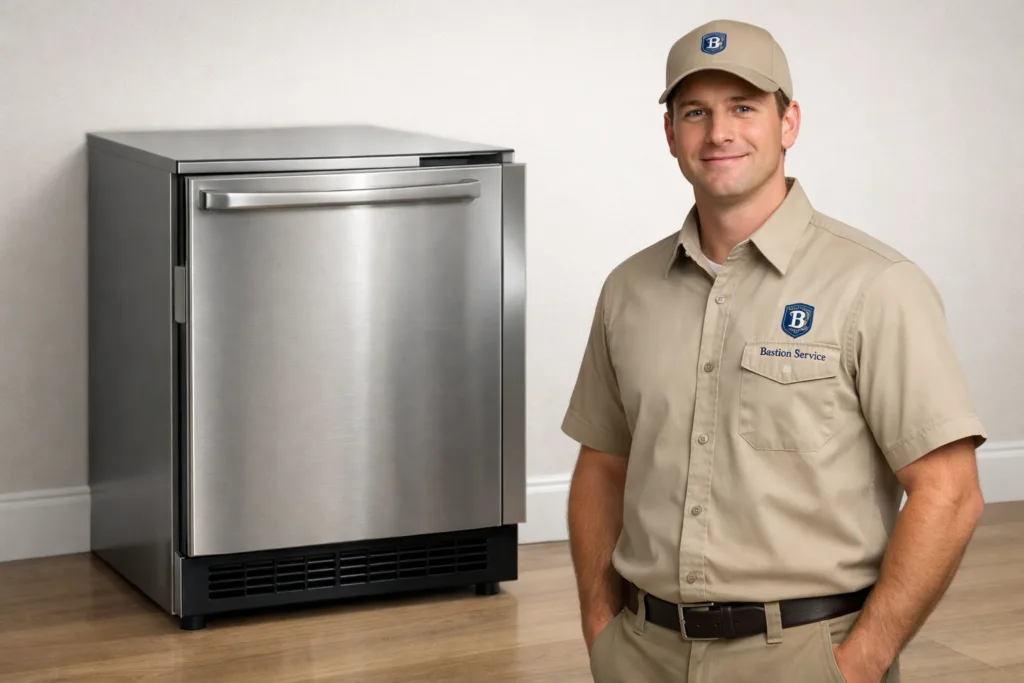
Ice maker problems rarely stay minor for long. A unit that starts with a few undersized cubes or occasional clumping can quickly turn into no ice at all, water on the floor, or a bin full of unusable frozen chunks. With True units, the most reliable way to solve the issue is to match the symptom to the part of the system that is failing, whether that is water delivery, temperature control, drainage, sensing, or the harvest cycle.
Common True ice maker symptoms in Inglewood homes
Many household ice maker issues look similar at first, but the causes can be very different. Paying attention to what the machine is doing day to day can help narrow down the repair path and prevent wasted time on the wrong fix.
No ice at all
If the bin stays empty, the problem may be as simple as interrupted water flow or as involved as a failed control or temperature-related fault. Common causes include a restricted supply line, clogged inlet screen, bad water inlet valve, sensor issue, or temperatures that are too warm for the unit to complete a normal freeze-and-harvest cycle. In some cases, poor door sealing or airflow problems can also interfere with production.
Slow ice production
When the machine still makes ice but cannot keep up with normal household use, it often points to reduced water fill, partial valve failure, mineral buildup, or a cooling problem that slows freezing. Slow output is worth checking early because it usually gets worse over time rather than resolving on its own.
Small, hollow, or misshapen cubes
Cube quality says a lot about how the ice maker is operating. Small or hollow cubes often suggest low water pressure or an incomplete fill. Uneven or malformed ice can point to inconsistent temperatures, scaling, sensor trouble, or a harvest issue that interrupts the normal cycle.
Clumped ice in the bin
Clumping usually means the ice is partially melting and refreezing, or that cubes are being produced with too much moisture. That can happen when temperatures fluctuate, the door does not seal correctly, or the machine is overfilling and creating excess water during production.
Leaks or water under the unit
Water around the appliance should not be ignored. A leak may come from a blocked drain path, a loose connection, an overflowing fill cycle, or interior ice buildup that later melts. Even a small leak can lead to cabinet damage, floor damage, and heavier ice accumulation inside the machine.
Buzzing, clicking, or repeated cycling sounds
Unusual noises during fill or harvest often point to a component that is struggling. A buzzing sound can suggest valve trouble, repeated clicking may indicate a control or switch issue, and grinding or strain sounds may mean part of the ice-making mechanism is not moving correctly.
What these symptoms often mean
Several True ice maker problems overlap, which is why guessing based on one symptom alone can be misleading. The same “no ice” complaint could come from a failed inlet valve, warm interior temperatures, a sensor fault, or a drain problem that has created hidden ice buildup. Looking at the full symptom pattern matters more than assuming a single bad part.
- No ice plus no fill sound: possible supply, valve, switch, or control issue
- No ice plus warm storage temperatures: possible cooling or airflow problem
- Slow production plus small cubes: possible low water pressure or restricted fill
- Leaks plus thick frost or interior ice: possible drainage or sealing problem
- Clumping plus inconsistent output: possible temperature swings or overfill condition
Why temperature and water flow matter so much
An ice maker depends on two basics working together: the right amount of water entering at the right time, and cold enough conditions to freeze and release the cubes properly. If either side is off, performance changes quickly. Too little water produces thin or hollow cubes. Too much water can create overflow, sheets of ice, or clumping. Temperatures that are only slightly too warm can delay harvest cycles enough to make the unit seem weak or unreliable.
That is why a successful repair usually starts with testing operation rather than swapping parts. A valve issue, thermistor problem, blocked line, or airflow restriction can all show up in similar ways until the system is checked step by step.
Signs the problem is getting worse
Homeowners often wait because the machine still makes some ice, but certain changes suggest the issue is progressing:
- The bin empties faster than it refills
- Ice size keeps getting smaller
- The machine needs resets to start again
- Water appears under or inside the appliance more than once
- New noises happen during every fill or harvest cycle
- Ice starts freezing together in larger masses
Once these patterns show up, continued operation can add strain to valves, motors, switches, and controls. It can also create more cleanup and a bigger repair if moisture or excess ice buildup spreads to other parts of the unit.
When repair makes sense
In many cases, repair is the better choice when the fault is isolated and the rest of the appliance is in solid condition. Issues involving fill valves, sensors, switches, drain restrictions, ice level controls, or single-component failures are often repairable without replacing the entire unit.
Repair becomes less appealing when the ice maker has repeated unresolved problems, multiple systems are failing at once, or the appliance shows broad age-related wear. For households in Inglewood, the decision usually comes down to whether the problem is limited and fixable or part of a larger decline in reliability.
What to do before service arrives
There are a few helpful observations homeowners can make before scheduling a visit. These do not replace repair work, but they can make the symptom pattern easier to explain.
- Check whether the unit is making any ice at all or none
- Note whether cubes are normal, hollow, tiny, or fused together
- Look for water under the unit or signs of melting inside
- Listen for buzzing, clicking, or repeated attempts to fill
- Notice whether cooling seems normal in the surrounding compartment
- Pay attention to whether the problem is constant or comes and goes
These details can help identify whether the likely cause is tied to supply, freezing conditions, harvesting, or drainage.
What a service-focused visit should include
A thorough visit should begin with symptom confirmation, then move into temperature checks, fill behavior, water supply inspection, and evaluation of the components involved in making and releasing ice. The goal is to determine whether the fault is caused by restricted flow, poor freezing conditions, a failed part, drainage trouble, or a control issue.
That kind of targeted inspection helps Inglewood homeowners make a sensible repair decision based on the condition of the appliance and the actual failure, not trial-and-error part replacement. When the issue is identified correctly, the repair path is usually faster, cleaner, and more likely to restore normal daily ice production.