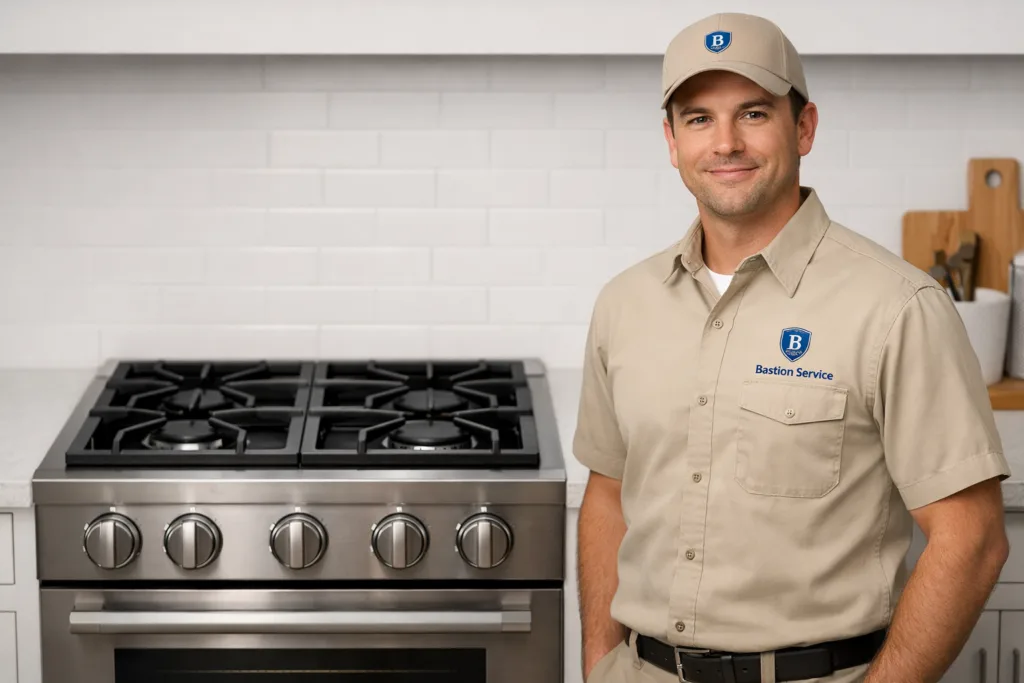
Cooktop problems rarely stay isolated for long. A burner that clicks without lighting, a flame that suddenly looks weaker, or an element that runs too hot can affect everyday cooking and make the whole appliance feel unreliable. With Wolf units, the most useful approach is to match the repair plan to the exact symptom pattern instead of assuming the most obvious part has failed.
Common Wolf cooktop problems in Hermosa Beach homes
Most issues fall into a few recognizable categories, but the details still matter. Two burners may seem to have the same problem while needing very different repairs, which is why the symptom itself is only the starting point.
Burners that click but do not light
On gas models, steady clicking with no flame often points to an ignition-side problem. The cause may be a wet or dirty burner area, misaligned burner parts, clogged ports, a worn igniter, or a fault in the spark system. If the clicking is constant even when a burner is already lit, that can also suggest a switch or ignition circuit issue rather than a simple cleaning problem.
If you notice a strong or persistent gas odor, stop using the appliance and treat it as a safety issue first. Service should come after the immediate concern is addressed.
Burners that light but heat unevenly
A burner can ignite normally and still perform poorly. Homeowners often describe this as slow boiling, inconsistent simmering, hot spots, or one burner behaving differently from the others. That may come from partial blockage, burner assembly fit, regulator-related issues, or wear that changes flame distribution.
Uneven heat is especially frustrating on a premium cooktop because the difference shows up in daily use right away. Sauces reduce too fast in one area, pans heat off-center, and low-heat cooking becomes harder to control.
Electric elements that stay cold or overheat
On electric Wolf cooktops, an element that does not heat at all may have a failed element, switch, connection, or control problem. In other cases, the element heats but does not respond correctly to the setting. A burner that remains too hot even on lower levels can indicate a control fault, while one that cycles erratically may point to a sensor or wiring issue.
If the issue appears only on certain heat settings, that is useful diagnostic information and can help narrow the failure more quickly.
Continuous clicking or sparking behavior
Some homeowners notice that the cooktop begins clicking after cleaning or during humid conditions. Moisture can sometimes affect ignition temporarily, but repeated or ongoing clicking usually deserves closer inspection. If the sound returns often, happens without burner use, or continues after the surface has dried, there may be a problem with the ignition switch system or related electrical components.
Controls that do not respond normally
When a burner knob feels normal but the heat level does not change, the issue may be deeper than the surface controls. Depending on the model, the problem can involve a switch, internal control component, or wiring fault. Symptoms here often include a burner stuck on one level, delayed response, inconsistent power, or a cooking zone that works only intermittently.
What these symptoms often mean
Symptom-based diagnosis matters because similar complaints can come from very different causes. A burner that will not light may need attention to the igniter, but it could also trace back to burner alignment, contamination, a switch issue, or another fault in the ignition path. A burner that seems weak may not have a burner failure at all if the real problem is elsewhere in the system.
That is why replacement-by-guesswork often leads to wasted time and unnecessary parts. The goal is to determine whether the problem is isolated, whether there may be related wear, and whether repair is likely to restore consistent cooking performance.
Signs the problem is getting worse
Some cooktop issues begin as occasional annoyances and gradually become more disruptive. It is usually worth scheduling service when you notice any of the following:
- A burner takes more tries to ignite than it used to
- Clicking continues after ignition
- Flame size changes without adjusting the control
- One element overheats or does not maintain temperature
- A burner shuts off unexpectedly during cooking
- Controls work intermittently or feel disconnected from actual heat output
- The same symptom keeps returning after cleaning or resetting power
Intermittent trouble is still meaningful. Many component failures start that way before becoming constant.
When to stop using the cooktop
Some symptoms are more than inconvenient. You should avoid continued use if a burner will not regulate correctly, if there is visible sparking where it should not be, if the unit trips power, or if there is any sign of gas smell that does not immediately resolve. Operating a malfunctioning burner can place extra stress on switches, ignition parts, controls, or wiring and may turn a repairable problem into a larger one.
Even when the cooktop still works partially, using around a known fault is not always harmless. A burner that overheats, clicks constantly, or performs unpredictably can interfere with safe cooking and signal a deeper issue that should be checked.
Repair or replacement: how homeowners usually decide
For many households in Hermosa Beach, the decision comes down to the condition of the appliance, the extent of the failure, and whether the problem is limited to one repairable area. If the cooktop is otherwise in solid condition and the fault is isolated, repair is often the sensible path. If there are multiple failing components, visible wear, or repeated major issues over time, replacement may deserve consideration.
Age alone does not decide it. A well-kept Wolf cooktop with a single identifiable failure can still be a strong repair candidate, while a unit with recurring control or ignition problems may call for a broader cost-versus-longevity discussion.
What helps speed up diagnosis
A few observations from the household can make the service visit more productive. Helpful details include:
- Which burner or element is affected
- Whether the problem is constant or intermittent
- If the issue happens at startup, during heating, or when adjusting settings
- Whether the symptom began after cleaning, moisture exposure, or a power interruption
- If the cooktop makes unusual sounds such as repeated clicking
- Whether performance changes are limited to one cooking zone or appear across the unit
These details may seem minor, but they often help separate a burner-level issue from a control, ignition, or wiring fault.
Focused help for Wolf cooktop problems at home
Wolf cooktop repair in Hermosa Beach is most useful when it moves quickly from symptom to cause. Instead of treating every ignition problem, heating complaint, or control issue as the same, the better path is to identify what the pattern actually points to and whether the repair is practical for the condition of the unit. For homeowners, that means fewer assumptions and a clearer next step toward safe, reliable cooking.