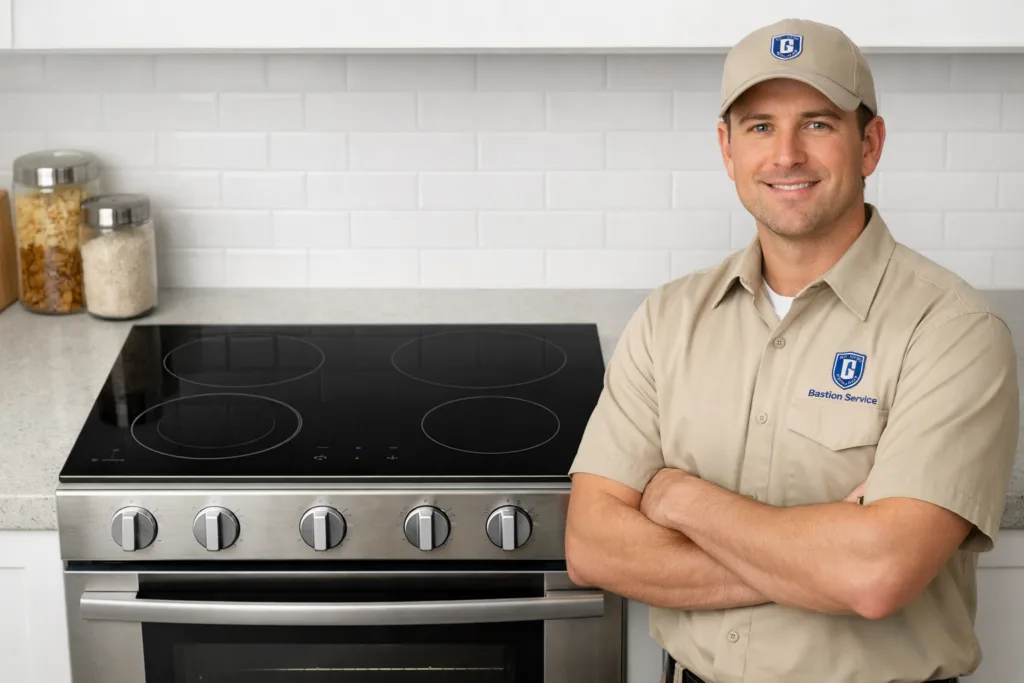
Cooktop problems rarely stay confined to a single annoyance. A burner that heats too slowly can throw off every meal, while constant clicking or a control that will not regulate temperature can make everyday cooking feel unpredictable. With Whirlpool units, the same outward symptom can come from a surface component, a switch, an ignition part, wiring, or the control system, so the best repair decisions start with symptom-based testing rather than part swapping.
What different Whirlpool cooktop symptoms often mean
One of the most useful ways to evaluate a malfunctioning cooktop is to look at exactly how the problem appears. Whether the unit is gas or electric, the pattern matters. A single burner failure suggests something different from a whole cooktop issue, and an intermittent problem usually points to a different repair path than a part that has failed completely.
One burner is not working
If only one burner will not heat or ignite, the problem is often isolated to that cooking zone. On electric Whirlpool cooktops, possible causes include a failed element, damaged receptacle, loose terminal connection, or a bad infinite switch. On gas models, the issue may involve the igniter, burner cap alignment, clogged ports, or a fault in the ignition path for that burner.
Because the rest of the cooktop still works, homeowners sometimes keep using the appliance and delay service. That can be reasonable for a short time, but it is still worth addressing before a loose connection overheats further or a minor ignition issue becomes harder to diagnose.
Multiple burners act up at the same time
When several burners stop responding, heat inconsistently, or fail together, the cause is more likely to involve shared wiring, incoming power, the spark module, or the main control area. This is usually less about one worn burner part and more about a central fault affecting the unit as a whole.
In Hermosa Beach homes, this kind of issue often feels sudden because several cooking zones may seem normal one day and unreliable the next. That symptom pattern usually deserves quicker attention than a single isolated burner problem.
Burner heats too high or will not adjust
A burner that stays near high heat no matter where the knob is set is a common complaint on electric cooktops. In many cases, the burner itself is not the main issue. The more likely culprit is the switch or control that is supposed to cycle power and regulate temperature.
This is more than a convenience problem. Excess heat can damage cookware, scorch food, and place extra stress on nearby components. If a burner cannot be controlled normally, it is a good reason to stop using that cooking zone until it is checked.
Clicking that does not stop
On gas Whirlpool cooktops, repeated clicking may happen when a burner is wet after cleaning, when food residue affects ignition, or when a cap is not seated correctly. If the clicking continues after the burner lights, keeps going after the knob is turned off, or starts happening across multiple burners, the issue may involve the switch harness or spark ignition components.
Persistent clicking is easy to dismiss at first, but it often points to a problem that will not improve on its own. If ignition becomes slower or less reliable over time, service is usually the smarter move than continued trial and error.
Common Whirlpool cooktop issues by cooktop type
Gas cooktop concerns
Gas models tend to show problems through ignition behavior and flame quality. Homeowners may notice delayed ignition, weak flame, uneven flame around the burner, or a burner that clicks repeatedly but will not light. Sometimes the repair is straightforward, such as cleaning buildup or correcting burner cap placement. In other cases, the fault involves a worn igniter, spark module, or switch issue under the knob.
If there is ever a strong or persistent gas odor, safety comes first. Stop using the appliance and address the situation before arranging repair.
Electric cooktop concerns
Electric Whirlpool cooktops more often develop issues related to heating output, control regulation, or damaged surface elements. A burner may stay cold, heat only intermittently, cycle incorrectly, or show visible signs of arcing or overheating. Problems can come from the radiant element, the switch, wiring at the terminal, or the control system that governs heating behavior.
When an electric cooktop trips a breaker, sparks, or shows signs of overheating, it should not be treated as a minor nuisance. Those symptoms suggest a problem that may worsen with continued use.
Surface damage and control problems should not be ignored
Not every repair call starts with a burner failure. Some Whirlpool cooktops need service because the glass is cracked, a knob stem is damaged, controls feel loose, or the surface has taken an impact. Physical damage matters because it can affect both safe use and repairability.
A cracked glass top, for example, is not just a cosmetic issue. It can compromise the structure of the cooking surface and may also indicate stress below the top. Damaged controls can create inaccurate temperature selection or make it hard to know whether a burner is fully off. If the cooktop no longer feels mechanically sound in normal use, that is reason enough to have it evaluated.
Signs it is time to stop using the cooktop
Some malfunctions allow limited temporary use of unaffected burners, but others call for immediate caution. It is best to stop using the cooktop if you notice any of the following:
- A burner that overheats or will not regulate
- Repeated sparking or visible arcing
- Breaker trips during operation
- Ignition that becomes increasingly delayed or erratic
- Controls that do not respond normally
- Cracked glass on the cooking surface
- A strong or persistent gas smell
These symptoms can indicate more than simple wear. They may point to electrical stress, ignition faults, or damage that makes the appliance less safe to use until the cause is confirmed.
Repair or replace? How to think through the decision
Many Whirlpool cooktop problems are worth repairing, especially when the failure is limited to a switch, igniter, element, or another serviceable component and the rest of the appliance is in solid condition. If the cooktop fits the kitchen well and has otherwise been dependable, a targeted repair often makes practical sense.
Replacement becomes more likely when the damage is widespread, the glass top is extensively compromised, several major components are failing at once, or the cost of repair approaches the value of the unit. The better question is not just how old the cooktop is, but whether the current issue appears isolated or part of a larger decline.
What a service visit should help you understand
For homeowners in Hermosa Beach, the value of a service appointment is getting beyond the symptom and identifying the actual failure point. A good inspection should determine whether the problem is tied to the burner assembly, ignition system, controls, wiring, power supply, or surface damage affecting safe operation.
That makes it easier to decide on the next step with confidence. In some cases, the answer is a straightforward repair. In others, the condition of the appliance may suggest replacement is the better investment. Either way, the goal is to restore predictable cooking performance without guessing at parts or overlooking a bigger issue.
When the problem keeps coming back
Intermittent cooktop issues are often the most frustrating because they seem to disappear just long enough to make the problem hard to trust. A burner may work fine in the morning and fail at dinner, or ignition may be normal for days before clicking returns. Recurring symptoms usually mean the underlying fault is still present even if the unit occasionally behaves normally.
If your Whirlpool cooktop has become inconsistent, documenting which burner is affected, whether the problem happens on specific settings, and whether it worsens after cleaning or during longer cooking sessions can help narrow down the cause. Small details often make the difference between replacing an obvious worn part and uncovering a broader control or wiring problem.