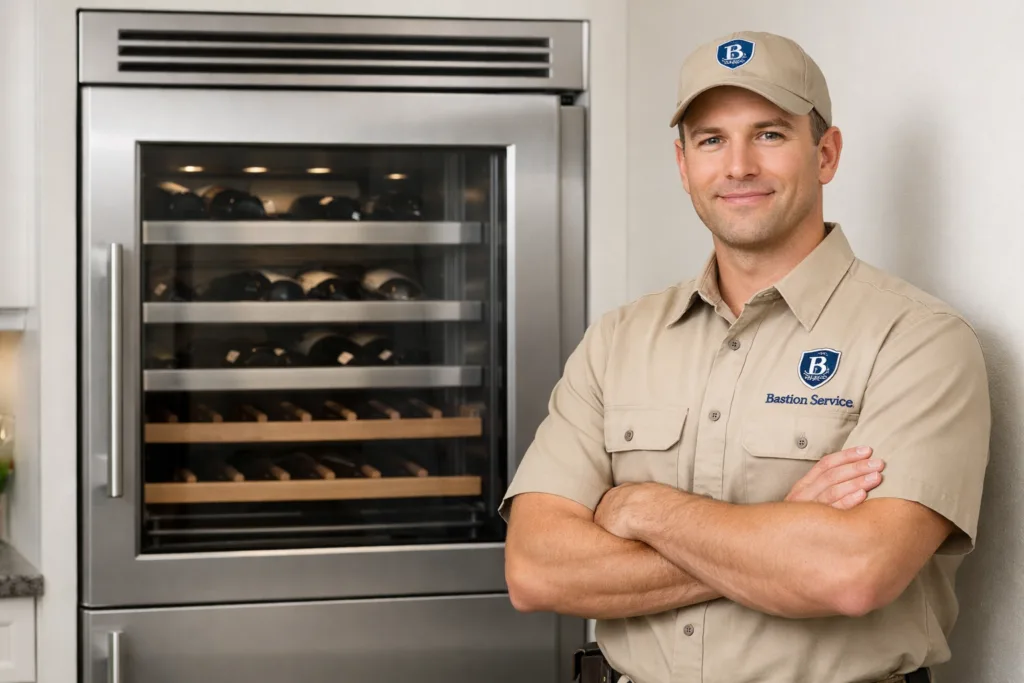
Wine needs a consistent environment, so even small changes inside a Sub-Zero wine cooler can matter. A cabinet that drifts warm, cools unevenly, runs longer than usual, or collects moisture may still appear to be working, but storage conditions can already be off. The most useful first step is to match the symptom to the likely system involved instead of assuming every cooling problem points to the same repair.
Common Sub-Zero wine cooler issues in Mid-City homes
Most service calls begin with one of a few patterns: unstable temperature, excess noise, condensation, or control problems. These symptoms can overlap, and that is where diagnosis becomes important. A fan issue, door seal leak, sensor fault, or sealed-system problem can all affect cabinet performance in different ways.
Temperature swings or cabinet not cooling properly
If the cooler is set correctly but bottles feel warmer than expected, the issue may involve poor airflow, a failing fan motor, inaccurate temperature sensing, or a control problem. In some cases, warm air is entering through a gasket that no longer seals evenly. If the cabinet is getting too cold instead, freezing certain zones, or cycling unpredictably, the cause may be a sensor or control fault rather than a simple setting change.
Temperature complaints are especially important to address early because wine can be exposed to repeated fluctuations before the problem becomes obvious. A unit that only cools part of the cabinet or struggles after the door is opened may need more than a reset.
Constant running, short cycling, or unusual noise
A Sub-Zero wine cooler that seems to run all day may be compensating for heat intrusion, restricted airflow, dirty condenser components, or a deeper refrigeration issue. Short cycling, where the unit turns on and off too quickly, can also signal sensor or control trouble.
Noise can narrow the diagnosis. Buzzing, rattling, clicking, or fan-like scraping sounds do not all mean the same thing. Vibration from a panel or bottle rack is very different from noise tied to a fan assembly or compressor operation. Noting when the sound happens—startup, shutdown, or throughout the cooling cycle—can help identify the source faster.
Condensation, moisture, or fogging around the door
Moisture inside the cabinet or around the door usually points to warm air getting in or humidity balance being disrupted. A worn gasket, slight door misalignment, poor closing pressure, or repeated airflow issues can all contribute. Condensation may start as a minor annoyance and then become a sign that the cooler is working harder than it should.
In Mid-City households, this symptom often becomes more noticeable when the cooler is opened often during dinners or gatherings, but persistent moisture should not be written off as normal use. If shelves, walls, or the door area stay damp, the appliance needs attention.
Display, lighting, or control response problems
If the display flickers, buttons do not respond consistently, or interior lights behave irregularly, the problem may involve the interface, wiring, or main control components. These issues can also affect cooling performance if the unit is not reading or regulating temperature correctly. Repeated control errors are a sign that the problem is likely beyond a basic power reset.
What these symptoms can actually mean
One visible issue does not always point to one failed part. A warm cabinet might come from a weak evaporator fan, an inaccurate sensor, restricted airflow, or a door that leaks air. Excess condensation might be caused by gasket problems, temperature imbalance, or cooling cycles that are no longer operating correctly. That is why symptom-based testing matters more than guessing.
For a Sub-Zero wine cooler, useful inspection usually includes checking actual cabinet temperature, confirming fan operation, inspecting gasket contact, reviewing control behavior, and looking for signs of airflow or sealed-system trouble. This helps separate a targeted repair from a more expensive problem that changes the repair decision.
Basic checks you can make before scheduling repair
There are a few simple things a homeowner can check safely before service is scheduled:
- Make sure the door closes fully and does not bounce back open.
- Check that bottles or shelves are not blocking interior vents.
- Confirm the temperature setting was not changed accidentally.
- Look for visible gasket gaps, debris, or sections that do not sit flush.
- Pay attention to whether noise comes from the back, inside the cabinet, or near the door.
If those basics do not change the symptom, continued use may place more strain on the cooler or leave the contents stored outside the intended range.
When to stop relying on the cooler for storage
If the cabinet cannot maintain a stable temperature, develops recurring condensation, or starts making persistent abnormal sounds, it is smart to limit reliance on it for long-term wine storage until the cause is identified. The same is true if the unit runs constantly or begins showing repeated control irregularities.
Continued operation in that condition can increase wear on fans and other cooling components. Moisture can also lead to repeat performance problems over time. Catching the issue earlier often leaves more repair options on the table.
Repair or replace: how the decision is usually made
Many Sub-Zero wine cooler repairs make sense when the issue is isolated to a fan, sensor, control, gasket, or another serviceable component. Replacement becomes a more serious consideration when there are multiple failures, major age-related wear, or a refrigeration-system problem that significantly changes cost and long-term reliability.
The better decision usually comes from looking at the whole picture: symptom history, appliance condition, repair scope, and whether the cooler has been performing consistently before this issue started. For Mid-City homeowners, that approach is more useful than deciding based on one symptom alone.
What to note before your appointment
A few details can make the visit more productive. If possible, write down whether the cooler is running warm or too cold, whether the problem is constant or intermittent, and whether the sound or moisture appears at certain times of day. It also helps to note any recent control changes, power interruptions, or times when the door may not have closed properly.
When a Sub-Zero wine cooler starts showing these patterns, the goal is not just to restore cooling, but to restore stable storage conditions without unnecessary parts replacement. A careful diagnosis and repair plan based on the exact symptoms is usually the fastest path to that outcome.