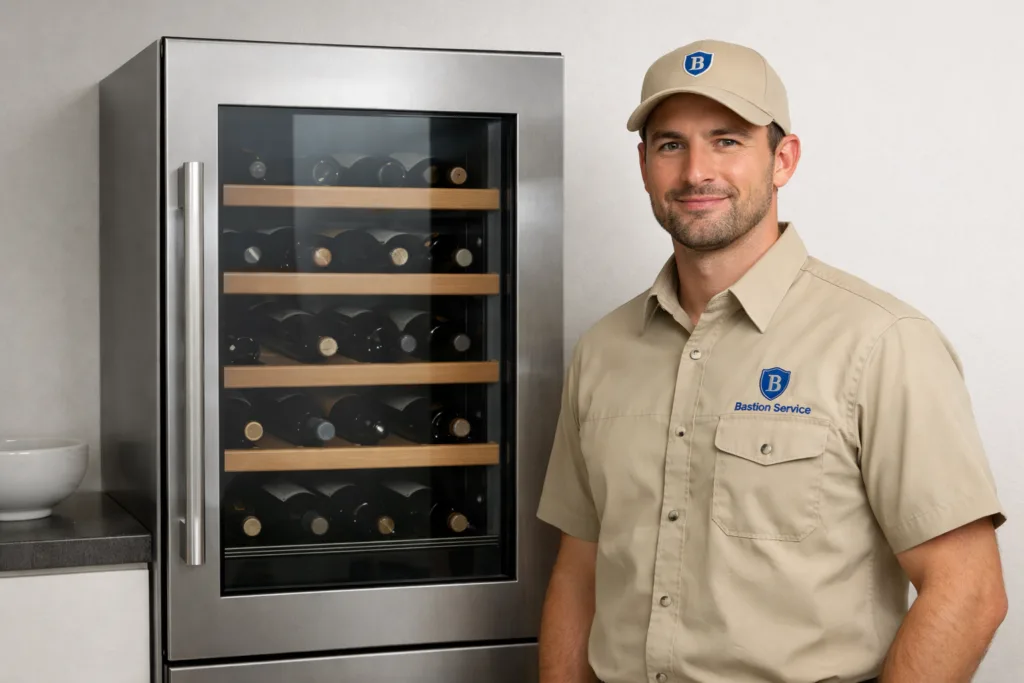
Small changes in a wine cooler can have outsized effects on storage conditions. If your Miele unit is drifting warmer, running longer than usual, or collecting moisture, the real concern is not just comfort or convenience but whether bottles are being exposed to repeated fluctuations that undermine stable storage. In Mid-City homes, the best next step is to evaluate the symptom pattern before the problem spreads to additional components.
Common Miele Wine Cooler Problems in Mid-City Homes
Most wine cooler complaints fall into a few recognizable categories. While the symptoms may seem similar at first, each one can point to a different repair path.
Not Cooling to the Set Temperature
If the cabinet is warmer than expected, the cause may be as simple as restricted airflow or as involved as a cooling-system failure. Common possibilities include a weak fan, dirty condenser area, inaccurate temperature sensing, control trouble, or loss of cooling performance within the sealed system. Some homeowners first notice the issue when bottles feel less cool than usual even though the display still appears normal.
Temperature Swings Throughout the Day
A unit that alternates between cooling normally and drifting warm may have a sensor problem, control irregularity, door seal leak, or intermittent fan issue. In practice, this often shows up as inconsistent bottle temperature, longer run cycles, or a cabinet that feels different from top to bottom. Even mild swings are worth addressing because wine storage depends on consistency more than occasional bursts of cold air.
Condensation on the Glass or Inside the Cabinet
Moisture can develop when warm room air is entering through a compromised gasket, when airflow inside the cabinet is uneven, or when drainage and humidity conditions are out of balance. Persistent condensation is more than a cosmetic issue. It can affect labels, create odor concerns, and signal that the cooler is working harder than it should.
New or Louder Noises
Buzzing, clicking, rattling, or louder fan noise often gives early warning that something is changing mechanically. A fan blade may be obstructed, mounting hardware may have loosened, or the compressor may be cycling under strain. Noise alone does not confirm a major failure, but a sudden change in sound is a useful service clue and should not be ignored.
Display, Alarm, or Control Problems
When the panel stops responding normally, alarms repeat, or settings seem to change without explanation, the issue may be tied to the interface, the control board, or the temperature monitoring circuit. These faults can be deceptive because the appliance may still power on while failing to regulate temperature correctly.
What Different Symptoms Usually Suggest
One reason wine cooler repair can be tricky is that the same headline complaint can come from very different causes. A warm cabinet does not automatically mean the compressor has failed, and condensation does not always mean the door was left ajar.
- Warm interior with normal lights and display: often points toward airflow, sensor, fan, or control issues.
- Warm interior with long nonstop running: may indicate sealing problems, restricted heat transfer, or a more serious cooling fault.
- Moisture near the door: commonly suggests gasket wear, alignment issues, or repeated warm air intrusion.
- Intermittent alarms: can reflect unstable temperatures, communication faults, or sensor readings outside normal range.
- Uneven cooling inside the cabinet: often relates to internal air circulation rather than total cooling loss.
This is why symptom-based testing matters. Replacing parts based on guesswork can waste time and still leave the underlying problem unresolved.
Why Accurate Diagnosis Matters Before Repair
Miele Wine Cooler Repair in Mid-City should focus on restoring stable storage conditions, not just making the cabinet feel cold for the moment. Similar symptoms can come from electrical faults, airflow restrictions, sealing issues, drainage problems, or sealed-system trouble. The repair only makes sense when the failed system has been identified correctly.
Diagnosis also helps determine whether the problem is isolated or part of a larger decline in appliance performance. A fan motor, sensor, gasket, or control-related issue is usually a different conversation than compressor or sealed-system work. Knowing that difference early helps a homeowner weigh cost, timing, and the overall condition of the unit with less uncertainty.
When to Schedule Service
It is smart to arrange service when the cooler no longer holds a reliable temperature, starts producing recurring alarms, develops persistent condensation, or begins making unfamiliar sounds. Service is also appropriate when the display appears normal but the contents no longer feel consistently cooled.
Prompt attention is especially important when:
- The cabinet temperature is clearly above the selected setting
- The unit runs constantly or cycles in an unusual pattern
- Condensation returns after basic cleaning and door checks
- A fan or compressor sound becomes noticeably louder
- The controls stop responding as expected
- The interior seems unevenly cooled from one area to another
When Continued Use Can Make the Problem Worse
A wine cooler that is only partially cooling is not necessarily functioning safely for storage. If the fan is weak, the door is leaking, or the controls are cycling erratically, the appliance may keep operating while placing added strain on other components. That can turn a limited repair into a broader one.
For example, poor sealing can lead to long run times and excess condensation. Airflow problems can cause uneven cabinet temperatures and overwork the cooling system. Electrical or control faults can trigger repeated starts and stops that create additional wear. In many cases, the unit still appears to be “working,” but not within normal conditions.
Basic Checks Homeowners Can Make First
Before service, a few simple observations can help narrow down the issue and prevent avoidable strain on the appliance.
- Confirm the door is closing fully and the gasket is making even contact
- Check for visible condensation patterns around the glass or door edge
- Listen for changes in fan sound, clicking, or unusually long run cycles
- Make sure interior airflow is not blocked by overcrowded storage
- Note whether the display temperature matches the actual cabinet condition
These checks are useful for describing the symptom, but they do not replace testing. If the problem keeps returning, a repair visit is the safer next step.
Repair or Replacement: How to Evaluate the Decision
Repair is often worthwhile when the cabinet itself is in good shape and the failure is tied to a serviceable part such as a fan, sensor, gasket, control component, or drainage-related issue. Replacement becomes more likely when the problem involves major cooling-system failure, repeated prior repairs, or a combination of issues that makes further investment hard to justify.
The key is to compare the scope of the fault with the overall condition of the appliance. A single identifiable component problem is very different from a unit with declining performance across multiple systems.
What Mid-City Homeowners Should Watch Over Time
Wine coolers often provide early warning before a full breakdown. If you notice slightly longer cycle times, occasional moisture, a mild change in sound, or a gradual upward drift in temperature, those details are worth paying attention to. In Mid-City households, catching the pattern early can help avoid bottle exposure to repeated temperature changes and reduce the chance of a more involved repair later.
When a Miele wine cooler starts showing signs of unstable cooling, condensation, noise, or control trouble, a symptom-based inspection is usually the most efficient way to decide what comes next. It protects the appliance, reduces trial-and-error parts replacement, and gives you a realistic basis for choosing repair or replacement.