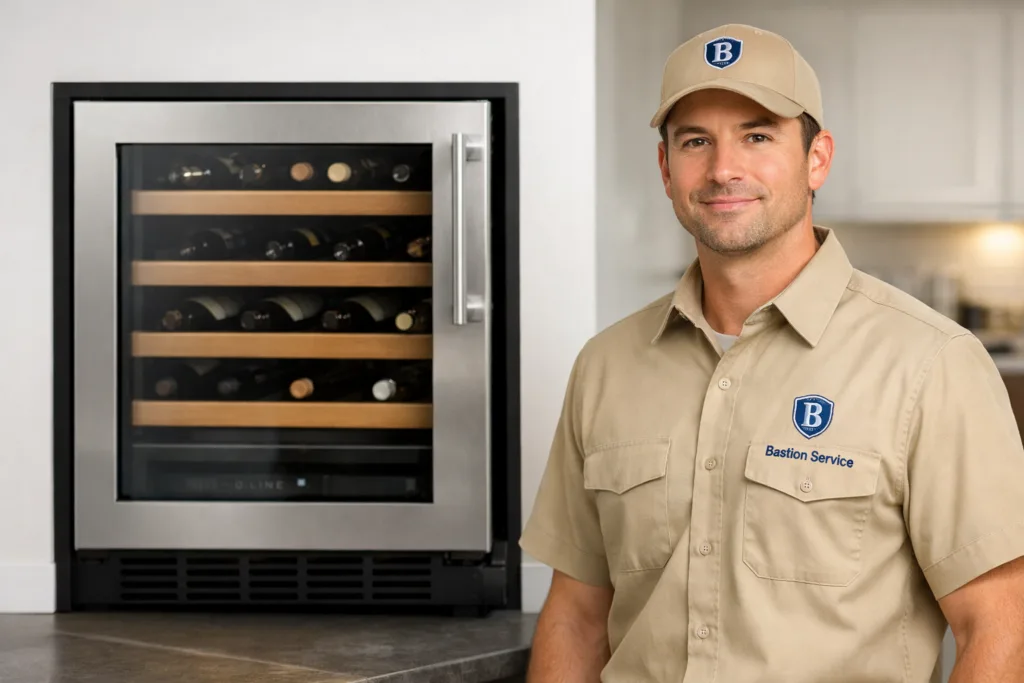
Temperature instability in a wine cooler usually points to a specific system problem rather than a vague loss of performance. In Mid-City homes, the most useful approach is to match the symptom to the likely cause so the repair decision is based on how the unit is actually behaving.
Start with the way the cooler is failing
U-Line wine coolers are designed to maintain a narrow temperature range. When the cabinet starts running warm, cycling too often, collecting moisture, or making new noises, those patterns help narrow down whether the issue involves airflow, controls, sealing, or core refrigeration components.
Not cooling enough
If bottles feel warmer than the selected setting, several faults are possible. A dirty condenser area, weak fan operation, inaccurate sensor readings, or a control problem can all prevent the unit from reaching temperature. If cooling is very weak or stops almost entirely, compressor or sealed-system trouble becomes more likely.
Repeatedly changing the setpoint is rarely a fix. It can mask the pattern and make diagnosis harder, especially when the underlying problem is intermittent.
Too cold or inconsistent temperature
A wine cooler that freezes contents, overshoots the setting, or swings between cold and warm may be responding to bad sensor input or control failure. In some cases, a worn door gasket allows warm air into the cabinet, causing erratic cycling and unstable recovery after the door is opened.
If the display appears normal but the cabinet condition says otherwise, the problem often goes deeper than a simple setting issue.
Constant running or longer-than-normal cycles
Long run times usually mean the system is struggling to remove heat efficiently. Restricted airflow, dirty condenser surfaces, fan issues, or warm air entering through the door can all force the cooler to run longer. A machine that rarely shuts off should be checked before excess strain affects additional components.
Buzzing, rattling, clicking, or fan noise
Not every sound means major failure, but a change in normal operation matters. Rattling can come from vibration or mounting issues. Buzzing may point to compressor strain or an electrical component under load. Clicking can indicate start problems, while scraping or uneven airflow noise may come from a fan motor or fan blade issue.
When noise appears together with poor cooling, that combination usually deserves faster attention.
Condensation, water, or a poor door seal
Moisture around the frame, condensation on shelves, or water where it does not belong often means humid air is entering the cabinet or drainage is not working correctly. A door that does not close evenly can create both cooling loss and excess moisture at the same time.
Early repair helps prevent odor, staining, and unnecessary wear on nearby cabinetry.
Common U-Line wine cooler issues and what they can indicate
On a service visit, diagnosis often focuses on a few key systems that commonly affect performance:
- Condenser airflow: blocked ventilation or debris buildup can reduce cooling efficiency and increase run time.
- Evaporator or condenser fan problems: poor internal or external airflow can lead to uneven temperatures and noise.
- Thermistors, sensors, and controls: inaccurate readings can cause overcooling, undercooling, or irregular cycling.
- Door gasket wear: leaks around the door let warm, humid air enter and disrupt stable storage conditions.
- Compressor and start components: hard starting, overheating, or intermittent cooling may point to these parts.
- Drain system issues: blocked or misdirected drainage can lead to water buildup and recurring condensation.
Because several different failures can create similar symptoms, part-swapping without testing often leads to extra cost and missed causes.
When service is worth scheduling
It is usually time to schedule U-Line wine cooler repair in Mid-City when the unit no longer holds its set temperature, runs nearly nonstop, becomes noticeably louder, develops repeated condensation, leaks water, or needs frequent resetting. Those signs suggest more than normal variation in operation.
Prompt service also makes sense when the cooler is built into cabinetry and heat buildup may be worsening the problem. A struggling refrigeration unit can put continuing stress on the compressor and may turn a smaller repair into a larger one.
Repair versus replacement
For many homeowners in Mid-City, the decision depends on the exact failed component, the age of the wine cooler, the condition of the sealed system, and the overall reliability of the appliance. Repairs are often reasonable when the problem is isolated to a fan motor, sensor, control board, gasket, switch, or drainage-related part.
Replacement becomes more likely when the cooler has major sealed-system trouble, repeated compressor-related issues, or multiple aging components that reduce confidence in future performance. With built-in U-Line units, fit and appearance also matter, so the right choice is not always based on repair cost alone.
Helpful observations before an appointment
Before service, it helps to note a few details:
- Whether the cabinet is always warm or only warm at certain times
- Whether the display temperature matches actual cabinet conditions
- Whether noise started suddenly or gradually increased
- Whether moisture appears near the door, on shelves, or underneath the unit
- Whether the issue began after a power outage or setting change
These details can make troubleshooting more efficient and help determine whether the problem is tied to airflow, controls, sealing, or the refrigeration system itself.
Why symptom-based diagnosis matters
A wine cooler is meant to protect storage conditions consistently, not just cool on and off. When a U-Line unit starts showing a pattern of warming, overcooling, moisture, or unusual sound, the best next step is to identify the actual source of the failure rather than chase the symptom. That gives Mid-City homeowners a clearer repair path and a better sense of whether the unit is worth fixing now.