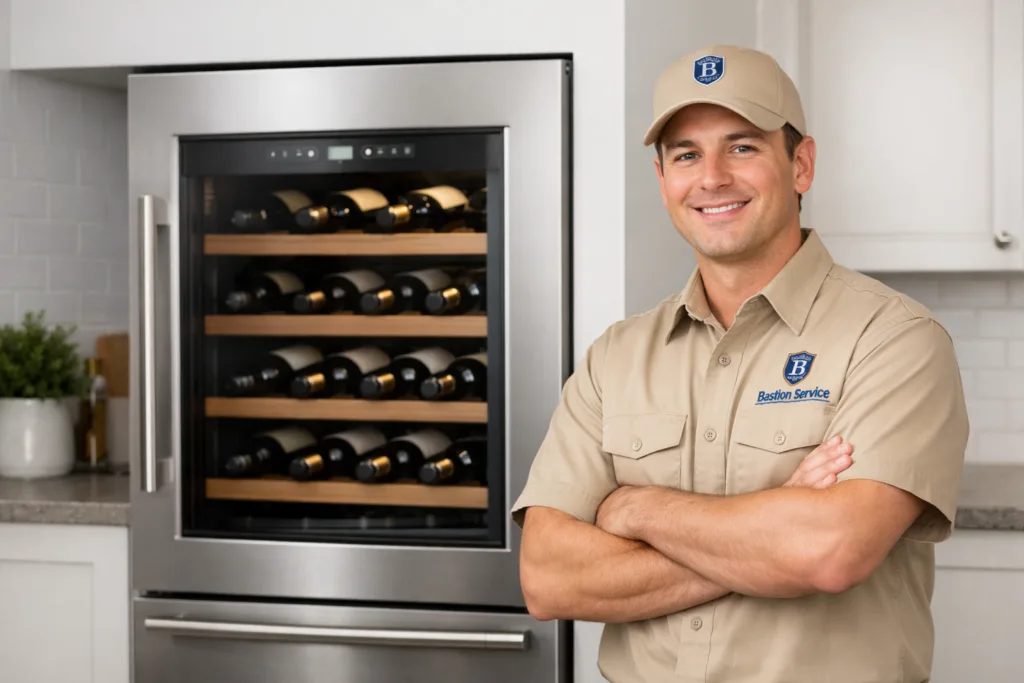
A wine cooler that starts running warm, cycling too often, or collecting moisture around the door can go from minor annoyance to storage problem quickly. Similar symptoms can come from very different causes, including restricted airflow, a weak door gasket, control failure, fan trouble, or a sealed-system issue. Pinpointing the fault first helps avoid unnecessary parts, repeat service calls, and guesswork.
Common wine cooler problems and what they often indicate
Temperature swings or a cabinet that will not stay cool
When bottles are no longer holding the selected temperature, the issue may involve the thermostat, control board, evaporator fan, condenser fan, or dirty condenser coils. In some units, the compressor is running but heat is not being removed efficiently. In others, the cooler may not be cycling correctly at all. If cooling problems seem isolated to a separate kitchen refrigerator instead of the wine unit, Refrigerator Repair in Mid-City may be the more appropriate service path.
Constant running or short cycling
A wine cooler that seems to run all day may be struggling with poor ventilation, dusty coils, warm room conditions, inaccurate sensor readings, or a door that is not sealing tightly. Short on-and-off cycles can also point to electrical control issues or compressor stress. Leaving the unit in this condition can add wear to major components and usually makes the problem more expensive over time.
Condensation, interior moisture, or water around the door
Moisture inside the cabinet or near the door can result from humidity, a loose seal, blocked drainage, or uneven cooling across the interior. Condensation is not always a major failure, but when it appears with temperature inconsistency, frost, or fan noise, it often suggests an airflow or control problem that should be checked before labels peel, corks dry out, or stored bottles warm up.
Noise, vibration, or new mechanical sounds
Buzzing, rattling, clicking, or vibrating can come from a fan motor, compressor mount, rear panel contact, or an installation issue that leaves the cabinet slightly unlevel. Some operating noise is normal, especially during cooling cycles, but new or worsening sounds deserve attention when performance has also changed.
Why wine coolers fail in everyday household use
Most residential wine cooler problems come from a handful of repeat causes: poor ventilation around the cabinet, dirty condenser surfaces, worn gaskets, sensor drift, failing fan motors, or control faults. Freestanding and built-in models can both be affected, but built-in units are especially sensitive to blocked airflow. A cooler pushed too tightly into cabinetry or loaded in a way that limits circulation can struggle to recover temperature after the door opens.
Power interruptions can also trigger erratic behavior. After an outage or breaker event, some units restart normally while others develop control glitches, display errors, or delayed cooling. If the appliance seems alive but no longer responds correctly to settings, service is often more useful than repeated resets.
Symptoms that help narrow down the diagnosis
The cabinet is warm but the fan can still be heard
This can point to dirty coils, control issues, low cooling capacity, or a compressor problem. The fan moving air does not necessarily mean the system is producing enough cold air to maintain the set temperature.
The inside is cold in one section and warm in another
Uneven cooling often suggests an airflow restriction, evaporator fan issue, sensor problem, or developing frost pattern that is interfering with circulation. If the freezer compartment of another household appliance is showing the same kind of airflow or frost symptoms, Freezer Repair in Mid-City may be more relevant.
The display is on, but cooling is inconsistent
A lit control panel can make the unit appear healthy even when the actual temperature sensor, relay, or board is failing. This is a common reason homeowners see normal numbers on the display while the cabinet itself feels too warm.
Leaks or ice appear near the internal cooling area
Drainage issues, icing on internal components, and poor sealing can all create moisture problems. If the symptom is centered on water feed, ice production, or dispenser-related filling rather than bottle storage temperature, Ice Maker Repair in Mid-City may be the better fit.
When to schedule service instead of waiting
Service is usually worth scheduling when the wine cooler cannot hold temperature, the compressor is running unusually hard, interior fans have gone quiet, condensation keeps returning, or the unit shuts down intermittently. Intermittent operation is especially important not to ignore, because sensor and control failures often start as occasional misbehavior before becoming complete no-cool problems.
Another sign to stop waiting is temperature recovery that gets slower after each door opening. A healthy unit should stabilize again within a reasonable time. When recovery becomes sluggish, the system may be losing efficiency or struggling with airflow.
Repair versus replacement
Whether repair makes sense depends on the age of the unit, overall condition, parts involved, and the type of cooling failure found. Repairs are often reasonable for fan motors, controls, thermostats, gaskets, drainage issues, and some electrical faults when the cabinet itself is still in good condition. Replacement becomes more likely when the cooler has major sealed-system trouble, repeated breakdowns, heavy corrosion, or wear that makes reliable operation doubtful even after repair.
Built-in appearance alone should not decide the issue. Some compact or premium-looking wine coolers are still not cost-effective to repair if the cooling system has failed, while a simpler unit with a straightforward fan or control problem may still have plenty of useful life left.
What a service visit should focus on
A useful diagnosis should confirm the complaint, check actual temperature behavior, inspect fan operation, evaluate door sealing, examine coil condition, and test control response. The visit should also look for signs of frost buildup, drainage restriction, compressor strain, or larger sealed-system problems that affect repair value.
For homeowners in Mid-City, the most helpful outcome is a straightforward explanation of what failed, what repair is recommended, and whether the unit is likely to return to stable operation. That makes it easier to decide whether to move forward with service, monitor a minor issue, or plan for replacement without unnecessary uncertainty.