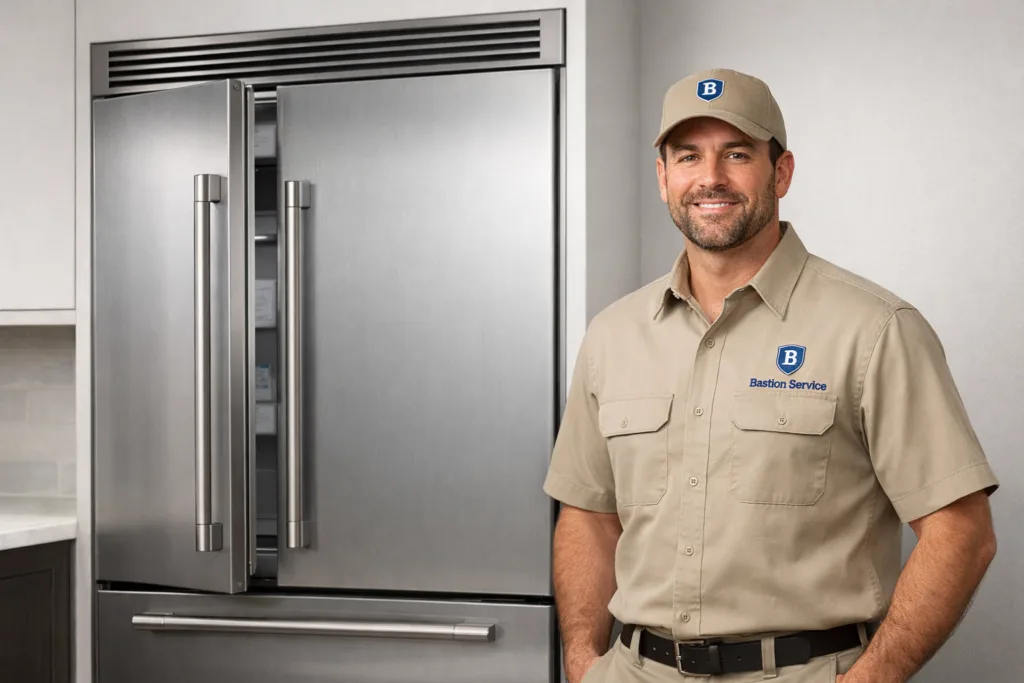
A Sub-Zero refrigerator that starts warming, leaking, icing over, or running nonstop can disrupt daily routines quickly. The same symptom can come from very different causes, so the best next step is to evaluate how the unit is behaving as a whole rather than guessing based on one visible issue.
What common symptoms usually point to
Fresh food section is warm but the freezer seems normal
This often suggests an airflow problem rather than a complete cooling failure. On many Sub-Zero units, the refrigerator side depends on proper circulation, accurate temperature sensing, and a functioning fan system. Frost behind interior panels, restricted vents, or a weak evaporator fan can all lead to a refrigerator compartment that struggles while the freezer appears less affected.
Helpful signs include milk spoiling early, produce drawers feeling humid, or temperatures changing from shelf to shelf. If the unit recovers for a while and then warms again, that pattern can point to an intermittent fan, control, or defrost issue.
Freezer temperature is inconsistent
If ice cream softens, food packages develop frost, or the freezer seems cold one day and too warm the next, the problem may involve door sealing, frost accumulation, circulation trouble, or a deeper cooling-system fault. Inconsistent freezing matters because food quality can decline even before the freezer fully stops working.
A freezer that appears to cool eventually but cannot hold a stable temperature is often under strain. That can lead to longer run times and more wear on critical components.
Frost is building up inside
Frost on shelves, drawers, walls, or around vents usually means moisture is entering where it should not, or the appliance is not managing defrost cycles properly. A worn door gasket, a door that does not close squarely, overpacked shelves, or a failed defrost component can all create similar symptoms.
Heavy ice should not be treated as just a cosmetic issue. As frost spreads, airflow can become restricted and cooling performance often drops with it.
Water is leaking under or inside the unit
Leaks can come from a clogged drain path, melting frost that is not draining correctly, excess condensation, or temperature imbalance inside the cabinet. Moisture around crispers, puddles on the floor, or water collecting beneath the unit should be addressed promptly, especially when the leak appears alongside cooling changes.
Ignoring this symptom can lead to flooring damage, odor problems, and hidden ice buildup that keeps getting worse.
The refrigerator is noisy or seems to run all the time
Some operating sounds are normal, but new buzzing, clicking, rattling, fan scraping, or constant running usually deserves attention. Noise may come from a fan motor, vibration, restricted airflow, or a compressor working harder than it should.
If the sound change is paired with weak cooling, frost, or leaks, it is usually a stronger sign that service should be scheduled soon.
Why symptom patterns matter on Sub-Zero refrigerators
Sub-Zero refrigerators are built differently from many standard models, so a warm compartment does not automatically mean the same fix you might expect on another brand. Two households in Mid-City can describe “not cooling” and still have completely different repair paths.
For example, one unit may have a door seal problem that lets in warm air and creates frost, while another may have a fan issue that prevents cold air from moving where it needs to go. A third may have a control or sealed-system problem that shows up as temperature swings before total cooling loss. Looking at the full symptom pattern helps narrow the issue and avoid unnecessary parts replacement.
Signs the problem is getting worse
- Food spoils sooner than expected even after temperature adjustments.
- Frost returns shortly after being cleared.
- The refrigerator runs nearly all day without reaching normal temperature.
- Moisture turns into recurring puddles or dripping inside drawers.
- One compartment starts failing after the other has already shown symptoms.
- Clicking or restarting behavior appears along with weak cooling.
These changes often mean the appliance is no longer compensating well. A small airflow or defrost issue can eventually affect both compartments if it is left alone.
What homeowners should avoid doing
When cooling becomes uneven, many people start lowering temperature settings again and again. That can make it harder to judge the true problem and may increase run time without solving the underlying fault. Repeatedly chipping away visible ice is another common response, but that only removes the result, not the cause.
It is also best not to keep loading the refrigerator as usual if temperatures are clearly unstable. A struggling unit may seem to recover for short periods, but food safety and appliance wear can both become concerns.
When service is worth scheduling promptly
It makes sense to arrange service when the refrigerator section is warming, the freezer is inconsistent, frost keeps returning, water is leaking, or the machine runs almost constantly. Even partial cooling can be misleading. Many refrigerators continue operating just enough to seem usable while performance steadily declines.
If both compartments are warming, the unit has stopped cooling altogether, or there is repeated clicking with little or no temperature recovery, limiting use is usually the safer choice until the problem is assessed.
Repair or replacement: what usually makes sense
For many Mid-City households, repair is still the practical option when the issue is isolated and the overall condition of the refrigerator is sound. Fan motors, drain problems, sensors, gaskets, certain control faults, and some defrost-related issues are often repairable without turning the situation into a replacement decision.
Replacement becomes a more serious consideration when the refrigerator has multiple major failures, advanced wear combined with costly cooling-system problems, or a repair estimate that no longer matches the appliance’s condition. Age matters, but symptom history matters just as much. A dramatic symptom can come from a manageable fault, while a unit with recurring temperature problems may point to a broader decline.
What a useful service visit should evaluate
A thorough refrigerator repair visit should look at temperature behavior, airflow, frost pattern, drainage, door sealing, fan operation, and overall system response. In a typical Mid-City home, that means paying attention to how the unit performs in normal daily use, including whether it struggles after door openings, cools unevenly from top to bottom, leaks near the base, or develops frost behind drawers or along vents.
That kind of practical repair guidance helps homeowners decide whether the issue is straightforward, urgent, or a sign that replacement should at least be considered.
Household impact beyond the appliance itself
Refrigerator problems do not stay neatly contained. They affect grocery costs, meal planning, kitchen cleanup, and confidence that food is being stored safely. Leaks can damage nearby flooring, and nonstop operation can make the kitchen noticeably louder and less comfortable.
Addressing symptoms early usually gives homeowners more options. It can prevent a minor performance issue from turning into a full loss of cooling at the worst possible time.