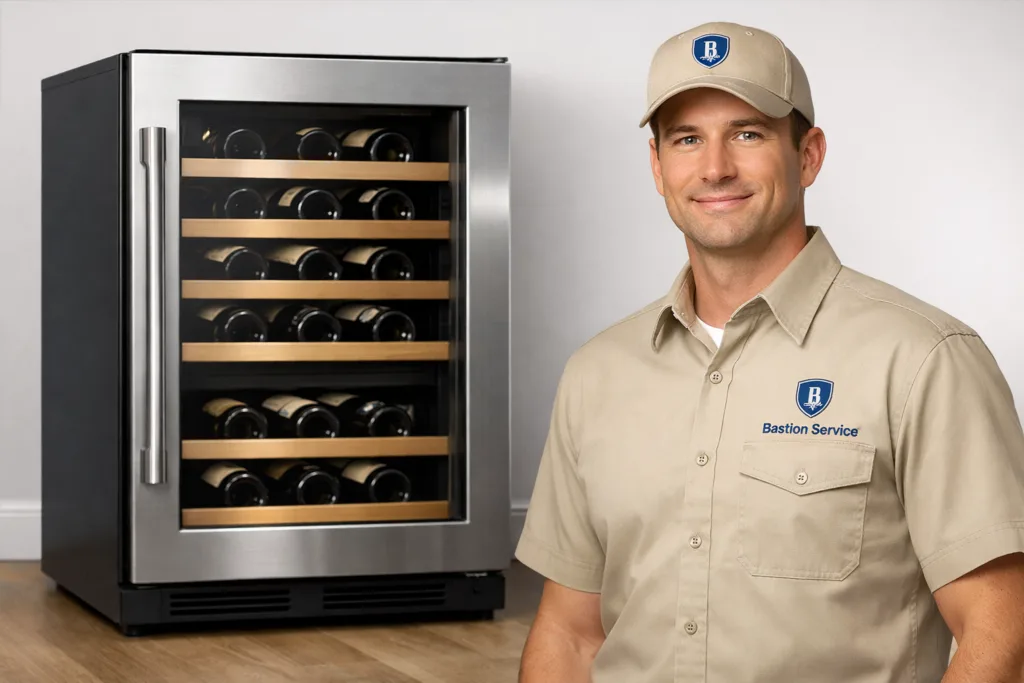
Small changes in wine cooler performance often show up before a complete failure. Bottles may feel a little warmer than usual, the cabinet may run longer between shutoffs, or moisture may begin collecting near the door. In a Mid-City home, those early signs are worth addressing because wine storage depends on stable conditions, not just a display that appears normal.
Start with the symptom, not the assumption
Marvel wine coolers can develop cooling problems that look alike at first but come from different causes. A temperature issue might be related to airflow, a sensor, a fan motor, the control system, a door-seal problem, or declining sealed-system performance. Looking at the exact pattern of the problem helps narrow down what is actually happening inside the unit.
Running warm or drifting above the set temperature
If the cooler is no longer holding the temperature you expect, the issue may be gradual or sudden. A gradual rise can point to reduced heat transfer, restricted ventilation, or a component weakening over time. A sudden loss of cooling may suggest a start problem, fan failure, or a control issue that prevents the system from operating correctly.
Homeowners sometimes notice that the display says one thing while the bottles feel different. That mismatch matters. When the reading and the real cabinet temperature do not agree, the problem may involve sensing or control rather than a simple adjustment.
Constant running or frequent cycling
A wine cooler that seems to run all day may be struggling to remove heat efficiently. Dirty condenser areas, poor airflow, warm air leaking past the gasket, or declining refrigeration performance can all cause long run times. On the other hand, rapid starts and stops may point to a control fault, sensor error, or trouble when the compressor tries to start.
Short cycling is especially important to watch because repeated starting can increase wear on key components. If the unit sounds like it is trying repeatedly without settling into a normal cooling pattern, service is usually a better choice than waiting.
Condensation, interior moisture, or frost
Moisture inside a Marvel wine cooler is not always just a nuisance. Water droplets, damp shelves, or frost buildup often mean warm air is entering the cabinet or air circulation is being disrupted. A worn gasket, a door that is slightly misaligned, or an airflow problem inside the unit can all contribute.
Frost can also reduce performance by interfering with normal circulation. Once that happens, temperature consistency becomes harder to maintain, and the cooler may run longer to compensate.
Clicking, buzzing, humming, or vibration
Some operational sound is normal, but a new noise pattern is a useful clue. Buzzing can come from the compressor area or a failing start component. Clicking may happen when the unit repeatedly tries to start and cannot. Rattling or vibration may be tied to mounting, fan issues, or how the cooler is sitting in its space.
If unusual noise appears together with poor cooling, moisture, or constant running, it usually points to more than a minor annoyance.
What a proper diagnosis should sort out
For Mid-City homeowners, the main value of service is understanding which system is responsible for the symptom. That usually means separating the problem into one of these categories:
- Airflow or ventilation problems: warm spots, reduced cooling, excess runtime
- Door or gasket issues: condensation, frost, temperature drift, inconsistent cabinet conditions
- Sensor or control faults: inaccurate readings, erratic cycling, failure to maintain the selected setting
- Fan or startup component problems: humming, clicking, partial cooling, weak recovery after the door opens
- Sealed-system concerns: persistent warming, very long run times, poor overall cooling performance
That distinction affects urgency, repair scope, and whether the unit is likely to return to stable operation with a targeted fix.
Signs it is time to schedule service
It is usually time to schedule Marvel Wine Cooler Repair in Mid-City when the cooler is no longer preserving a dependable temperature, when moisture or frost keeps returning, or when new sounds develop that were not there before. You should also act when the unit briefly improves after a reset but then slips back into the same problem. Temporary recovery often means the underlying fault is still present.
Another important sign is slow recovery after the door has been opened. If the cabinet takes much longer than usual to return to its target temperature, the cooling system may be losing efficiency or control accuracy.
What you can check before service
Without disassembling anything, a few basic observations can help clarify the issue:
- Confirm the door closes fully and seals evenly on all sides.
- Look for visible moisture, frost, or gaps around the gasket area.
- Notice whether the interior fan sound has changed or stopped.
- Pay attention to whether the compressor area clicks repeatedly.
- Compare the displayed temperature with how the bottles and interior actually feel.
These checks do not replace repair work, but they can help identify whether the problem is likely tied to airflow, sealing, controls, or cooling performance.
When continued use may make the issue worse
If the cooler is running nonstop, repeatedly clicking, building frost, or failing to maintain a safe storage range, continued operation can put more strain on the system. Keeping the door closed as much as possible may reduce temperature swings while waiting for service, but it does not solve the underlying fault.
Problems that begin as minor air leaks or circulation issues can sometimes lead to heavier runtime and more stress on refrigeration components. Addressing the issue earlier can help avoid a larger repair decision later.
Repair or replacement depends on the failure pattern
Many Marvel wine cooler issues are repairable, especially when they involve fans, controls, sensors, gaskets, drainage issues, or startup components. Replacement becomes a more serious consideration when there is major sealed-system trouble, repeated expensive failures, or overall age-related decline affecting multiple parts of the unit.
The best decision depends on the exact fault, how the cabinet and cooling system have held up, and whether the repair is likely to restore stable day-to-day operation. That is why a clear diagnosis is more useful than guessing from one symptom alone.
A focused repair approach for Mid-City homes
In residential settings, the goal is not just to make the cooler run again. It is to restore reliable temperature control, reduce the risk of repeat problems, and determine whether the repair path makes sense for the appliance you have. For homeowners dealing with temperature swings, noise, condensation, or weak cooling, symptom-based service is the most practical way to move from uncertainty to a real fix.