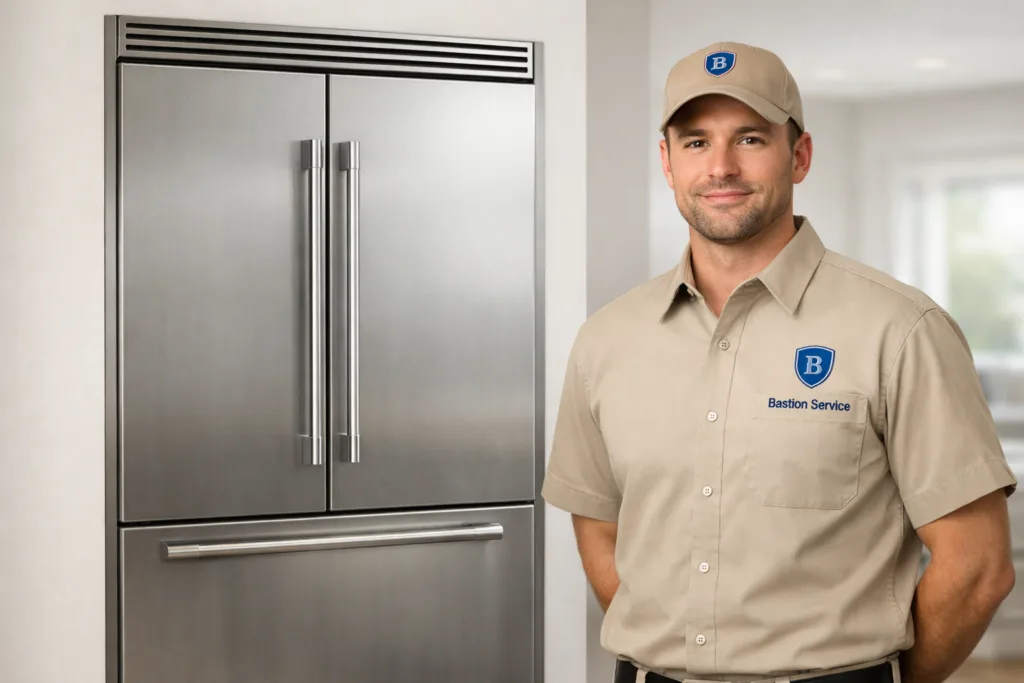
Temperature drift in a Sub-Zero refrigerator usually starts as a pattern rather than a total breakdown. You might notice produce freezing in one drawer, drinks staying warmer on an upper shelf, soft ice cream, moisture near the door, or a motor that seems to run longer than usual. Those early signs matter because refrigeration problems often spread from airflow or control issues into heavier wear on other components when the unit keeps struggling to hold set temperatures.
How symptom patterns help narrow down the problem
Sub-Zero refrigerators are built around controlled airflow, consistent temperature management, and compartment separation. When one part of the refrigerator behaves differently from another, that detail helps identify where the fault may be developing. A refrigerator that is warm everywhere points to a different repair path than one with a cold freezer and a warming fresh food section.
Useful clues include whether the issue is constant or intermittent, whether frost is visible, whether doors are sealing fully, and whether the unit is noisy, leaking, or running almost nonstop. Looking at the full pattern is what separates a targeted repair from random parts replacement.
Common Sub-Zero refrigerator symptoms in Palos Verdes Estates homes
Fresh food section is too warm
If the refrigerator compartment is warming up, the cause may be restricted airflow, fan trouble, sensor errors, dirty condenser components, gasket wear, or a developing cooling issue. In some cases the freezer still appears cold enough, which can delay action even though food in the refrigerator section is already at risk.
This symptom deserves prompt attention when milk spoils quickly, leftovers do not stay cold, or temperatures vary from shelf to shelf. Uneven cooling often means the unit is no longer circulating air as intended.
Freezer stays cold but refrigerator does not
This often suggests an airflow problem between compartments rather than a complete loss of cooling. Ice behind panels, evaporator fan failure, damper issues, or control faults can prevent cold air from reaching the fresh food section. The result is a refrigerator that seems partly functional while food storage becomes unreliable.
Frost buildup on panels, drawers, or vents
Frost where it should not be can point to defrost component failure, a door left slightly ajar, worn gaskets, or moisture entering the cabinet repeatedly. Once frost starts interfering with vents or evaporator airflow, temperature consistency usually gets worse. Homeowners often notice drawers becoming harder to open or cold spots forming in some areas while others turn warm.
Water leaking inside the unit or onto the floor
Leaks commonly come from blocked defrost drains, drainage ice, condensation problems, or sealing issues that let in excess moisture. Even a small recurring leak is worth addressing because water can affect flooring, cabinetry, and nearby finishes. If the leak returns after wiping it up, the source usually needs more than a basic cleanup.
New or unusual noises
Not every refrigerator sound is a sign of failure, but a change in sound pattern matters. Buzzing, clicking, rattling, fan scraping, or louder-than-normal running can indicate fan motor wear, vibration, ice contact, relay issues, or compressor stress. The most useful question is whether the sound is new and whether it happens along with poor cooling or frost buildup.
Unit runs constantly or cycles abnormally
A Sub-Zero refrigerator that rarely seems to shut off may be trying to compensate for poor heat exchange, air leaks, incorrect sensing, or cooling system trouble. Long run times can also show up after doors stop sealing well or when hidden frost blocks airflow. If the exterior feels hotter than usual or the kitchen seems warmer around the unit, the refrigerator may be under increased load.
What homeowners can check before scheduling service
Some issues become clearer with a few simple observations:
- Check whether doors close fully without resistance from bins, shelves, or food containers.
- Look for torn, loose, or dirty door gaskets.
- Notice whether frost is collecting near vents or behind interior panels.
- Pay attention to whether one compartment is affected more than the other.
- Listen for fan noise that seems louder, irregular, or absent.
- Watch for recurring moisture under crisper drawers or on the floor.
These checks do not replace diagnosis, but they help describe the problem more accurately and can shorten the path to the right repair.
When waiting usually makes the repair harder
It is smart to schedule service when temperatures will not stabilize, frost keeps returning, leaks are recurring, or the refrigerator is preserving food unevenly. A unit can still be running and still be failing. That is why waiting often leads to more spoilage, thicker ice buildup, and more strain on motors and cooling components.
Service becomes more urgent when:
- Food is spoiling before its normal timeframe
- The refrigerator section fluctuates noticeably through the day
- The freezer overfreezes while the fresh food compartment warms up
- Water reaches the floor or surrounding cabinetry
- Drawers or panels are obstructed by ice
- The appliance clicks, hums, or runs continuously in a new way
- The unit has gone from intermittent problems to partial or complete cooling loss
Repair versus replacement for a Sub-Zero refrigerator
Many Sub-Zero refrigerator problems are repairable. Fan motors, sensors, defrost-related parts, drainage faults, gasket issues, and some control problems can often be corrected without replacing the appliance. When the cabinet, insulation, and major systems are otherwise in good shape, repair may be the sensible next step.
Replacement becomes a more serious consideration when diagnosis points to major sealed-system trouble, repeated expensive failures, severe age-related wear, or multiple problems developing at the same time. The key question is whether the recommended repair is likely to restore stable food preservation instead of buying only a short period of improvement.
What a service visit should clarify
A useful appointment should do more than confirm that the refrigerator is not cooling properly. It should sort out whether the issue is related to airflow, defrost function, drainage, fan operation, temperature sensing, sealing, or a deeper cooling-system fault. That gives the homeowner a realistic basis for deciding what to do next.
For households in Palos Verdes Estates, that matters because premium built-in refrigeration can sometimes hide a developing issue until the symptoms become more obvious. By the time there is visible frost, leaking water, or widespread warming, the original cause may have been present for a while.
Signs the refrigerator is no longer preserving food reliably
Even before a complete failure, a struggling unit may show smaller warnings that should not be ignored:
- Leafy vegetables freeze in one drawer but not another
- Condiments feel cool while milk feels warm
- Ice cream softens but frozen items still look solid
- Moisture forms around the door opening
- Items near the back wall freeze unexpectedly
- The refrigerator sounds busier than usual during normal use
These signs usually mean the appliance is no longer holding a stable environment across the cabinet. If your Sub-Zero refrigerator is showing this kind of uneven behavior in Palos Verdes Estates, a symptom-based evaluation is the most reliable way to determine whether the problem is a manageable repair or a larger decision.