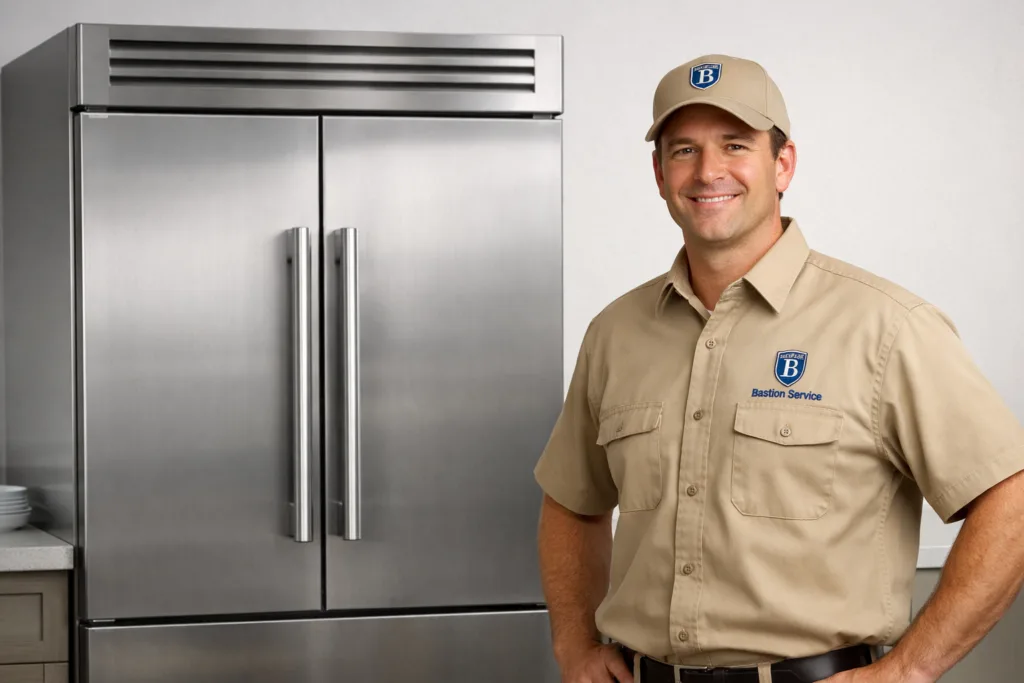
Temperature problems in a True refrigerator rarely come from one simple cause. A fresh food section that feels warm, a freezer that ices over, or shelves that collect water can each point to different failures involving airflow, defrost components, sensors, controls, or the sealed system. Looking at the full symptom pattern helps narrow the problem faster and avoids replacing parts that are not actually causing the issue.
How symptom patterns help identify the real problem
True refrigerators are designed to hold steady temperatures, so a noticeable change usually means one of the core cooling systems is no longer working as intended. The most useful clues are often the ones homeowners notice first: whether the problem is constant or intermittent, whether noise changed before cooling dropped, whether frost appears in one area or throughout the cabinet, and whether the unit is running nonstop or cycling oddly.
In Palos Verdes Estates homes, common calls include inconsistent cooling, food freezing in the refrigerator compartment, water leaks, frost buildup, and louder operation than normal. Those symptoms can overlap, but they do not all lead to the same repair. A blocked drain, failing evaporator fan, torn door gasket, sensor issue, or compressor-related fault can all produce different versions of “not cooling right.”
Common True refrigerator symptoms and what they may indicate
Refrigerator is warm or not cooling enough
If drinks stay cool but not cold, leftovers spoil early, or temperatures rise slowly over several days, the issue may involve restricted airflow, a weak fan motor, dirty condenser surfaces, a sensor problem, or a compressor struggling to maintain temperature. When cooling drops gradually, the refrigerator often runs longer in an attempt to recover, which can increase wear on other parts.
If the cabinet becomes warm quickly, especially after unusual clicking or repeated restart attempts, the failure may be more serious. That can point to a start component problem, electrical fault, or sealed-system issue that needs prompt attention.
Food is freezing in the fresh food section
Frozen produce, icy containers, or items near the vents becoming too cold usually indicate a control or airflow problem rather than “extra strong” cooling. A faulty sensor, damper problem, control board issue, or uneven air distribution can cause one area to overcool while another section struggles to stay consistent. This is worth checking before it leads to wider temperature instability.
Water leaking inside or under the refrigerator
Water on shelves, under crisper drawers, or around the base of the appliance often comes from a clogged defrost drain, excess condensation, poor door sealing, or an ice maker supply issue on equipped models. Even a small recurring leak matters. Water can damage flooring, create odor problems, and signal a defrost or moisture-control issue that will not resolve on its own.
Frost buildup or heavy condensation
Frost on the back wall, icy buildup near vents, or sweating around the door opening usually means warm air is entering where it should not, or the defrost system is not clearing moisture properly. Worn gaskets, doors not closing fully, airflow restrictions, and failed defrost components are common causes. Once frost starts building up, cooling efficiency usually drops and run times get longer.
Loud buzzing, rattling, clicking, or fan noise
A change in sound is often one of the earliest warning signs. Rattling may come from vibration or a loose component. Buzzing can point to compressor strain. Clicking may indicate repeated start attempts. Squealing or scraping often suggests fan trouble or ice interfering with blade movement. If the refrigerator suddenly sounds different and temperatures are also drifting, both symptoms should be evaluated together.
Refrigerator runs all the time
A True refrigerator that rarely cycles off may be compensating for warm air intrusion, dirty heat-transfer surfaces, sensor errors, defrost trouble, or reduced cooling efficiency. Constant operation does not always mean the compressor itself has failed, but it does mean the appliance is working harder than it should. Left unresolved, that can turn a moderate repair into a larger one.
What homeowners can check before scheduling repair
A few simple observations can help clarify the issue without guessing at parts:
- Check whether the doors are closing fully and sealing evenly on all sides.
- Look for frost on interior panels, around vents, or behind drawers.
- Listen for fan noise that seems louder, slower, or irregular.
- Notice whether the compressor is running constantly or clicking on and off.
- Inspect for water under bins, on shelves, or on the floor near the front or back.
- Confirm whether only one section is affected or the whole unit is warming.
These details often help distinguish between an airflow problem, moisture issue, control fault, or more significant cooling failure.
Signs the problem should not be ignored
Some refrigerator issues start small and become expensive mainly because the unit keeps running in a stressed condition. A door gasket that no longer seals can lead to condensation, frost, and nonstop operation. A partially blocked drain can turn into repeated leaks and interior moisture damage. A weakening fan motor can fail completely and cause rapid temperature loss. A compressor or sealed-system problem can worsen if the refrigerator continues struggling to cool for long periods.
If milk, meat, or other perishable food cannot be kept at a safe temperature, service should be scheduled promptly. The same is true if the appliance trips a breaker, will not restart reliably, clicks repeatedly without cooling, or leaves recurring water around the base.
Repair or replacement: how the decision usually works
Many True refrigerator problems are worth repairing when the failure is limited to a serviceable part such as a fan motor, drain issue, gasket, sensor, control component, or defrost part, and the rest of the appliance is in solid condition. In those cases, a targeted repair can restore normal cooling without the disruption of replacement.
Replacement becomes more likely when the refrigerator has repeated major cooling failures, multiple unrelated problems at once, or a sealed-system issue combined with other costly wear. Age, overall condition, and prior repair history all matter. The key is understanding which system has actually failed and whether the total repair path makes sense for the appliance you have now.
What service should address during a visit
For households in Palos Verdes Estates, the most helpful service call is one that connects the symptom to the likely cause. That usually means checking cabinet temperatures, airflow, fan operation, defrost behavior, gasket condition, drain function, control response, and compressor performance. Once the failed system is identified, it becomes much easier to decide whether the next step is a focused repair or a broader replacement conversation.
When a True refrigerator is showing warning signs, the goal is not just to quiet a noise or wipe up a leak. It is to restore stable food storage, prevent repeat breakdowns, and make sure the repair path matches the condition of the appliance. That kind of practical repair guidance is what helps homeowners avoid wasted time, spoiled groceries, and unnecessary part changes.