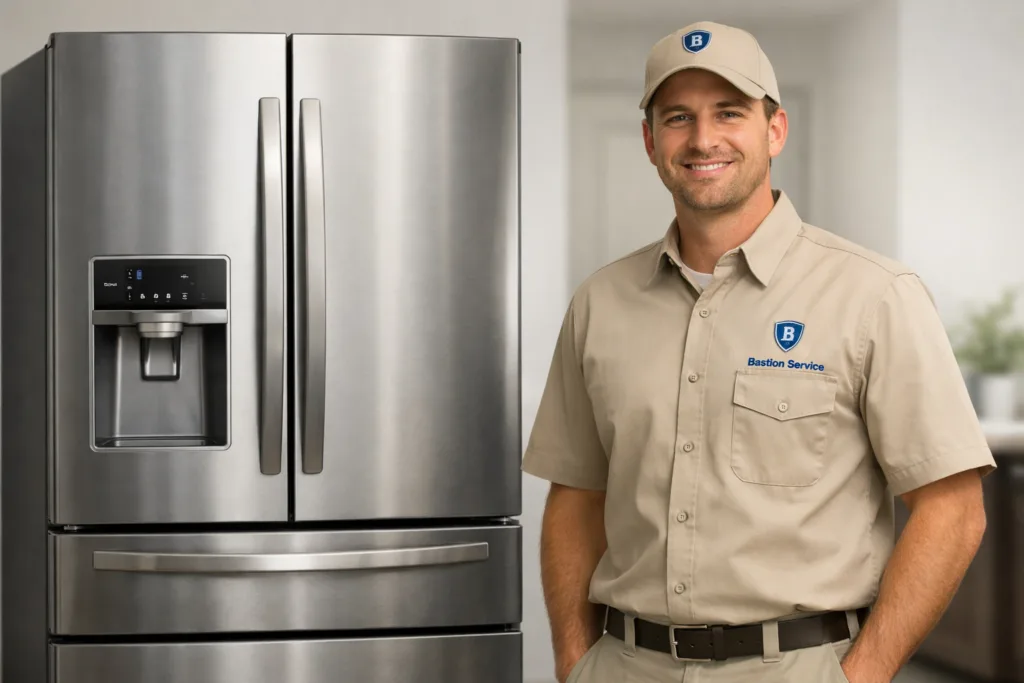
When a Kenmore refrigerator stops holding temperature, leaks onto the floor, or starts making new sounds, the symptom itself is only the starting point. The same warm-food complaint can come from restricted airflow, a defrost failure, a weak fan motor, a control issue, or a more serious cooling-system problem. Looking at the full pattern of symptoms usually tells you much more than the first obvious sign.
Start with the way the refrigerator is behaving
Most household refrigerator problems show up in recognizable patterns. A freezer that still feels cold while the fresh food section warms up often points to an airflow or defrost issue. If both sections are warming, the problem may involve condenser performance, startup components, or the sealed system. Water around the unit, recurring frost, or constant running can also narrow down what is actually wrong.
For homeowners in Palos Verdes Estates, paying attention to when the problem happens can help make service more efficient. Does the refrigerator struggle all day, only after the doors have been opened frequently, or after the ice maker runs? Does it recover after a reset and then fail again? Those details help separate a one-part failure from a broader system issue.
Fresh food section is warm but freezer seems normal
This is one of the most common complaints on refrigerators. In many cases, the freezer is producing cold air, but that air is not moving properly into the refrigerator compartment. Possible causes include:
- Frost blocking airflow around the evaporator
- A failing evaporator fan motor
- Blocked or restricted vents
- A defrost system problem
- Sensor or control issues affecting temperature regulation
If produce, dairy, or leftovers are spoiling early while frozen items still seem solid, it usually means the refrigerator side is not receiving or managing cold air the way it should.
Both sections are getting warm
When the freezer and refrigerator are both losing temperature, the cause is often more central to the cooling process. Dirty condenser coils, a failing start relay, compressor trouble, or a sealed system issue can all create this pattern. In some cases, the unit may run for long periods without ever reaching the set temperature.
This is usually not a symptom to wait out. Continued operation during a full cooling failure can lead to food loss and may put additional strain on already weakened components.
What leaks and moisture usually mean
Water under or inside a Kenmore refrigerator does not always mean the same thing. A blocked defrost drain is a common cause, especially when water appears inside the fresh food section or freezes into sheets under freezer drawers. A leaking water line, loose fitting, cracked inlet valve area, or ice maker fill problem can also create puddles near the front or back of the appliance.
Moisture around the door opening can point to warm air entering the cabinet. That may happen because of a worn gasket, a door that is slightly out of alignment, or items inside the refrigerator preventing the door from closing fully.
Leaks are worth addressing early because the damage can spread beyond the refrigerator itself. Flooring, trim, and nearby cabinetry can all be affected by repeated moisture.
Frost buildup inside the freezer
Heavy frost usually signals one of two issues: a defrost problem or warm air entering where it should not. If frost keeps returning after being cleared, the refrigerator may not be completing its defrost cycle correctly. If frost forms mainly near the door area, the gasket or door closure may be the bigger issue.
Frost also reduces airflow. That means what starts as a freezer frost problem can turn into a refrigerator cooling complaint not long after.
Unusual refrigerator noises and what they can suggest
Refrigerators are never completely silent, but a noticeable change in sound often matters. Clicking, buzzing, grinding, rattling, or squealing can all point toward specific components.
- Clicking: may indicate startup trouble involving the relay or compressor
- Grinding or squealing: often suggests a fan motor problem
- Buzzing near the water system: can relate to the inlet valve or ice maker operation
- Rattling: may be something simple such as tubing vibration or a loose panel
A refrigerator that sounds different and also cools poorly deserves more attention than a noisy unit that is otherwise working normally. The combination of noise plus performance changes usually points to an active failure rather than normal operation.
Signs the issue may be getting worse
Some symptoms start small and become more expensive if ignored. Watch for these warning signs:
- Food temperatures that fluctuate from day to day
- The compressor trying repeatedly to start
- Doors that no longer seal tightly
- Ice maker production dropping without a water shutoff issue
- Condensation returning after you wipe it away
- The refrigerator running almost constantly
These patterns often mean the appliance is compensating for another fault in the background. Addressing the original cause is usually better than continuing to adjust settings and hoping the problem resolves on its own.
When repair usually makes sense
Many refrigerator problems are still reasonable to repair, especially when the issue is tied to a specific part or subsystem. Fan motors, defrost components, door gaskets, drain issues, inlet valves, controls, and startup parts are often more straightforward repair situations than homeowners expect.
Repair tends to make the most sense when:
- The refrigerator is otherwise in solid condition
- The failure is limited to one or two identifiable parts
- The cabinet, shelving, and door structure are still in good shape
- The appliance has not had a pattern of repeated major breakdowns
When replacement may be the better path
There are also cases where replacement becomes the more practical decision. That is more likely when the refrigerator has major sealed system trouble, a failing compressor combined with age-related wear, or multiple unresolved issues occurring close together. If repair costs begin approaching the value of a newer unit, many households choose not to keep investing in an appliance with declining reliability.
The important part is knowing which category the problem falls into. A refrigerator that appears “dead” may only need a targeted repair, while one that still runs may actually have a much larger internal problem.
How homeowners can help before a service visit
A few simple observations can make diagnosis easier and faster:
- Note whether the freezer, refrigerator section, or both are affected
- Check whether lights, fans, and the display are functioning
- Listen for clicking, humming, or fan noise changes
- Look for frost on interior panels or around the door opening
- Notice whether water is coming from inside the cabinet or behind the unit
- Avoid overloading the refrigerator if airflow already seems weak
It is also helpful not to keep changing the temperature settings repeatedly. That can make the symptom pattern harder to interpret and may delay identifying the actual fault.
What to expect from a focused repair approach
A useful service visit should do more than respond to the broad complaint of “not cooling.” It should connect the symptom pattern to the component or system causing it. That may include checking temperatures, airflow, frost patterns, fans, door sealing, drain condition, and startup behavior, depending on what the refrigerator is doing in the home.
For Palos Verdes Estates homeowners, that process helps answer the question that matters most: is this a manageable repair, or is it time to think about replacement? Once the fault is identified, the next step becomes much easier to judge with confidence.
Kenmore refrigerator problems are easier to solve when the symptom is specific
The more precisely a problem is described, the more likely it is to lead to the right repair path. “Freezer cold, fridge warm,” “water under deli drawer,” “clicks every few minutes,” or “frost returns after two days” are all more useful than simply saying the refrigerator is not working.
When a Kenmore refrigerator in Palos Verdes Estates starts showing those patterns, symptom-based evaluation is the best way to avoid guesswork, protect food, and make a smarter repair decision.