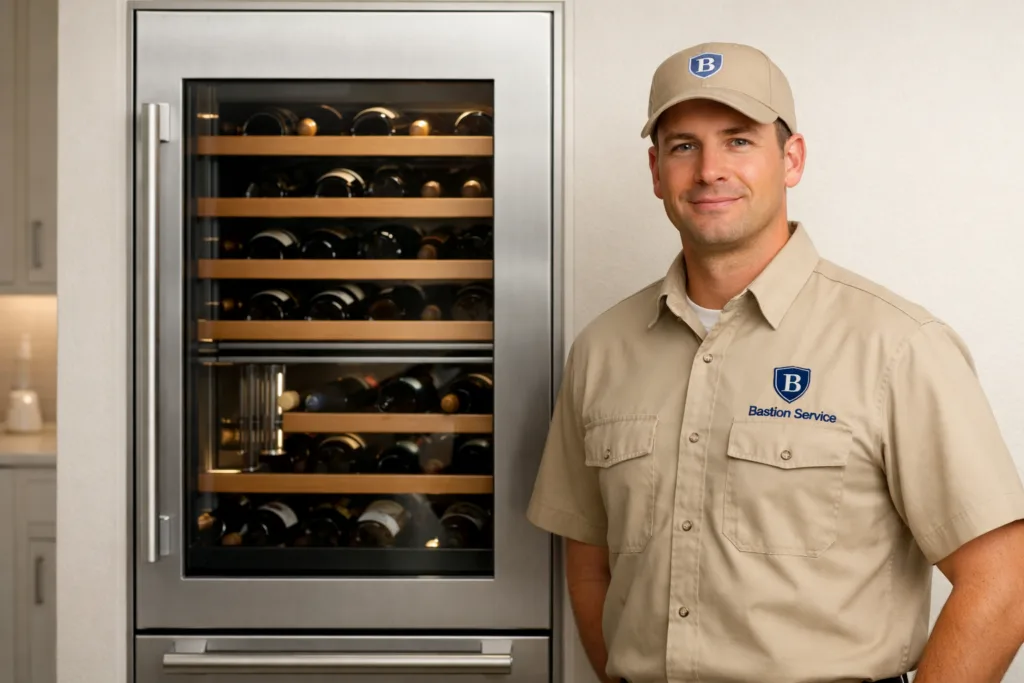
Stable storage matters with a wine cooler because small performance changes can affect both temperature and humidity inside the cabinet. When a Sub-Zero unit starts running warm, building up moisture, or making a new sound, the same symptom can come from very different causes. Fan problems, sensor faults, restricted airflow, control issues, and door seal wear can all show up in similar ways, so it helps to look at the full pattern before deciding on a repair.
Common Sub-Zero Wine Cooler Problems Homeowners Notice
Most wine cooler issues begin with a subtle change rather than a complete shutdown. In Palos Verdes Estates homes, owners often notice that bottles are not as cool as usual, the cabinet temperature drifts during the day, or the unit sounds different than it used to. Paying attention to those early changes can help prevent a minor issue from turning into a more expensive one.
Not Cooling Properly
If the cooler is no longer reaching the set temperature, the cause may be as simple as blocked airflow or as involved as a failing component in the cooling system. A weak evaporator fan, dirty condenser area, bad thermistor, control problem, or poor door seal can all reduce cooling performance. Some units will still run and light up normally even while the storage temperature is no longer stable.
Uneven cooling can also point to airflow trouble inside the cabinet. If one section feels cooler than another, the fan may not be moving air the way it should, or bottles and shelving may be restricting circulation. This kind of symptom is especially important to address early because the unit may continue operating while storage conditions slowly get worse.
Temperature Swings
A wine cooler that cools for a while and then warms back up may be dealing with a sensor or control issue rather than a full no-cooling failure. Temperature swings can also happen when the door gasket is leaking enough air to make the system work harder than normal. In some cases, the cooler appears to recover temporarily, which can make the issue easy to ignore until the pattern becomes more obvious.
Condensation, Fogging, or Moisture
Moisture around the door, fogging on the glass, or dampness inside the cabinet usually means outside air is getting in or internal moisture is not being managed correctly. A worn gasket is a common reason, but drainage issues and control faults can also be involved. Excess moisture should not be treated as cosmetic, because it often goes hand in hand with unstable temperature and extra strain on the refrigeration system.
Fan Noise, Buzzing, or Clicking
A change in sound is one of the most useful clues with a Sub-Zero wine cooler. A fan that has become louder may be wearing out or rubbing because of frost buildup or mounting issues. Buzzing can come from vibration or from a component working harder than it should. Clicking may point to a control or starting problem. Not every unusual noise means major failure, but a new sound that repeats is usually worth having checked.
Running Constantly or Cycling Too Often
If the wine cooler seems to run without much rest, it may be struggling to shed heat, maintain a seal, or read temperature correctly. A unit that starts and stops too often can also indicate sensor or electrical faults. Both operating patterns increase wear and usually show that the cooler is compensating for a problem rather than working normally.
Why Similar Symptoms Can Have Different Causes
Wine cooler repairs are often less straightforward than they appear. A cabinet that feels warm does not automatically mean compressor failure. Condensation does not always mean a bad gasket. Noise does not always point to a fan motor. The reason diagnosis matters is that overlapping symptoms can lead to the wrong part being replaced if the appliance is not tested carefully.
That is especially true with premium built-in refrigeration, where airflow, controls, and sealing all affect performance. A good service call should identify what is actually failing, what is still operating normally, and whether the repair path is likely to restore stable storage conditions.
When Service Should Not Wait
It is smart to schedule repair when the cooler no longer holds the set range, moisture keeps returning after you wipe it away, the door does not close cleanly, or the sound of operation changes in a noticeable way. These are all signs that the unit may be under extra stress. Continued use can sometimes worsen the original problem, particularly when the cooler is running constantly or having trouble cycling correctly.
Even a small temperature drift is worth paying attention to. Wine storage depends on consistency more than quick cooling, so a unit that is only slightly off can still be failing in a way that deserves attention before other components are affected.
What You Can Check Before Scheduling Repair
There are a few simple things homeowners can review before an appointment:
- Make sure the door closes fully and the gasket is not folded, torn, or loose.
- Check that bottles, shelves, or liners are not blocking interior airflow.
- Confirm that the temperature setting was not changed accidentally.
- Look for visible dust or lint around ventilation areas if they are accessible.
- Notice whether the problem is constant or happens at certain times of day.
These checks can help narrow down the symptom, but they do not replace testing when cooling remains inconsistent, condensation continues, or unusual sounds keep coming back.
Repair or Replacement: How the Decision Usually Gets Made
For many homeowners in Palos Verdes Estates, the decision comes down to the age and overall condition of the wine cooler, the specific part or system that has failed, and whether the cabinet itself is still in good shape. If the issue is limited to a fan motor, control component, sensor, gasket, or another serviceable part, repair is often the sensible route.
Replacement becomes more likely when the unit has several problems at once, a history of recurring cooling trouble, or a major sealed-system issue in an older appliance. The most useful answer is not a blanket recommendation either way. It is an explanation of what failed, what repair would involve, and whether the expected result justifies the cost.
What a Symptom-Based Repair Visit Should Focus On
A wine cooler service appointment should be centered on the actual complaint, not a generic refrigeration checklist. If the main problem is fan noise, the visit should determine whether the fan motor, ice buildup, mounting, or airflow is responsible. If the complaint is moisture, the inspection should focus on seal condition, temperature control, and drainage behavior. If the cabinet is warm, the work should narrow down whether the issue is airflow, sensing, controls, or the cooling system itself.
That symptom-based approach helps homeowners in Palos Verdes Estates make better decisions about timing, cost, and whether continued use risks more damage. It also gives a clearer expectation of what should improve once the repair is completed.
Residential Service for a Built-In Cooling Appliance
Sub-Zero wine coolers are often installed as part of a finished kitchen or bar area, so the repair process needs to account for both appliance performance and the home environment around it. Door alignment, ventilation clearance, and how the unit fits in its opening can all affect how the cooler behaves over time. A problem that looks electrical or mechanical at first may sometimes be tied to heat retention, restricted airflow, or seal stress from the way the appliance is sitting.
For households in Palos Verdes Estates, the goal is straightforward: restore stable operation, protect the bottles being stored, and avoid unnecessary part replacement. When the symptom is identified correctly, the next step becomes much easier to judge.