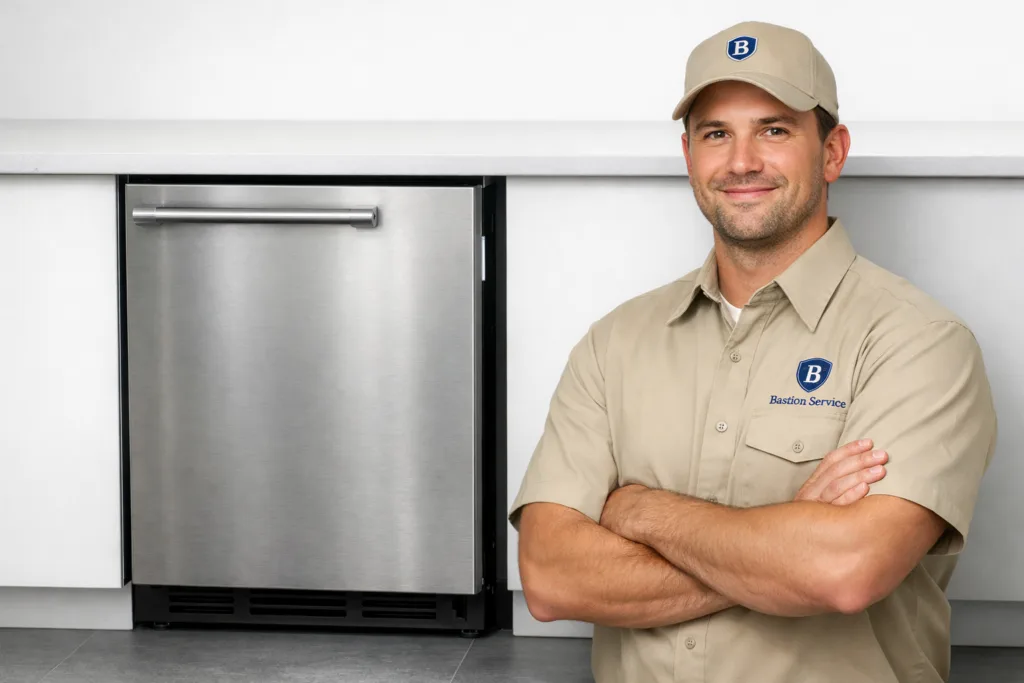
When a Perlick freezer begins warming, frosting over, leaking, or running longer than normal, the best next step is to match the symptom to the most likely system involved. What looks like one problem from the outside can come from airflow restrictions, sensor errors, door seal leaks, fan failure, a defrost fault, or deeper cooling trouble. Sorting that out early helps prevent food loss and avoids replacing parts based on guesswork.
Common Perlick freezer symptoms and what they may mean
Freezer not freezing hard enough
If food is no longer staying solid, ice cream turns soft, or the cabinet seems slow to recover after the door is opened, the problem may not be the same from one unit to the next. Weak evaporator airflow, condenser buildup, a worn fan motor, a loose door gasket, or an inaccurate temperature control can all reduce cooling performance. In some cases, the compressor runs but the freezer still cannot pull down to the correct temperature, which points to the need for more detailed testing.
Frost buildup on walls, shelves, or around the door
Heavy frost usually means warm, humid air is entering where it should not, or the freezer is failing to clear frost during its normal defrost cycle. A gasket that is not sealing well, a door left slightly ajar, or a defrost component problem can all create the same visible result. Once frost thickens, airflow drops and temperatures often become uneven throughout the compartment.
Freezer runs constantly
A Perlick freezer that rarely cycles off is working harder than it should. That can happen because the cabinet is losing cold air, coils are not shedding heat efficiently, sensors are not reading correctly, or ice buildup is forcing the system to compensate. Constant operation is important to address because prolonged strain can accelerate wear on other components.
Clicking, buzzing, rattling, or fan noise
Not every new sound means a major failure, but a change in sound along with weaker cooling is a useful clue. Fan blades can contact ice, motors can wear out, panels can vibrate, and start-related electrical parts can create clicking when the compressor is struggling to begin a cycle. Noise matters most when it appears together with temperature swings, frost, or long run times.
Water under the freezer or moisture inside
Leaks can come from drainage problems, melting frost, or warm air infiltration that creates excess condensation. Even a small recurring puddle is worth attention because the source may be tied to the same issue affecting temperature stability. In a household kitchen, garage, or utility area, water around the appliance can also become a floor safety problem.
Why Perlick-specific repair matters
Perlick freezers are built differently from many basic household units, and premium refrigeration often requires a more careful diagnostic approach. Controls, fans, thermistors, defrost components, and cooling performance need to be evaluated together. Replacing a visible failed part without checking the rest of the operating pattern can leave the original cause unresolved. For homeowners in Pico-Robertson, that means a symptom like frost buildup or warming should be treated as a system issue first, not just a single-part guess.
Problems that should not be ignored
Some freezer issues can wait a short time for a scheduled visit, but others should be addressed quickly. If food is thawing, frost is spreading fast, the cabinet is alarming, or the compressor seems to run nearly all day, delaying service can make the repair more involved. Ice accumulation can block airflow further, repeated thawing and refreezing can spoil stored items, and overworked components may begin to fail in sequence.
Even milder symptoms deserve attention when they repeat. A little frost in the same area, an intermittent fan sound, or occasional moisture near the door often signals an early-stage problem that is simpler to resolve before cooling drops completely.
Simple checks homeowners can make before service
- Confirm the door is closing fully and nothing inside is pushing against it.
- Look for torn, loose, or dirty door gaskets that may be letting warm air in.
- Avoid repeated door openings while the freezer is struggling to hold temperature.
- Check whether frost is concentrated near the door, back wall, or air vents, since the pattern can help narrow the cause.
- If water is collecting on the floor, note whether it appears after heavy frost or after a period of warming.
These observations are helpful, but they usually do not replace proper diagnosis when the freezer keeps losing temperature or ices up again after being cleared.
Repair or replacement: how to judge the situation
Many Perlick freezer problems are repairable, especially when the fault involves airflow, fan motors, sensors, controls, gaskets, drainage, or defrost parts. In those cases, repair is often the sensible path when the cabinet and overall condition are still strong. Replacement becomes a more serious consideration when the unit has major sealed-system trouble, a history of repeated expensive failures, or broad wear that makes long-term reliability doubtful.
The most useful decision point is not whether the freezer technically can be fixed, but whether the fix is justified by the unit’s condition, the parts involved, and the expected performance afterward. That is why diagnosis comes before any meaningful repair recommendation.
What to do if your Perlick freezer is failing in Pico-Robertson
If the freezer is no longer holding safe temperatures, move vulnerable food elsewhere if possible and limit door openings. If there is heavy frost, recurring leaking, or nonstop running, do not assume the unit will recover on its own. Households in Pico-Robertson usually benefit most from service when the symptom is still specific and trackable, before a smaller airflow or defrost problem turns into a full cooling loss.
A focused service visit should identify which part of the system is failing, whether the repair path is reasonable, and what to expect next in terms of performance and cost. That gives homeowners a straightforward way to protect both the appliance and the food stored inside it.