
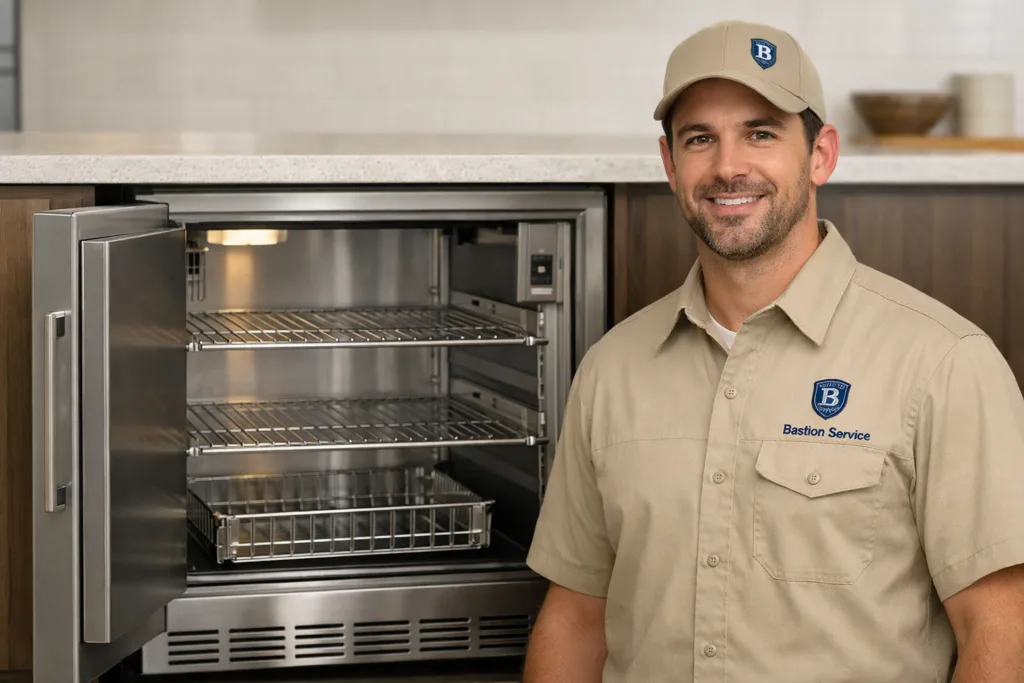




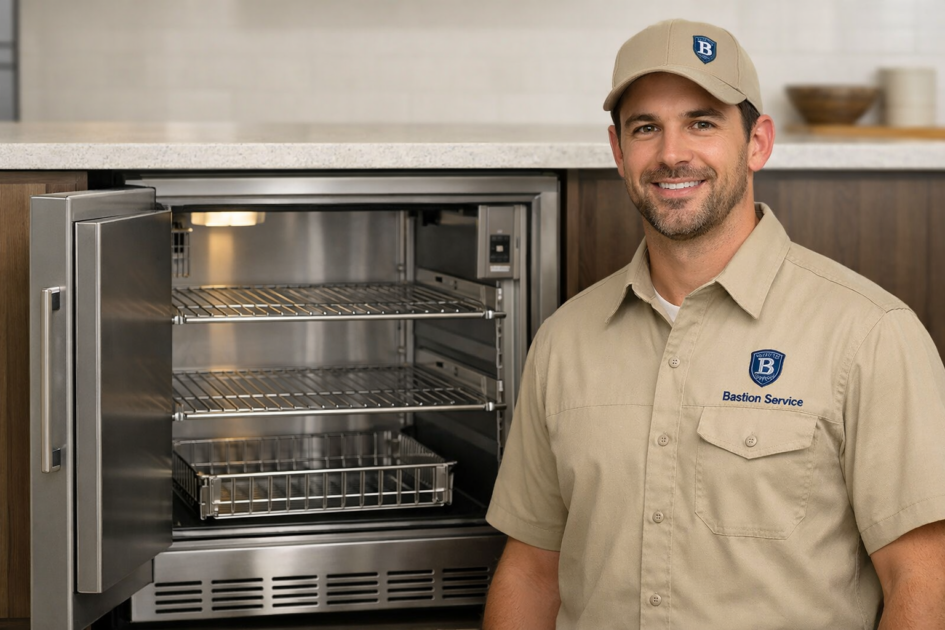
Perlick appliances are often built into kitchens, bars, and entertaining spaces, so performance problems tend to show up quickly in everyday use. A refrigerator that starts warming, an ice maker that slows down, or a wine cooler that no longer holds a stable range can all stem from more than one underlying issue. Symptoms that seem simple on the surface may be tied to airflow loss, control trouble, sensor errors, drainage problems, or declining cooling performance.
For specific Perlick appliance paths in Brentwood, review Perlick Refrigerator Repair in Brentwood, Perlick Freezer Repair in Brentwood, and Perlick Ice Maker Repair in Brentwood.
For homeowners in Brentwood, the most useful first step is to focus on the pattern of the problem rather than the part that seems easiest to blame. That makes it easier to judge urgency, protect food or flooring, and decide whether repair is likely to be worthwhile.
How Perlick appliance problems usually show up
Most service calls fall into a few symptom groups. Looking at those groups helps narrow down what may be happening inside the appliance.
- Temperature drift: the cabinet cools, but not consistently or not enough.
- Moisture or leaking: water appears under the unit, inside the cabinet, or around the door.
- Frost or ice buildup: frost forms on walls, around vents, or in areas where it should not collect.
- Noise changes: buzzing, rattling, clicking, fan noise, or compressor strain becomes more noticeable.
- Long run times: the unit seems to run continuously or cycle more often than normal.
- Production problems: an ice maker makes too little ice, poor-quality ice, or no ice at all.
These categories are helpful because the same symptom can come from several causes. Warm temperatures, for example, might point to a fan issue, dirty condenser area, sensor problem, door seal leak, or a larger sealed-system concern.
Refrigerator symptoms to take seriously
When a Perlick refrigerator is not holding a stable temperature, food quality usually changes before the failure becomes obvious. Drinks may feel less cold, dairy may spoil sooner, or some shelves may stay colder than others. In other cases, items in the fresh-food section start freezing unexpectedly.
Common causes behind these complaints include:
- faulty or drifting temperature sensors
- evaporator or condenser fan problems
- restricted airflow inside the cabinet
- worn door gaskets allowing warm air in
- control board or thermostat issues
- drainage problems causing moisture and ice interference
If the refrigerator is running much longer than usual or struggling to recover after the door is opened, that often points to declining efficiency somewhere in the cooling process. When shelves are unevenly cold, the issue is frequently related to airflow or sensing rather than a simple overall loss of cooling.
Signs the problem may be getting worse
A refrigerator should be checked sooner if you notice repeated warming, new interior frost, puddling, or a compressor that rarely seems to shut off. Those symptoms can move from inconvenience to food spoilage quickly, especially if the appliance is already showing unstable temperatures.
Freezer issues that can lead to food loss
Freezer problems often become urgent because stored items can thaw before the cause is fully obvious. Soft food, heavy frost, poor door sealing, or unusual cycling are all signs that the freezer is not operating as it should.
Typical causes include:
- defrost system faults
- evaporator fan failure
- airflow restrictions from frost or blocked vents
- temperature control problems
- gasket wear or door alignment issues
- cooling-system weakness
A freezer with rapid frost buildup is not always just a door-left-open issue. It can reflect a gasket leak, defrost malfunction, or moisture entering the cabinet repeatedly. If food is softening while the unit runs almost nonstop, the system may be working hard without actually reaching the set temperature.
That distinction matters because some repairs are relatively contained, while others point to a more significant cooling issue that should be weighed carefully against the age and condition of the appliance.
Ice maker problems often involve more than ice production
When a Perlick ice maker slows down or stops, the visible problem is the missing ice, but the source may involve water supply, temperature conditions, sensor behavior, or harvest-cycle components. Hollow cubes, very small cubes, clumping, sheets of ice, leaking, and no production at all all suggest different fault paths.
Common symptom patterns
- Low output: may be caused by restricted water supply, partial freezing problems, or temperature instability.
- Misshapen or hollow cubes: often relate to water fill problems or inconsistent freezing conditions.
- Ice clumping together: can point to melt-and-refreeze cycles caused by temperature drift.
- Water leaking or overflowing: may involve valves, drains, or fill control issues.
- No ice at all: can be tied to controls, sensors, water delivery, or broader cooling trouble.
Leaking should not be ignored, especially when the appliance is installed near finished cabinetry or flooring. Even a small recurring leak can create swelling, staining, or hidden moisture damage over time. If the machine is still producing some ice but quality has declined, that often means the fault is developing rather than fully failed.
Wine cooler temperature drift is worth addressing early
Wine coolers are often expected to maintain a stable environment rather than simply get cold. That means mild fluctuation can matter, even when the unit still seems to be working. Homeowners may first notice warmer bottles, more frequent cycling, interior condensation, vibration, or unexpected noise.
Likely causes can include:
- sensor or thermostat problems
- fan issues affecting air circulation
- door seal leakage
- control faults
- dirty condenser surfaces
- declining cooling performance
Moisture inside a wine cooler is often a clue that outside air is entering or internal temperatures are no longer being controlled consistently. Excess vibration is also worth attention because it may indicate fan trouble, mounting issues, or compressor-related strain.
What noises can indicate
Not every sound means repair is needed, but a noticeable change in sound is usually worth paying attention to. Different noises can suggest different areas of concern:
- Clicking: control or start-related problems, especially if cooling does not follow.
- Buzzing or humming that grows louder: possible compressor strain or fan interference.
- Rattling: loose panels, vibration, or components shifting during operation.
- Scraping or rubbing: fan blades contacting ice or nearby surfaces.
- Gurgling with poor cooling: can sometimes accompany sealed-system concerns.
If a noise appears together with warming, leaking, or frost buildup, it is more significant than a sound change on its own. Multiple symptoms appearing at once usually point to a problem that should not be left to continue for long.
When continued use can make damage worse
Some appliance issues remain relatively stable for a short time. Others create secondary damage if the unit keeps running. It is smart to limit use or empty the appliance as needed when you notice:
- water leaking near flooring or cabinets
- food compartments no longer staying safely cold
- frost increasing day by day
- an appliance running nearly nonstop
- strong new fan or compressor noises
- an ice maker that overflows or freezes into a solid mass
In Brentwood homes with built-in refrigeration, early attention is especially helpful because moisture and heat around enclosed installations can affect surrounding materials as well as the appliance itself.
Repair or replacement: what usually influences the decision
The repair decision usually comes down to a few practical factors: the age of the appliance, the type of failure, the cost of parts, the history of recent problems, and the overall condition of the unit. Isolated issues such as a fan motor, sensor, valve, door gasket, or drain problem are often easier to justify repairing when the rest of the appliance is in good shape.
Replacement becomes more worth considering when there are repeated cooling complaints, major sealed-system concerns, extensive wear, or repair costs that approach the value of keeping the unit long term. A good diagnosis helps separate a manageable component failure from a larger investment decision.
What homeowners should watch before scheduling service
Before arranging service, it helps to note a few details about the symptom pattern:
- Has the problem been constant or intermittent?
- Is the appliance still cooling at all?
- Are leaks, frost, or noise getting worse?
- Does the issue appear after door openings, heavy use, or all the time?
- Is one section affected more than another?
Those observations can make troubleshooting more efficient and help determine whether the issue is likely related to airflow, controls, sealing, water delivery, or cooling performance.
Practical expectations for Perlick service in Brentwood
Most homeowners want a straightforward answer: what is failing, how urgent it is, and whether the appliance is a sensible repair candidate. With Perlick refrigerator, freezer, ice maker, and wine cooler issues, the most useful approach is to evaluate the symptom pattern carefully rather than guessing from one visible complaint.
That gives Brentwood homeowners a better basis for protecting food, avoiding water damage, and deciding on the next step with confidence.


