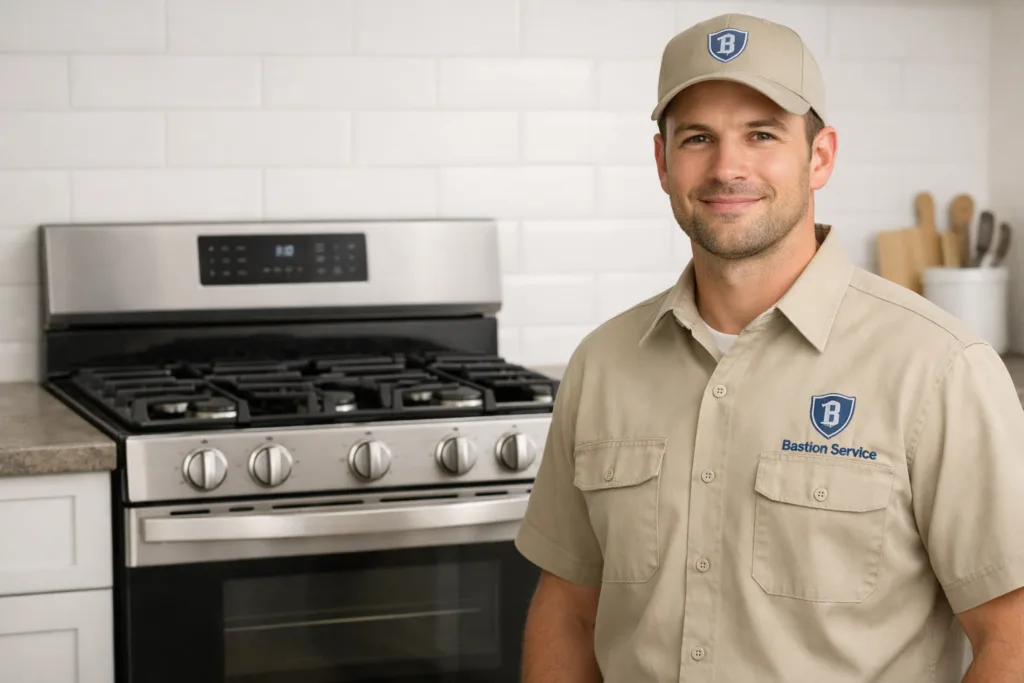
Cooking problems with a range often start small: a front burner that runs hotter than expected, an oven that suddenly needs extra time, or a steady clicking sound that does not match normal ignition. On a Whirlpool range, those symptoms can point to very different causes, so the most useful next step is to match the repair plan to the exact way the appliance is failing.
Common Whirlpool Range Problems in Manhattan Beach Homes
Most service calls fall into a few main categories: cooktop heating issues, oven temperature problems, ignition faults, and control-related failures. Paying attention to which function is affected helps narrow down whether the problem is tied to a burner component, a sensor, an igniter, a switch, a control board, or wiring inside the appliance.
Burners that will not heat, heat unevenly, or get too hot
On electric Whirlpool ranges, a surface element that stays cold may be caused by a failed element, a damaged burner receptacle, a bad infinite switch, or a wiring issue at the connection point. If a burner cycles erratically or overheats, the control side of the circuit often becomes part of the diagnosis rather than the element alone.
On gas models, repeated clicking, delayed ignition, or an uneven flame can come from buildup around the burner head, moisture near the igniter, a spark issue, or poor flame crossover. When one burner behaves differently from the others, that usually helps isolate the fault faster.
Oven not heating, taking too long, or baking unevenly
If the oven will not preheat, struggles to hold temperature, or browns food unevenly, the cause may be a weak bake element, a broil element problem, a failing temperature sensor, an igniter that no longer draws enough current on gas models, or an electronic control issue. Homeowners often notice the problem first through cooking results rather than a complete failure.
- Cookies that brown on one side but stay pale on the other
- Casseroles that need much longer than normal
- Food that looks done on top but remains undercooked in the center
- An oven that says it is preheated before it is actually ready
Ignition trouble and constant clicking
A Whirlpool gas range that clicks continuously may still light, fail to light, or light only after several tries. In some cases, the fix is as simple as addressing residue or moisture around the burner cap area. In others, the issue involves the switch harness, spark module, or ignition path. If clicking continues after the burner is lit, that is a sign the ignition system is not operating normally.
Display, keypad, and control failures
When the display goes blank, shows an error code, beeps unexpectedly, or stops responding to commands, the problem may involve the electronic control, touch panel, power supply, or a loose electrical connection. Intermittent control issues can be especially frustrating because the range may appear normal until it heats up or runs for a longer cycle.
Door, latch, and self-clean related issues
An oven door that does not close fully can let heat escape and change cooking performance. If the latch does not engage or release properly, certain functions may not start at all. Some Whirlpool ranges also develop faults after a self-clean cycle, when high heat stresses fuses, sensors, control components, or lock assemblies.
Symptom Patterns That Help Identify the Cause
Small details make range diagnosis much more accurate. The same basic complaint can come from different failures depending on when it happens, how often it happens, and whether the problem affects one function or several.
If the oven heats sometimes but not always
This often suggests a component that is weakening rather than completely failed. A gas igniter may glow but not pull enough current to open the gas valve reliably. An electric element may work until it expands under heat and loses continuity. A control relay may also fail intermittently.
If one burner is the only problem
That usually points toward a localized component failure, such as a burner head issue, spark problem, surface element failure, switch problem, or burner connection defect. When multiple burners act up at once, the repair path often shifts toward shared wiring, controls, or power supply issues.
If the range trips power or resets the clock
This can indicate an electrical problem that should not be ignored. Power interruptions, wiring damage, or control faults can affect both safety and reliability. If the range repeatedly loses power during use, it should be checked before continued operation.
Why Diagnosis Matters Before Replacing Parts
Range symptoms overlap more than many homeowners expect. An oven that will not heat may look like a bad element but actually be a control problem. A burner that clicks may seem like a dirty cap, but persistent ignition failure can come from the spark system. Replacing parts based on guesswork often leads to extra cost and the same original problem.
A symptom-based inspection helps determine whether the fault is isolated, whether additional wear is present, and whether the repair makes sense for the condition of the range overall. That is especially important with intermittent failures, since those often worsen over time and can lead to additional damage.
When to Stop Using the Range
Some problems mainly affect cooking results, while others call for immediate attention. It is smart to stop using the range and schedule service if you notice any of the following:
- A burner that overheats and does not regulate normally
- An oven that will not control temperature
- Repeated tripping of power during operation
- Controls that activate the wrong function or respond unpredictably
- Persistent clicking that does not stop as expected
If there is a strong or ongoing gas smell, stop using the appliance right away and follow gas safety procedures before arranging appliance repair. Safety comes first.
Repair or Replace a Whirlpool Range?
For many households in Manhattan Beach, the decision depends on the type of failure and the overall condition of the appliance. A single bad igniter, heating element, burner switch, sensor, or latch component is often worth repairing when the rest of the range is working well.
Replacement becomes more likely when the range has multiple major faults, repeated electronic control issues, significant wiring damage, or broad performance problems affecting both the oven and cooktop. Age alone is not the only factor. The better question is whether the current failure is isolated and repairable, or part of a larger pattern of decline.
What to Note Before Scheduling Service
Before service, it helps to write down exactly what the range is doing. Useful clues include:
- Whether the issue affects the cooktop, the oven, or both
- Whether the problem happens every time or only occasionally
- Whether an error code appears
- Whether the issue began suddenly or gradually worsened
- Whether only one burner or one oven function is affected
Details like delayed ignition, long preheat times, uneven flame, temperature swings, or a display that resets can make troubleshooting much more efficient.
Whirlpool Range Service Focused on the Actual Failure
For residential homeowners in Manhattan Beach, the goal is not just getting the range to turn back on. It is identifying why the symptom is happening, whether the fix is likely to hold, and whether the appliance is still a good repair candidate. That approach helps avoid unnecessary parts replacement and gives you a more useful repair decision based on the condition of the range in front of you.