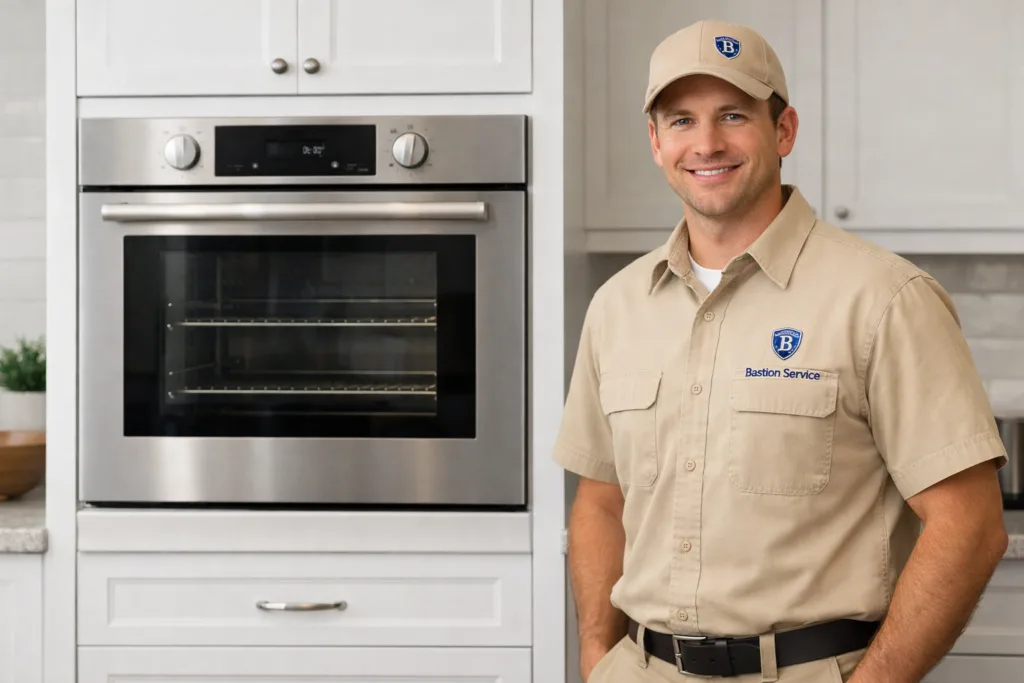
How Miele oven problems usually show up at home

Most oven failures start as a performance change rather than a complete shutdown. You may notice preheat taking longer than usual, baked dishes finishing unevenly, or temperature results that vary from one use to the next. In a Miele oven, those symptoms can come from several different points in the heating and control system, so the pattern matters.
For homeowners in Manhattan Beach, the most useful approach is to look at what the oven is doing consistently. Does it fail only on bake, only during broil, only after reaching temperature, or only when convection is selected? Those details help narrow the issue far faster than replacing parts based on a guess.
Common symptoms and what they can indicate
Oven not heating at all
If the display powers on but the cavity never gets hot, the problem may involve a failed bake element, broil element, igniter on gas configurations, temperature cutoff issue, wiring fault, or a control board problem. In some cases, the oven appears normal from the outside while a key heating component is not turning on.
If there is no heat in every cooking mode, the diagnosis often needs to include power supply checks as well as component testing. A partial electrical issue can sometimes leave lights and controls working while heating functions fail.
Slow preheat
Slow preheat often points to a weak heating element, an igniter that is aging and no longer drawing properly, a sensor reading inaccurately, or a control issue affecting how the oven cycles. This symptom can be easy to overlook at first because the oven still works, just not well.
At home, this usually shows up as longer dinner prep, delayed cooking times, and food that needs extra minutes beyond the recipe. If slow preheat is getting steadily worse, the problem is usually progressing.
Uneven baking or roasting
When cookies brown more on one side, casseroles stay cool in the center, or roasting results vary from rack to rack, the cause may be inaccurate temperature sensing, weak heat output, convection fan problems, or heat loss around the door seal. Uneven results are especially common when one component is only partially failing rather than completely dead.
Because many households keep using the oven this way, the issue can linger for a while before service is scheduled. By then, what seemed like a recipe problem is often a hardware problem with a clear cause.
Temperature swings
All ovens cycle to maintain heat, but large swings are different. If the oven overshoots, drops too low, or seems unable to hold a steady temperature, technicians typically look at the temperature sensor, control system, relays, and related wiring. Calibration concerns can also be part of the diagnosis, but true fluctuation often points to a part that is no longer reading or responding correctly.
Error codes or inconsistent operation
If the oven shuts off mid-cycle, restarts unpredictably, locks up, or displays recurring faults, the issue may be tied to sensors, communication faults, overheating protection, latch assemblies, or the electronic control itself. Intermittent problems are frustrating because they can disappear during one use and return during the next, but that behavior usually means a failing component is becoming less stable.
Door and latch problems
A door that does not close fully, a latch that sticks, or a door that will not unlock after a cycle can affect both safety and cooking performance. Heat escaping from a poor seal can lead to long preheats, uneven cooking, and excessive strain on other oven components. If the problem started after a self-clean cycle, heat-stressed parts are often part of the inspection.
What to notice before service
A few simple observations can make an oven visit more productive:
- Whether the problem happens in bake, broil, convection, or every mode
- If the oven eventually heats or never heats at all
- Whether the display shows an error code
- If the issue began suddenly or has been getting worse over time
- Whether the door closes tightly and the gasket looks intact
- If the oven shuts off, trips power, or resets during use
You do not need to disassemble anything or run repeated tests. A clear description of the symptom pattern is usually far more helpful than trying multiple home fixes.
Signs the oven should not keep being used
Some symptoms go beyond inconvenience. Stop using the oven if you notice sparking, burning electrical odor, repeated breaker trips, visible damage to elements, severe overheating, or a door that will not stay closed. If the oven is gas and you smell a strong or persistent gas odor, leave the area if needed and contact the gas utility or emergency service before arranging appliance repair.
Even when the issue seems less urgent, continued use can make the repair larger. An oven that overheats can stress controls and wiring. A weak element can place extra demand on the remaining heating system. Repeatedly turning the temperature up to compensate for poor performance may also hide the real fault while adding wear.
Repair or replace?
Many Miele oven problems are still worth repairing when the issue is limited to a sensor, igniter, heating element, latch component, fan-related part, or electronic control failure that has not caused wider damage. Replacement is more likely to make sense when the appliance has multiple major issues, severe structural wear, or repair costs that approach the value of a sound replacement option.
That decision is easier when it is based on the actual failed part and the overall condition of the oven. A diagnosis can show whether the problem is isolated and repairable or whether the appliance has reached a point where further investment is hard to justify.
What homeowners usually want from Miele oven service
Most households are not looking for a technical lecture. They want to know what failed, whether the oven is safe to use, and whether the recommended repair is practical. For a Miele oven in Manhattan Beach, good service means tracing the symptom back to the component that is actually causing it, rather than treating every heating complaint as the same problem.
That is especially important with premium cooking appliances, where temperature control, airflow, door sealing, and electronics all affect performance. The right next step is usually the one that restores reliable daily use without unnecessary part replacement.
When it makes sense to schedule service
It is time to schedule service when the oven no longer heats normally, preheat takes far too long, baking results are noticeably inconsistent, the unit shows recurring errors, or operation has become unpredictable. Those are all signs that the problem is no longer minor.
If your Miele oven has started behaving differently in your Manhattan Beach home, acting early often helps limit inconvenience and prevents a smaller fault from turning into a broader repair.