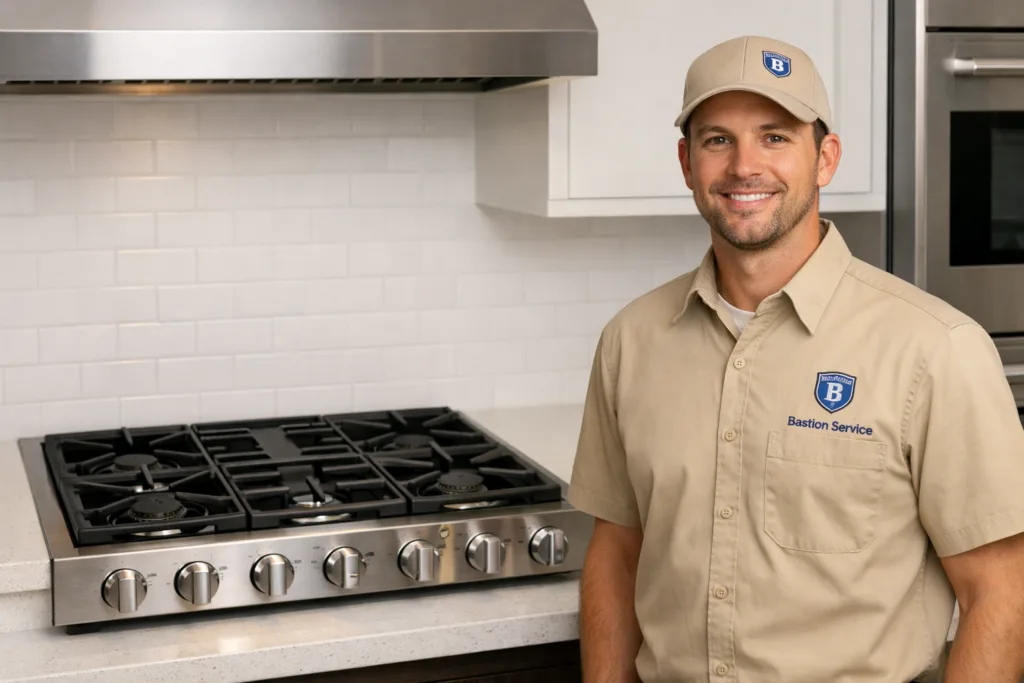
Common Monogram cooktop symptoms and what they usually point to

Cooktop problems often look simple from the surface, but the same symptom can come from several different components. On Monogram units, it helps to separate ignition issues, heating problems, power loss, and control faults before deciding whether repair is the right next step.
Burner clicks but does not ignite
On gas cooktops, repeated clicking without flame can be caused by a wet ignition area, food debris around the burner ports, a misaligned burner cap, a worn igniter, or a failing spark module. If one burner is affected, the problem is often isolated to that burner assembly. If multiple burners act the same way, the fault may involve shared ignition components or power to the ignition system.
If you notice a persistent gas odor, stop using the cooktop and do not continue testing it. That is a safety issue, not just a convenience problem.
Burner lights but flame is weak or uneven
A weak flame usually means the gas is not flowing or burning evenly. Burner port blockage, improper cap placement, buildup beneath the burner head, or valve-related wear can all change flame pattern and heat output. Some homeowners first notice this when pans heat slowly on one side or water takes much longer to boil than usual.
Electric element heats poorly or cycles oddly
On electric Monogram cooktops, a burner that takes too long to heat, shuts off unpredictably, or never reaches the expected temperature may have a failing element, sensor issue, switch problem, or control fault. Uneven heating is especially noticeable with sautéing, simmering, and any cooking that depends on steady temperature control.
Cooktop does not power on at all
If the unit appears completely dead, the issue may be external power, a tripped breaker, damaged wiring, a failed switch, or a control board problem. The key is determining whether the cooktop is receiving proper power before focusing on internal parts.
Controls respond inconsistently
When settings do not change properly, a knob no longer regulates heat, or only certain burners respond, the problem may involve the user interface, infinite switch, internal wiring, or electronic control system. These issues can feel intermittent at first, which is one reason they are often misread as minor until they become more disruptive.
Signs the problem is getting worse
Some cooktop issues stay stable for a while, but many worsen with regular use. It is smart to stop and reassess when you notice any of the following:
- Ignition takes multiple tries more often than it used to
- Clicking continues after the burner is lit
- Flame pattern looks uneven or unusually low
- An electric burner overheats or does not cycle down
- Controls only work part of the time
- The same burner repeatedly fails after cleaning and reassembly
These patterns matter because they can signal wear in switches, ignition components, wiring, or control parts. Continued use may increase strain on connected components and lead to a larger repair.
What homeowners can safely check before service
There are a few basic checks that can help rule out simple causes without getting into disassembly or electrical work.
- Make sure burner caps are seated correctly
- Check for visible food debris blocking burner ports
- Allow recently cleaned burner areas to dry fully before testing
- Confirm the cooktop has power and the breaker has not tripped
- Notice whether the issue affects one burner or several
If those steps do not change the symptom, the next step is usually direct diagnosis. Internal ignition parts, wiring, switches, and controls need to be tested rather than guessed at.
When repair is usually worth considering
For many Westwood households, repair makes sense when the cooktop is in otherwise good condition and the failure appears limited to a serviceable part. Common examples include an igniter, burner switch, heating element, spark module, or control-related component.
Repair can also make sense when the problem is localized to one burner or one function instead of showing signs of widespread wear across the whole appliance. A premium cooktop with a single identifiable failure is often a better repair candidate than a unit with multiple unrelated symptoms developing at the same time.
When replacement may be the better choice
Replacement becomes more likely when the cooktop has several failing systems, visible surface damage that affects use, major age-related wear, or a repair cost that approaches the value of the appliance. Cracked glass, recurring control failures, and hard-to-source parts can also shift the decision.
The most useful way to make that call is by looking at the actual failed part, the condition of the cooktop overall, and whether one repair is likely to restore normal everyday cooking instead of buying a short-term fix.
Why symptom patterns matter on Monogram cooktops
Monogram cooktops are built with model-specific components and controls, so diagnosis should follow the symptom pattern rather than a generic part-swapping approach. A burner that clicks constantly is not the same problem as a burner that never clicks at all. A dead cooktop is not diagnosed the same way as a cooktop that powers on but mismanages heat.
That is why a practical repair plan starts with what the unit is doing consistently, what changed recently, and whether the problem is isolated or shared across multiple burners.
What to note before scheduling service in Westwood
If you are arranging Monogram cooktop repair in Westwood, it helps to have a few details ready. These details can shorten diagnosis time and make the service visit more productive:
- Whether the cooktop is gas or electric
- Which burner or burners are affected
- Whether the problem is constant or intermittent
- If the issue began after cleaning, a power interruption, or a spill
- Any unusual sounds, smells, sparking, or overheating
For homeowners in Westwood, this kind of symptom-based information makes it easier to understand whether the problem points to ignition, heat regulation, electrical supply, or controls.
How a service visit should help
A useful service visit should answer more than whether the cooktop is malfunctioning. It should identify the likely failed component, explain whether the issue is isolated or part of broader wear, and clarify whether repair is practical for the unit’s condition. That gives you a realistic path forward instead of uncertainty around repeated symptoms.
When a cooktop is used daily, accurate diagnosis matters because it helps restore reliable cooking performance without unnecessary delays or replacement of the wrong parts.