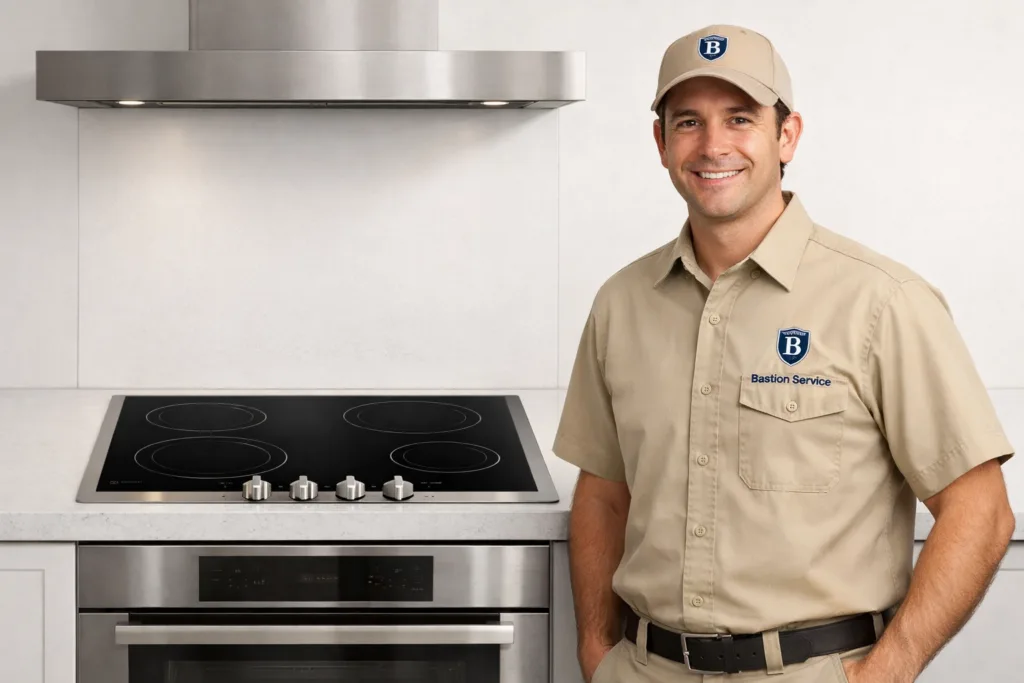
Common Miele cooktop problems and what they often indicate

Miele cooktops tend to show problems in recognizable patterns. Paying attention to exactly how the issue appears can help narrow down whether the fault is related to ignition, heating, controls, sensors, or the cooktop surface itself.
Burner will not ignite or takes several tries
On gas cooktops, a burner that clicks but does not light may have debris around the burner cap, moisture affecting the igniter, a misaligned cap, or a problem in the spark ignition system. If the burner lights only after repeated attempts, the issue may be progressing rather than staying minor. Delayed ignition is worth addressing promptly because normal operation depends on consistent spark and gas flow.
Burner is on, but heat is weak or uneven
If cooking suddenly takes longer or one burner no longer heats as expected, the cause can vary by model type. Electric and induction units may have trouble with an element, sensor, relay, or user interface control. On gas models, flame irregularity may come from burner blockage or an issue affecting proper fuel delivery. Uneven performance is especially noticeable when water boils slowly, pans heat in patches, or settings no longer match the actual output.
Cooktop clicks constantly
Continuous clicking often points to moisture, residue around the ignition area, component wear, or a switch issue. Sometimes the clicking starts after cleaning or spillover. If it does not stop after the surface has fully dried and the burner parts are correctly seated, the problem usually needs closer inspection.
Controls do not respond correctly
Touch controls or knobs that behave inconsistently can make the appliance hard to use safely. You might notice delayed response, settings that change unexpectedly, or a burner that does not react to input at all. On some models, the fault may be in the control interface. On others, the underlying issue may involve the main control system that interprets those inputs.
Glass is cracked or the surface is visibly damaged
A cracked glass cooktop should be taken seriously. Even if some functions still work, surface damage can affect safe operation and may allow heat or stress to spread in ways that make the condition worse. Visible impact damage, chipping, or spreading cracks usually changes the repair decision right away.
Symptom-based checks homeowners can do first
Before assuming a major failure, there are a few basic observations that can be useful. These are not substitutes for repair, but they can help separate a simple use condition from a developing appliance problem.
- Make sure burner caps and grates are seated correctly after cleaning.
- Check whether the issue affects one burner or multiple burners.
- Note whether the problem started after a spill, heavy cleaning, or a power interruption.
- On induction models, confirm the cookware is compatible and centered properly.
- Look for recurring patterns, such as failure only at high heat or only after the cooktop has been running for a while.
If the same symptom returns repeatedly, normal reset steps and routine cleaning are usually not enough to solve it for long.
Why the exact symptom matters on a Miele cooktop
Two cooktops can appear to have the same problem while needing very different repairs. A burner that never heats is different from one that overheats. A burner that clicks constantly is different from one that will not spark at all. A control panel that is fully dead suggests a different path than a panel that responds only sometimes.
That is why good repair work starts by matching the complaint to the actual failure pattern. On Miele cooking appliances, model-specific electronics, sensors, and control systems can make symptom details especially important when deciding what repair is practical.
When to stop using the cooktop
Some issues are mostly inconvenient. Others can create avoidable risk or lead to added damage if the appliance stays in use. It is usually best to stop using the cooktop and arrange service if you notice any of the following:
- Repeated delayed ignition
- Persistent clicking that does not stop
- Burners that overheat or do not regulate normally
- Loss of power during cooking
- Error displays that keep returning
- A cracked glass surface
- Controls that activate unpredictably or fail to respond
Continuing to work around one failing burner or unreliable controls can turn an isolated part issue into a broader repair.
Repair decisions for Westwood homeowners
In many Westwood homes, a Miele cooktop is worth repairing when the appliance is otherwise in solid condition and the problem is limited to a specific functional area such as ignition, a burner circuit, a sensor, or the controls. Repair becomes less appealing when there is major surface damage, several significant faults at once, or signs that the cooktop’s overall condition has declined beyond a sensible fix.
The most useful question is usually not whether a repair is technically possible, but whether it makes sense for the age, condition, and expected reliability of the appliance after the work is completed.
What to have ready when scheduling service
If you are arranging Miele Cooktop Repair in Westwood, a few details can make the process more efficient:
- The full model number, if available
- Whether the cooktop is gas, electric, or induction
- Which burner or zone is affected
- Whether the issue is constant or intermittent
- Any fault code, unusual sound, smell, or visible damage
- Whether the problem began after cleaning, a spill, or a power event
Those details help connect the symptom to the likely repair path and make it easier to decide whether service is the right next step.
Practical service for Miele cooktops in Westwood
When a cooktop becomes unreliable, most homeowners want a straightforward answer about what is failing, whether it is still safe to use, and what repair is likely to restore normal cooking. Bastion Service helps households in Westwood evaluate Miele cooktop issues based on the actual symptom pattern so the next step is informed, efficient, and suited to the appliance in the home.