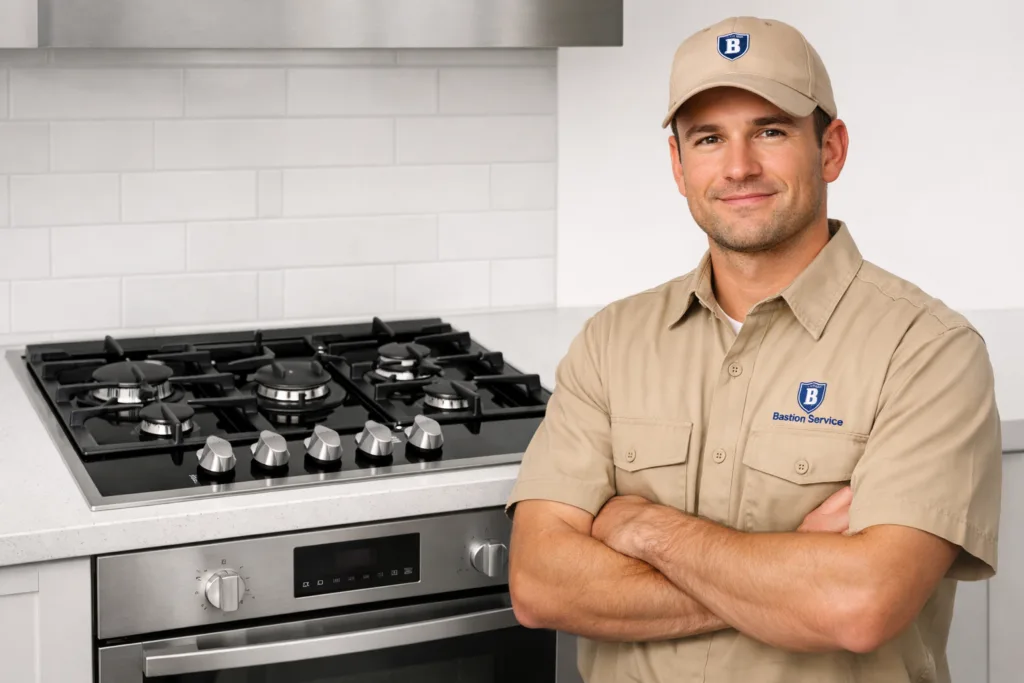
Cooktop problems rarely stay minor for long. A burner that only works sometimes, a zone that runs hotter than the setting, or nonstop clicking during ignition can quickly turn routine meals into a safety and convenience issue. With Blomberg units, the most useful way to approach the problem is to match the symptom to the likely failed part or system instead of assuming every heating issue means the same repair.
Start with what the cooktop is actually doing
The pattern matters. If one burner is affected while the others work normally, the problem is often isolated to that burner assembly, switch, igniter, or element. If several burners show similar behavior, the issue may involve shared wiring, power supply, controls, or a broader internal fault. Noticing whether the problem is constant, intermittent, or triggered by heat or moisture can also help narrow down the repair path.
Homeowners in Westwood often notice problems during ordinary use: breakfast burners that stop responding, a simmer setting that no longer stays low, or an ignition system that keeps firing after the flame is lit. These details are important because they point to different failure points and affect whether repair is likely to be straightforward or more extensive.
Signs a gas cooktop may need service
Gas Blomberg cooktops commonly show trouble through ignition and flame behavior. A burner that clicks but does not light may have an igniter issue, misaligned burner cap, moisture in the burner area, or a switch problem. A burner that lights only after several tries can indicate weakening ignition performance or buildup interfering with proper gas flow.
- Constant clicking even after ignition
- Slow ignition or delayed lighting
- Weak, uneven, or unstable flame
- A burner that lights and then goes out
- One burner failing while others work normally
Repeated clicking is especially common after spills or cleaning, but if it continues after the area is fully dry and correctly assembled, a deeper electrical or switch-related issue may be involved. If the flame looks irregular or fails to spread evenly around the burner, the problem may not be limited to the igniter alone.
Signs an electric cooktop may need service
Electric Blomberg cooktops usually reveal faults through poor heat control. A radiant element may stay cold, heat too slowly, or cycle on and off in a way that no longer matches the selected setting. In other cases, the burner still heats, but it overshoots the temperature and makes basic cooking difficult.
- Burner not heating at all
- Heating zone stuck too high or too low
- Uneven heat across the cooking area
- Slow warm-up compared with other elements
- Control not responding consistently
These symptoms can point to a failing element, switch, limiter, sensor, or internal connection. Because several parts can produce similar behavior, replacing parts by guesswork often leads to extra cost without solving the real issue.
What different symptoms often mean
A cooktop can fail in ways that look similar from the surface, but the underlying causes are not always the same. Understanding the symptom pattern helps set realistic expectations for repair.
Burner will not ignite
On gas models, this may be caused by a worn igniter, poor burner cap alignment, residue blocking proper ignition, a failed spark switch, or a wiring fault. If the burner clicks but never lights, the ignition side may be working while the flame is not establishing correctly. If there is no clicking at all, the fault may be in the switch circuit or spark module.
Burner keeps clicking
Persistent clicking can happen when moisture gets into the ignition area, but it can also signal a stuck switch or a failing spark system. If the clicking starts after cleaning and then stops once everything is fully dry, the issue may be temporary. If it returns repeatedly or continues during normal use, service is usually needed.
Burner heats unevenly
Uneven heat on electric cooktops can come from a weakening element or control problem. On gas cooktops, uneven heating may follow an unstable flame pattern or blocked burner ports. If pans no longer cook evenly on a burner that used to perform normally, that change is worth investigating before it affects more components.
Cooktop has power but one zone does not work
This usually suggests an isolated failure rather than a full power loss. A single non-working burner often points to an element, igniter, burner switch, or local wiring issue. That is often more favorable for repair than a cooktop with multiple dead zones and erratic controls.
Controls behave unpredictably
If settings do not match the actual heat output, if touch controls respond inconsistently, or if the unit shuts off unexpectedly, the problem may involve control components, wiring, or heat-related internal damage. Intermittent control faults tend to worsen over time rather than resolve on their own.
Cracked glass and surface damage
A cracked glass cooktop should be treated seriously, even if the burners still appear to work. Surface damage can affect both safety and performance, especially if heat spreads unevenly or moisture reaches internal components. Continued use may increase the risk of electrical issues or further cracking. Whether repair is practical depends on the extent of the damage, the condition of the rest of the unit, and the availability of the correct replacement surface.
When to stop using the cooktop
Some problems are inconvenient. Others are reasons to stop using the appliance until it is checked. Ongoing use can worsen the repair and create avoidable risk.
- Burner overheating or not regulating temperature
- Visible sparking beyond normal ignition
- Breaker tripping during operation
- Cracked glass on an electric cooktop
- Burner flame that is unstable or repeatedly goes out
If there is a strong or persistent gas smell, stop using the cooktop immediately and address the gas safety issue first through the proper emergency channel before arranging appliance service.
Repair versus replacement
Many Blomberg cooktop issues are worth repairing, especially when the fault is limited to a burner component, igniter, switch, element, or other serviceable part and the rest of the appliance is in good shape. Repair becomes less attractive when there are multiple failing systems, extensive surface damage, or a major control issue combined with overall wear.
The age and condition of the appliance matter, but the exact failure matters more. A cooktop that seems to have a major problem may only need one targeted repair. On the other hand, a minor symptom that keeps returning can point to a larger electrical or control problem underneath. That is why the right decision depends on testing the specific fault rather than judging by appearance alone.
What a useful service visit should answer
Most homeowners in Westwood want straightforward answers: what failed, whether the cooktop is safe to use, and whether the repair makes sense. A good diagnosis should determine whether the issue is isolated or system-wide, confirm which part has actually failed, and explain whether repair is likely to restore normal daily cooking without unnecessary work.
For Blomberg Cooktop Repair in Westwood, the goal is not just getting a burner to turn on again. It is restoring stable, predictable cooking performance so the appliance works the way it should across everyday use.