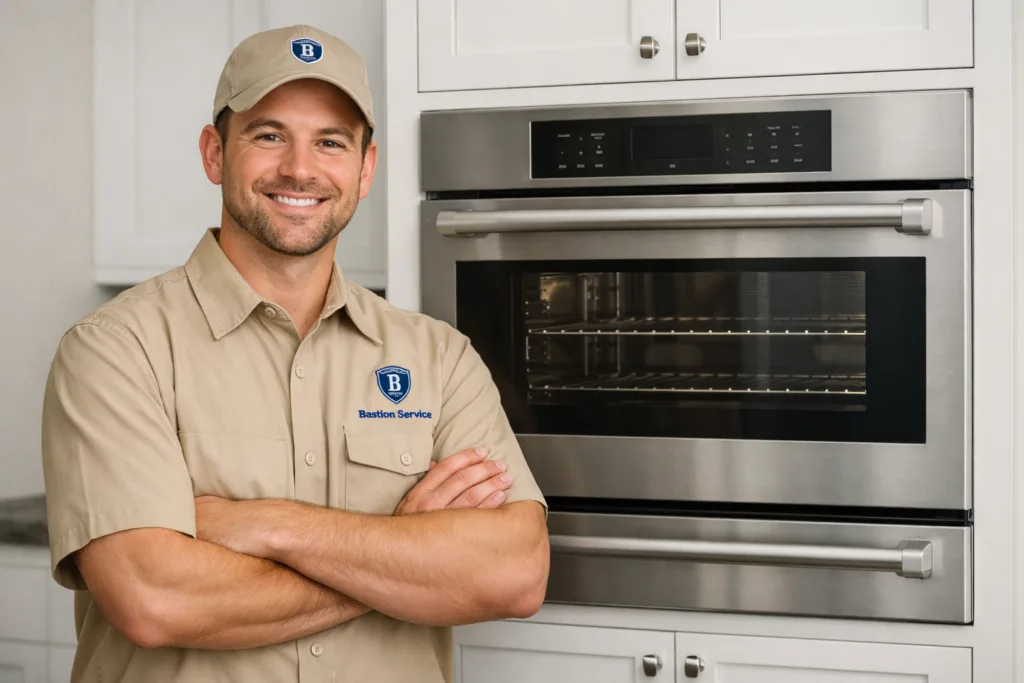
Oven problems rarely stay small for long. What begins as longer preheat times or slightly uneven baking can turn into scorched meals, undercooked food, repeated error messages, or an oven that stops working altogether. With Monogram models, the most useful starting point is identifying the specific failure behind the symptom rather than assuming a single part is to blame.
How Monogram oven problems usually show up at home
Many homeowners first notice a performance change before a complete breakdown. The oven may still turn on, but results become less predictable. Cookies brown unevenly, casseroles need extra time, or the oven temperature seems different from what the display says. Those symptoms often point to heating, sensing, airflow, or control issues that should be checked before they lead to larger repairs.
Because Monogram ovens can include advanced electronic controls, convection systems, and door-lock features, different failures can create similar symptoms. A proper inspection helps separate a sensor issue from a control issue, a weak heating component from a circulation problem, or a latch fault from a broader electrical concern.
Common Monogram oven symptoms and what they may mean
Oven is not heating
If the oven powers on but does not produce heat, the cause may differ depending on whether the unit is electric or gas. Electric models may have a failed bake element, broil element, sensor, relay, or control problem. Gas models may have an igniter issue, gas flow problem, or ignition-related fault. In some cases, the oven appears to start normally but never builds enough heat to cook properly.
Slow preheat
A slow preheat cycle is one of the most common complaints. It can happen when a heating element is weakening, an igniter is no longer drawing the right current, the temperature sensor is reading inaccurately, or the control is not cycling heat correctly. Slow preheat is easy to ignore at first, but it often signals a component that is wearing down.
Uneven baking or roasting
When food cooks differently from front to back or top to bottom, the issue may involve poor heat distribution, convection fan trouble, a door that is not sealing well, or inconsistent element performance. If one rack browns much faster than another, the oven may not be circulating heat the way it should.
Temperature swings or overheating
An oven that runs hotter than the set temperature can burn food, shorten cooking times unexpectedly, and make everyday use frustrating. Common causes include a bad temperature sensor, calibration drift, relay problems, or control board faults. In some situations, the oven may alternate between running too hot and not hot enough, which points to unstable temperature regulation rather than a simple calibration adjustment.
Display, keypad, or control issues
If the display is blank, flickering, beeping, or showing repeated fault codes, the problem may involve the user interface, wiring connections, control board, or a failed component elsewhere in the oven that the control is detecting. A fault code can be helpful, but it does not always confirm a single failed part without further testing.
Door not closing, locking, or unlocking properly
A door that will not close tightly can affect heat retention and cooking results. If the door lock fails during or after a self-clean cycle, the oven may become unusable until the latch, switch, motor, or control issue is corrected. Door alignment and hinge wear can also contribute to performance problems that seem like temperature issues at first.
Symptoms that should not be ignored
Some signs call for stopping use until the oven is checked. These include:
- Repeated tripping of a breaker
- Burning smells that continue beyond normal first-use or spill-related odors
- Sparking or visible arcing
- Intermittent loss of power during cooking
- A door that will not stay shut
- Error codes that keep returning after reset attempts
For gas models, a strong or persistent gas smell should always be treated as a safety concern first. Stop using the appliance and follow appropriate gas safety steps before scheduling appliance service.
Why diagnosis matters with premium ovens
Premium ovens often have layered systems that work together: heating components, sensors, convection elements, cooling fans, door switches, lock assemblies, and electronic controls. When one part begins to fail, the symptom may appear somewhere else. For example, a temperature complaint may actually start with a door seal problem, while a preheat complaint may trace back to an ignition issue or weak element output.
That is why part-swapping based on guesswork can waste time and money. A practical repair plan starts by confirming which component has failed, whether related parts have been affected, and whether the oven is likely to perform normally after the repair is completed.
Repair or replace?
In many cases, repair makes sense when the issue is limited to a sensor, igniter, heating element, fan motor, latch assembly, switch, or a specific control-related component. If the oven is otherwise in good condition and the cavity, wiring, and major systems are sound, restoring normal operation is often the better value.
Replacement becomes more worth considering when there are multiple major failures, severe interior damage, recurring electronic faults, or repair cost approaches the value of keeping the appliance in service. Age alone is not always the deciding factor. Condition, parts involved, and overall reliability after repair matter more than a simple year count.
What Westwood homeowners can do before service
Before scheduling repair, it helps to note exactly how the oven is behaving. Useful details include whether the problem happens during preheat or mid-cycle, whether broil works when bake does not, whether convection changes the symptom, and whether the issue began suddenly or gradually. If an error code appears, writing it down can also help narrow the problem.
It is also worth checking for simple issues such as a tripped breaker, clock reset after a power interruption, or cookware placement that blocks airflow. These quick observations do not replace service, but they can make the repair path more direct.
When service is the right next step
If your Monogram oven in Westwood is not heating properly, takes too long to preheat, cooks unevenly, runs too hot, or has recurring control problems, service is usually the right next step. Continued use can lead to more wasted food, more strain on components, and a less reliable appliance overall.
For households that rely on the oven regularly, early attention to changing performance often prevents a smaller issue from becoming a larger one. The goal is not just getting the oven to turn back on, but restoring consistent, predictable cooking results.