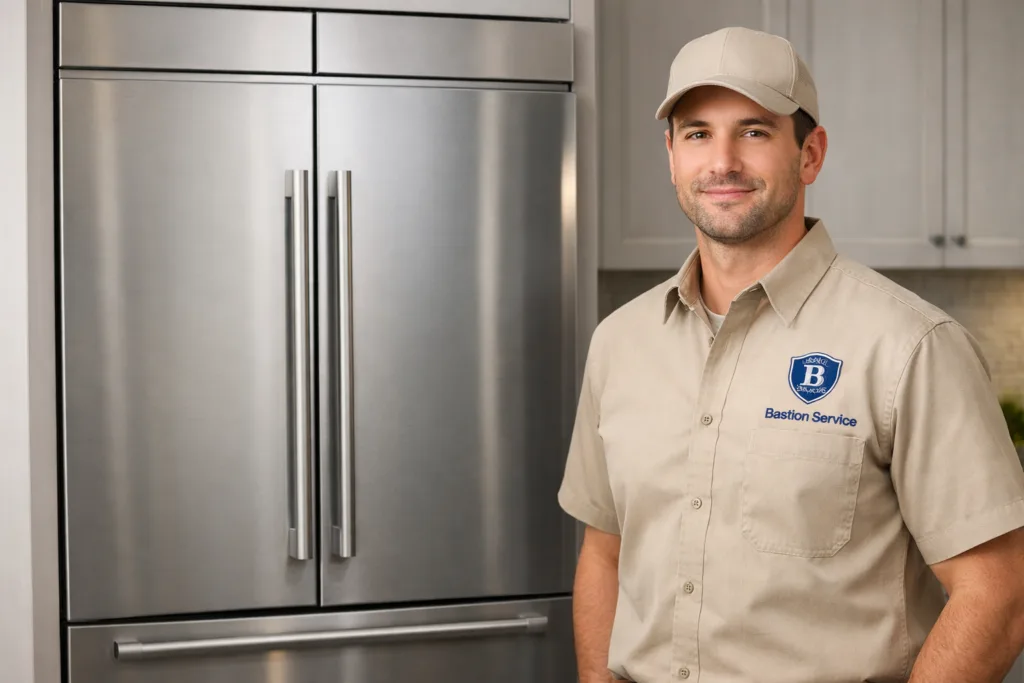
A Monogram refrigerator that starts leaking, warming up, frosting over, or making unfamiliar sounds can throw off the entire kitchen routine. Because similar symptoms can come from very different failures, the most useful next step is to match the symptom pattern to the system most likely causing it.
How Monogram refrigerator problems are usually diagnosed
Monogram refrigerators often rely on electronic controls, temperature sensors, fan-driven airflow, defrost components, and model-specific features that need to work together. When one part of that system slips out of range, the result may look simple from the outside but still require careful testing.
A solid diagnostic process usually starts by checking actual temperature performance, listening to how the unit cycles, inspecting airflow through the fresh food and freezer sections, and looking for visible frost, moisture, or drain issues. From there, the problem can be narrowed to areas such as:
- Evaporator or condenser fan problems
- Defrost system failure
- Thermistor or sensor issues
- Door gasket or air leak problems
- Control board or electrical faults
- Water valve, line, or ice maker issues
- Compressor or sealed system concerns
Common Monogram refrigerator symptoms and what they may mean
Fresh food section is too warm
If the refrigerator compartment is not staying cold enough, the cause may be restricted airflow, a weak evaporator fan, a faulty sensor, or frost buildup behind the rear panel. In some cases, the freezer may still seem acceptable while the refrigerator side struggles, which often points to an airflow or damper-related issue rather than a complete loss of cooling.
If both sections are warming, the problem may be more serious and could involve the compressor circuit, condenser airflow, or the sealed system.
Freezer is cold but the refrigerator section is warm
This is one of the more common symptom patterns in built-in and premium refrigeration. It often means the appliance is still generating cold air, but that air is not being moved or distributed correctly into the fresh food compartment.
Possible causes include:
- Evaporator fan not moving air properly
- Frost blocking the evaporator cover or air passages
- Damper problems between compartments
- Sensor or control issues affecting airflow timing
Water leaking onto shelves or the floor
Water leaks may come from a blocked defrost drain, a loose or damaged water connection, an ice maker fill issue, or condensation created by a sealing problem at the door. If water is reaching hardwood, tile edges, or cabinet bases, prompt service is important to reduce the chance of secondary damage around the refrigerator.
Ice maker not producing ice
Low or inconsistent ice production can be caused by water supply restrictions, fill valve problems, freezer temperature issues, sensor faults, or a failing ice maker assembly. If the refrigerator is also showing cooling swings, the ice complaint may be a result of a broader refrigeration problem rather than a standalone ice maker failure.
Frost buildup inside the unit
Heavy frost often signals a defrost failure, warm air entering through a poor door seal, or moisture collecting because the refrigerator is not managing airflow correctly. Frost behind panels can restrict circulation and eventually lead to poor cooling in one or both compartments.
If food in the fresh food section is freezing while other items are too warm, that combination can point to an airflow imbalance, sensor issue, or control malfunction.
Clicking, buzzing, humming, or rattling noises
Not every noise means a repair is needed, but changes in sound are worth paying attention to. Fan blades can strike ice, compressors can struggle to start, and drain or defrost activity can create noises that seem unusual to the homeowner.
The key question is whether the sound is new, getting louder, or appearing alongside cooling problems. Noise paired with weak cooling, temperature swings, or long run times deserves faster attention.
Signs the refrigerator may need service soon
Some issues allow a little time for scheduling, while others should be addressed quickly. A Monogram refrigerator in Westwood usually needs prompt attention when you notice:
- Food spoiling earlier than expected
- Interior temperatures rising or drifting
- Constant running without reaching set temperature
- Repeated beeping, alarms, or error behavior
- Water pooling under drawers or on the floor
- Heavy frost or ice buildup where it should not be
- Repeated clicking as the unit tries to start
Multiple symptoms at once often mean the main failure is affecting more than one system, so it is better not to rely on resets or repeated temperature changes as a long-term fix.
When continued use can cause more damage
Some refrigerator problems get worse the longer the unit keeps trying to run through them. A failing fan can reduce airflow and increase strain on the cooling system. A blocked drain can keep adding water to the cabinet or floor area. A refrigerator that runs almost nonstop may place extra wear on components that are still functioning.
If cooling is clearly dropping, avoid frequent door opening to check temperatures. Every door opening adds heat and moisture, which can make frost, condensation, and recovery time worse.
Repair or replace: what usually makes sense
Whether repair is worthwhile depends on the exact failure, the age of the refrigerator, the condition of major components, and how reliably the unit has been performing before this issue appeared.
Repair is often reasonable when the problem is tied to parts such as:
- Fan motors
- Sensors or thermistors
- Drain restrictions
- Water valves or tubing
- Ice maker components
- Certain electronic control parts
Replacement becomes a more serious consideration when the refrigerator has major sealed system trouble, repeated high-cost failures, or signs of broader wear that make future reliability uncertain. For many households in Westwood, the right choice depends less on the symptom itself and more on what testing shows behind it.
What homeowners should expect from a useful service visit
A good service visit should do more than confirm that something is wrong. It should identify the most likely failure, separate primary symptoms from secondary ones, and explain the repair path in plain terms. That gives you a better basis for deciding whether to proceed with repair now, monitor performance, or rethink the appliance based on its overall condition.
With Monogram refrigeration, that step matters because a warm compartment, frost problem, leak, or noisy operation can all overlap. The best outcome is not a guess at the part, but a clear explanation of why the symptom is happening and what needs to be corrected to restore normal cooling.