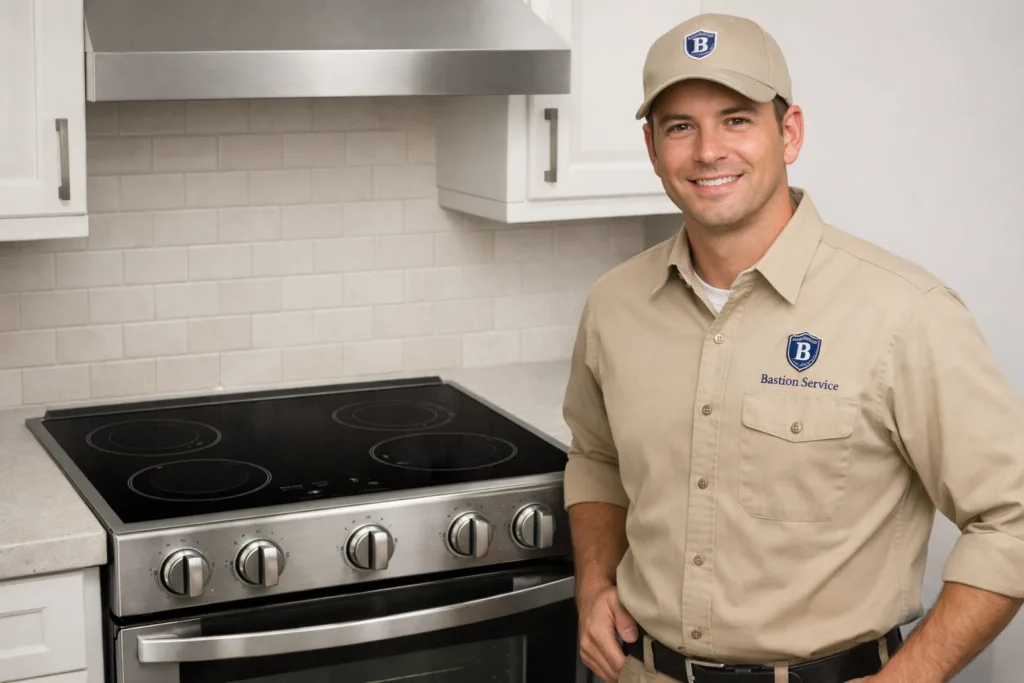
Cooktop failures tend to interrupt everyday meals in a hurry, especially when the problem is inconsistent. One burner may work in the morning and fail at dinner, or the unit may click, spark, or heat far differently than the setting suggests. With LG models, the smartest next step is to match the repair approach to the exact symptom instead of assuming every burner issue comes from the same part.
Start with what the cooktop is actually doing
LG cooktops can fail in several different ways, and similar symptoms often have different causes. A burner that does not heat on an electric model may involve the element, switch, receptacle, wiring, or power supply. A gas burner that will not ignite could point to clogged ports, a wet igniter, burner cap misalignment, or a fault in the spark system.
That is why symptom-based troubleshooting matters. It helps separate a minor, isolated fault from a larger control or wiring problem and gives homeowners in Westwood a better sense of whether repair is likely to be straightforward or more involved.
Common LG cooktop problems and what they may mean
Burner not heating on an electric cooktop
If a radiant or coil-style burner stays cold, the problem often comes down to a failed surface element, a worn switch, a damaged terminal connection, or internal wiring trouble. In some cases, the burner may heat only partway or cycle incorrectly, which can make it look like a cookware issue when the actual cause is electrical.
If only one burner is affected, the fault is often localized. If several burners behave oddly, the diagnosis may need to include shared controls, incoming power, or broader component wear.
Gas burner will not ignite
On LG gas cooktops, ignition trouble can show up as no spark, delayed ignition, repeated clicking, or a burner that lights only with a match. Common causes include dirty burner ports, moisture around the igniter, a misseated burner cap, or a failing spark module.
When the burner clicks but does not light, it is important to determine whether the issue is fuel flow, spark delivery, or burner alignment. Those are very different repair paths even though the symptom can feel the same during everyday use.
Burner heats unevenly or runs at the wrong level
Uneven heat can make simple cooking frustrating. On electric units, a burner that runs too hot or not hot enough may have a switch or control problem. On gas models, a weak or uneven flame can be caused by partial blockage, cap alignment issues, or wear affecting flame distribution.
If the selected setting does not match actual heat output, the cooktop may still turn on, but results in the kitchen become unreliable. That matters when simmering, boiling, or using larger pans that depend on stable heat.
Clicking that does not stop
Constant clicking is one of the most common complaints on gas cooktops. Sometimes it starts after cleaning, spillover, or steam exposure and clears once the area dries completely. If the clicking keeps returning, the cooktop may have an igniter issue, wiring problem, stuck switch, or failing spark module.
Persistent ignition clicking is not just annoying. It can also put extra wear on related components, so it is worth having checked before routine cooking continues.
Touch controls or knobs not responding correctly
Control problems can appear as delayed response, settings changing unexpectedly, burners failing to activate, or heat levels not matching the selected input. Depending on the model, that may involve a switch failure, interface problem, damaged wiring, or an issue on the control board.
Intermittent control behavior can be especially misleading because the cooktop may seem fine for short periods and then act up again under normal cooking use.
Cracked glass or visible surface damage
On glass cooktops, cracks and impact damage should be taken seriously. Even if the burner still works, the surface may no longer be safe or structurally sound. A crack can also affect how heat is transferred and may allow damage to spread with continued use.
Loose burner parts, scorched areas, or signs of heat damage around controls are also worth evaluating promptly, since physical wear can affect both performance and repair value.
Signs you should stop using the cooktop for now
Some issues can wait briefly for a scheduled appointment, but others justify stopping use until the unit is inspected. It is usually best to pause use if you notice:
- a burner that will not turn off
- overheating beyond the selected setting
- repeated breaker trips
- constant ignition clicking that does not clear
- sparking where it should not occur
- visible cracks, scorching, or melted insulation
- a persistent gas odor
These symptoms can indicate a condition that may worsen with continued operation. On gas models, any ongoing gas smell should be treated as a safety concern first rather than a normal repair inconvenience.
What makes LG cooktop diagnosis different from guesswork
Cooktops are easy to misdiagnose because the visible symptom is often only the end result. A dead burner may not mean the burner itself has failed. Replacing one obvious part without testing the related circuit, switch, igniter, or control can lead to repeat problems and unnecessary cost.
A more useful service approach checks how the reported symptom appears in real operation, whether the failure is isolated to one cooking zone, and whether wear in one area may be affecting other components. That is especially helpful when the problem only happens sometimes, such as a burner that fails after warming up or controls that become erratic during longer cooking sessions.
Repair versus replacement for an LG cooktop
Many LG cooktop problems are worth repairing when the issue is limited to a serviceable part such as an igniter, switch, element, or related control component. If the appliance is otherwise in good shape and the fault is contained, repair is often the better value.
Replacement becomes more likely when there is major glass damage, extensive wiring damage, multiple failing systems, or a cost picture that no longer makes sense for the condition of the unit. In those cases, the real question is not simply whether the cooktop can be repaired, but whether the repair is a sensible long-term investment.
What homeowners in Westwood can expect from a service visit
A focused visit for cooktop service usually starts with confirming the reported symptom, checking burner and control behavior, and looking for signs of wear that may affect the repair path. For intermittent issues, the goal is to narrow down what triggers the failure rather than replacing parts based on assumption alone.
For households in Westwood, that means getting a clearer answer on whether the problem is isolated, whether it is safe to keep using the appliance, and whether repair is likely to restore dependable day-to-day cooking performance.
Practical next steps when your cooktop starts acting up
If your LG cooktop is showing ignition problems, burner performance issues, control trouble, or physical damage, it helps to note exactly what happens and whether the issue affects one burner or several. Details like clicking frequency, inconsistent heat levels, recent spillovers, or breaker trips can make the diagnosis more accurate.
When the symptoms are mild but recurring, early service can prevent a smaller fault from becoming a broader one. When the symptoms involve overheating, cracking, repeated sparking, or gas odor, the safer move is to stop using the cooktop until it is evaluated.