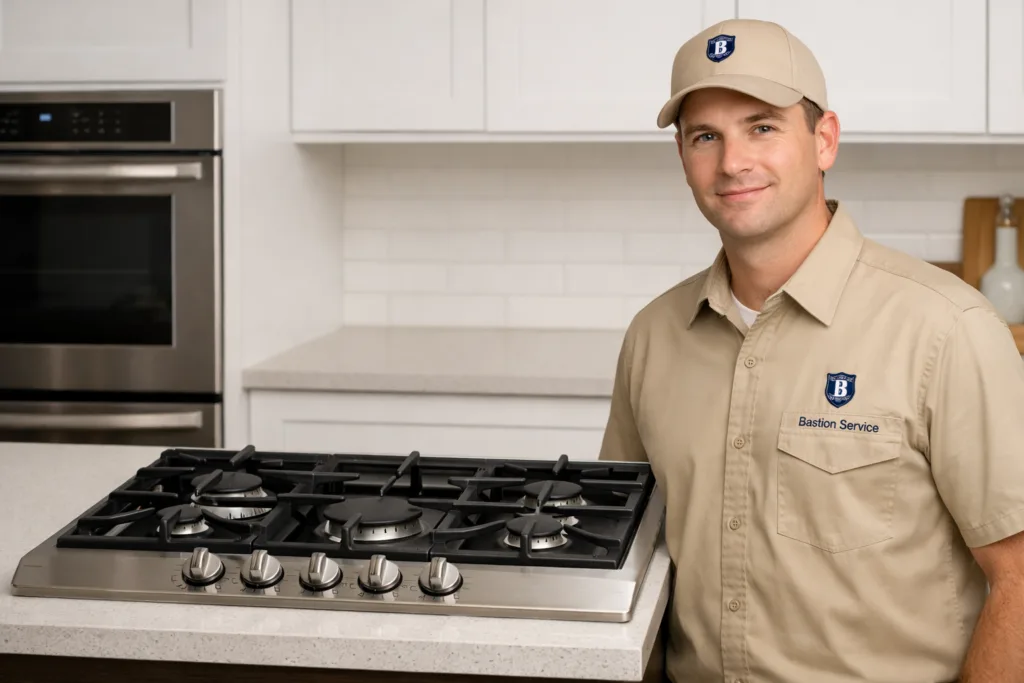
How Bosch cooktop problems usually show up at home

Cooktop faults rarely begin as a complete shutdown. More often, homeowners notice small changes first: a burner that takes longer to light, an induction zone that stops recognizing cookware, a control that feels less responsive, or heat that seems uneven from one meal to the next. Those early symptoms matter because they often point to a specific part or system before the problem spreads.
With Bosch cooktops, the exact symptom pattern helps narrow the issue quickly. A single burner problem is different from a whole-surface power or control failure, and a gas ignition issue follows a different repair path than a touch-control or induction fault. Looking closely at what the unit does, when it happens, and whether the problem is isolated or recurring usually makes the next step clearer.
Common Bosch cooktop symptoms and what they may mean
Burner clicks but does not light
On gas models, persistent clicking without ignition can come from moisture, food residue, a misaligned burner cap, clogged ports, or a worn ignition component. If the flame lights but the clicking continues, the ignition system may still be sensing a fault. This is a common issue after spills, but if it keeps returning after the cooktop has dried and been cleaned, the cause is usually deeper than surface mess.
Burner lights slowly or only sometimes
Intermittent ignition often points to developing wear rather than a one-time interruption. You may notice one burner needing several tries while the others work normally. That often suggests a localized problem with the igniter, burner assembly, or switch rather than a full cooktop failure.
Weak flame or uneven heating
If a gas burner looks low, patchy, or unstable, the issue may involve blocked burner ports, burner cap positioning, regulator-related problems, or gas delivery inconsistency inside the cooktop. In day-to-day use, this tends to show up as pans heating unevenly, simmer settings behaving unpredictably, or water taking much longer to boil.
Electric or induction zone stays cold
When a Bosch electric or induction zone does not heat at all, the likely causes include a failed element, internal wiring fault, sensor issue, or control problem. If only one zone is affected, repair is often more straightforward because the fault may be isolated. If multiple zones fail together, diagnosis usually shifts toward shared components such as the control system or incoming power path.
Induction cooking is inconsistent
Induction models can also show symptoms that seem random at first. A zone may start heating and then cut out, flash a warning, or fail to detect cookware reliably. That can be related to sensors, electronics, cooling issues, or the interaction between the pan and the cooktop. If the same cookware used to work normally and now does not, the appliance itself deserves closer attention.
Touch controls lag, freeze, or change settings unexpectedly
Control issues can make a cooktop frustrating even when the burners still produce heat. Delayed response, settings that jump unexpectedly, unexplained beeping, or a unit that shuts off mid-use may point to a failing interface, control board trouble, or heat-related electronic stress. These issues should not be brushed off as minor, because unreliable controls affect both cooking performance and safe operation.
Error codes or repeated lockouts
When a Bosch cooktop displays a fault code or repeatedly enters a lockout state, resetting the unit may clear the display temporarily without solving the cause. If the same code returns, that repeat pattern is useful information. It usually means the cooktop is detecting an ongoing fault rather than a one-time interruption.
Signs the problem is getting worse
Some symptoms are more urgent because they tend to progress with continued use. Scheduling service sooner makes sense when you notice:
- A burner that fails more often each week
- Clicking that continues after ignition
- Heat levels that no longer match the selected setting
- Repeated shutdowns during normal cooking
- Only certain controls or power levels working correctly
- The same error returning after cleaning or resetting
In many cases, a cooktop that still works part of the time is more misleading than helpful. Intermittent performance can make it tempting to wait, but recurring faults usually become more disruptive instead of resolving on their own.
When to stop using the cooktop and get it checked
Some conditions call for immediate caution rather than continued trial and error. Stop regular use if you notice a persistent gas smell, sparking behavior that seems abnormal, tripped power connected to cooktop operation, visible damage to the glass surface, or controls that no longer respond predictably. A cracked glass top, in particular, should not be ignored, because even small damage can affect safe operation and the long-term integrity of the unit.
For households in Pico-Robertson, the safest approach is to treat repeated ignition failure, unstable heating, or electrical irregularity as a repair issue rather than a convenience issue. A cooktop sits at the center of daily meal prep, so reliability matters as much as whether it technically still turns on.
What helps narrow down the cause before service
You do not need to disassemble anything to provide helpful information. A few simple observations can make diagnosis more efficient:
- Whether the problem affects one burner or several
- Whether the issue started after a spill, cleaning, or power interruption
- If the symptom happens every time or only occasionally
- Whether lights, sounds, or error codes appear with the failure
- If the cooktop loses heat, fails to start, or shuts off after starting
That symptom history often reveals whether the fault is mechanical, electrical, electronic, or related to burner assembly conditions. It also helps separate user-correctable surface issues from failures that need part testing and repair.
Repair or replace?
Many Bosch cooktop issues are repairable, especially when the problem is limited to an igniter, switch, burner component, heating element, sensor, or control-related part. Repair tends to make sense when the cooktop surface is in good condition, the appliance has been performing well otherwise, and the failure is isolated rather than widespread.
Replacement becomes a more serious consideration when there is major glass damage, multiple system failures at once, severe wear across the appliance, or a parts situation that makes repair less practical. The right decision usually depends on the condition of the full unit, not just the symptom that is most noticeable today.
What homeowners in Pico-Robertson should expect from service
Good service should move beyond guesswork. The goal is to confirm what has failed, explain how that fault connects to the symptom you are seeing, and outline whether the repair path makes sense for your Bosch cooktop. That is especially important when the problem is intermittent, because replacing the wrong part can leave the original issue untouched.
For many homes in Pico-Robertson, the most useful outcome is not just restoring operation, but understanding whether the repair addresses a single fault or whether the cooktop is starting to show broader wear. That makes it easier to decide how to proceed with confidence and avoid repeated disruption around daily cooking.