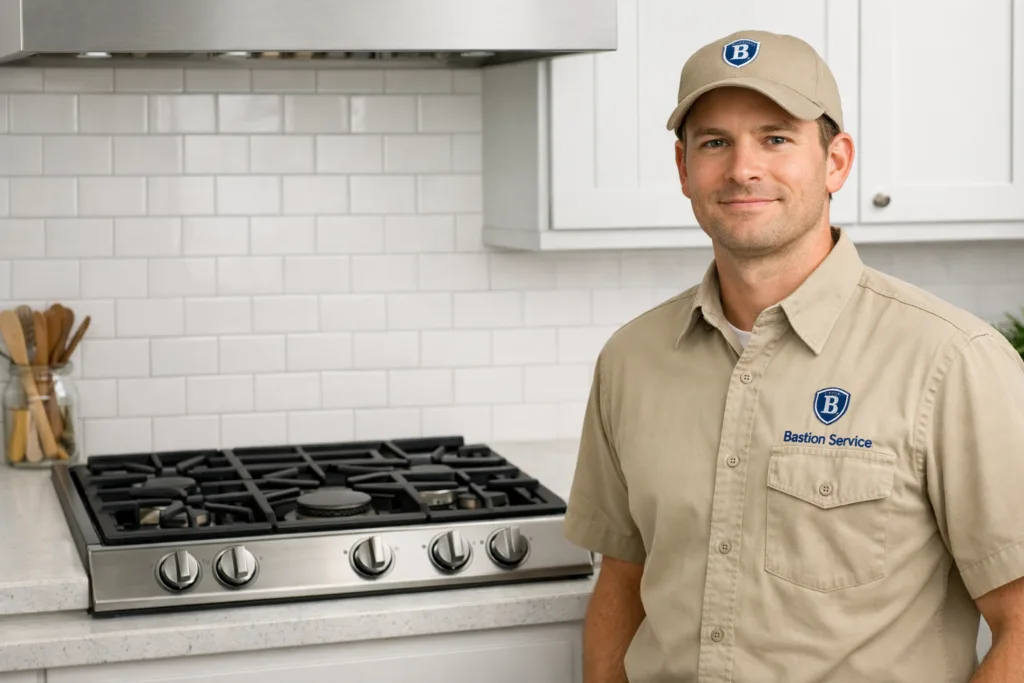
Cooktop problems tend to show up in ways that disrupt normal cooking fast: a burner that stays cold, a flame that will not stabilize, a control that responds one minute and not the next. With Kenmore units, the symptom usually points toward a smaller group of likely causes, which makes symptom-based troubleshooting the best place to start.
Common Kenmore cooktop symptoms and what they often mean
Burners that do not ignite on gas models
If you hear clicking but the burner does not light, the problem may be as simple as moisture, food buildup, or a burner cap that is slightly out of position. It can also indicate a worn spark switch, ignition issue, or trouble in the burner assembly itself. When one burner misbehaves but the others work normally, the fault is often isolated to that burner. When several burners act up at once, the diagnosis may shift toward shared ignition components or power-related issues.
Electric elements that stay cold or heat inconsistently
On electric Kenmore cooktops, a burner that does not heat may be caused by a failed surface element, a bad infinite switch, a damaged receptacle, or wiring trouble under the top. If the burner heats only on certain settings, cycles erratically, or never reaches proper temperature, the issue may be in the control rather than the element itself. These distinctions matter because replacing the wrong part can leave the original problem unchanged.
Weak flame or uneven heating
Gas burners should produce a steady, even flame. If the flame looks small, uneven, or patchy, clogged burner ports, misalignment, or a problem with gas flow may be involved. On electric and radiant models, uneven heating can show up as hot spots, slow response, or burners that struggle to maintain temperature. Homeowners often notice this first when pans stop heating evenly or cooking times become unpredictable.
Constant clicking or sparking
Repeated clicking after ignition is a common complaint. Sometimes the cause is residue around the burner base or moisture from recent cleaning. In other cases, the spark system continues firing because a switch is sticking or an ignition component is failing. If the clicking continues regularly, it is worth having it checked before the symptom turns into a no-ignition condition.
Cracked glass or damaged surface areas
On smooth-top Kenmore cooktops, a cracked glass surface is not just a cosmetic problem. It can affect safe operation and expose internal components to spills and heat stress. If the cooktop surface is chipped, cracked, or separating, it should be evaluated before continued use. The same is true for loose knobs, damaged burner bases, or controls that feel unusually stiff.
Controls that do not respond correctly
When a cooktop turns on by itself, fails to adjust heat correctly, or ignores touch input, the problem may involve the user interface, switch assembly, or electronic control. Control issues can seem random at first, especially when they appear only during longer cooking sessions. If settings do not match actual burner behavior, the appliance needs more than a basic cleaning or reset.
Why the exact symptom matters
Two cooktops can show the same outward problem for different reasons. A burner that will not heat might need a new element, but it could also have a failed switch, damaged terminal, or wiring fault beneath the surface. A gas burner that clicks without lighting might have a simple alignment problem, or it could need ignition-related parts.
That is why repair decisions should be based on the symptom pattern, whether the problem affects one burner or several, and how the cooktop behaves during normal household use. A more accurate diagnosis usually saves time, prevents unnecessary parts replacement, and gives a better idea of whether the repair is likely to hold up well.
Signs the problem is getting worse
- A burner works only after multiple attempts.
- Clicking continues after the flame is lit.
- One heat setting behaves like another.
- The burner cycles on and off more often than before.
- Knobs feel loose, rough, or inconsistent.
- The glass top shows a crack, spreading line, or impact mark.
- Using one burner seems to affect another burner or control.
These are the kinds of changes that often start small and become more expensive if ignored. In many homes, the cooktop remains usable for a while, but performance becomes less predictable and the repair path can widen from one failed part to several related components.
When to stop using the cooktop
It is usually best to pause use if the cooktop trips a breaker, sparks unexpectedly, smells hot or burnt, has a cracked glass top, or shows signs of unstable ignition. The same caution applies if a burner will not turn off properly or if a control does not match the selected setting. Continued use in these situations can increase wear on switches, wiring, igniters, and surrounding parts.
For households in Pico-Robertson, this is especially important when the cooktop is used daily and small issues are easy to work around. A burner that is “mostly fine” often becomes the burner that fails at the worst time.
Repair or replace: how homeowners usually decide
Repair is often the sensible choice when the issue is limited to a burner component, ignition part, switch, or other contained failure and the rest of the Kenmore cooktop is in good condition. If the surface is intact, the controls are otherwise reliable, and parts are available, a targeted repair can restore normal use without much disruption.
Replacement becomes more likely when there is extensive glass damage, multiple burner failures, recurring control problems, or evidence that several systems are wearing out together. Cost matters, but so does overall condition. A cooktop with one isolated fault is very different from one showing a broader pattern of decline.
What a useful service visit should focus on
A productive service call should answer a few practical questions:
- Which exact component has failed?
- Is the issue isolated or part of a larger electrical or control problem?
- Is continued use likely to cause additional damage?
- Is the repair reasonable based on the cooktop’s condition?
For homeowners in Pico-Robertson, the goal is not just to identify a bad part, but to understand whether the cooktop can return to reliable day-to-day use after the repair. That helps set realistic expectations and makes the next step easier to choose.
Practical steps before scheduling Kenmore cooktop repair in Pico-Robertson
Before service, it helps to note whether the issue affects one burner or multiple burners, whether the problem is constant or intermittent, and whether it appears only after cleaning, heavy cooking, or longer use. If you have a gas model, pay attention to whether the burner clicks, lights briefly, or never lights at all. If you have an electric model, note whether the burner stays cold, heats partially, or overheats regardless of setting.
These details can make the diagnosis faster and more accurate. They also help separate a simple burner-level fault from a switch, wiring, or control issue that needs closer inspection.
Residential cooktop repair with everyday cooking in mind
In a household kitchen, cooktop problems are more than technical faults. They interrupt routines, complicate meal prep, and make a basic appliance harder to trust. Whether the issue is a single burner that stopped working or a control problem that makes heating unpredictable, the right repair approach is the one that matches the real symptom, the actual condition of the appliance, and the expected outcome after service.
That keeps Kenmore cooktop repair in Pico-Robertson focused on what matters most: restoring safe, consistent performance for normal home use.