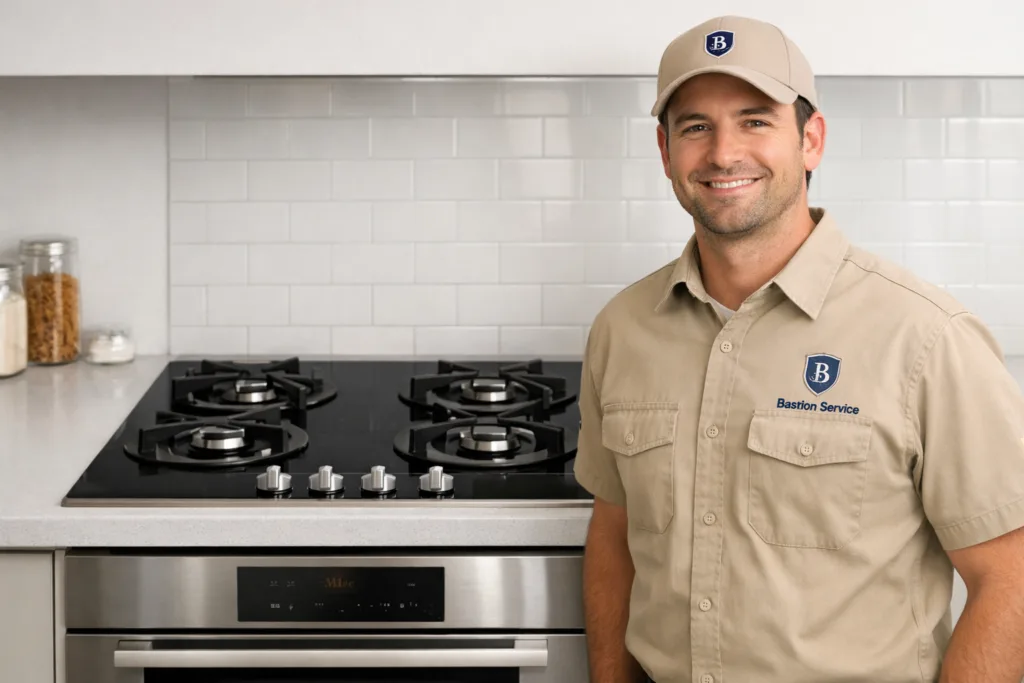
Cooktop problems rarely stay minor for long. A burner that takes too long to heat, an igniter that keeps clicking, or controls that respond inconsistently can turn everyday cooking into trial and error. With Miele units, the most important first step is identifying whether the fault is isolated to one burner, tied to the control system, or related to power, ignition, or internal wiring.
How Miele cooktop problems are typically diagnosed
Many cooktop symptoms look similar from the outside but come from different failures inside the appliance. One burner not working may point to a localized part issue, while several burners failing at once can suggest a shared component problem. On some models, a unit that appears dead may actually have a supply issue or a failed interface rather than a problem at the burner itself.
Symptom-based testing usually focuses on:
- Whether the issue affects one burner or multiple burners
- Whether the problem involves heating, ignition, or control response
- Whether the failure is constant or intermittent
- Whether there are signs of moisture, heat damage, or damaged wiring
- Whether the appliance is safe to keep using before repair
This approach helps homeowners in Marina del Rey avoid replacing the wrong part or continuing to use a cooktop that may be worsening internally.
Common symptoms and what they may mean
Burner will not heat
On electric or induction-style configurations, a burner that does not heat can indicate a failed element, burner control, sensor issue, wiring fault, or electronic control problem. If only one cooking zone is affected, the failure may be limited to that section. If several zones stop working together, the issue may involve a shared board, incoming power, or another central component.
It is also worth noting whether the burner stays completely cold or heats only partway. Partial heating often points to a weakening component rather than a complete failure.
Igniter clicks but burner does not light
On gas cooktops, repeated clicking without ignition may be caused by a dirty burner cap, moisture around the igniter, an ignition component failure, or a spark module problem. If the clicking continues after the surface has dried and normal cleaning has been done, the cooktop should be checked before regular use resumes.
If there is a strong or persistent gas smell, stop using the appliance and treat that as a safety issue rather than a routine performance problem.
Cooktop heats unevenly
Uneven heat is one of the more frustrating symptoms because it affects basic cooking results right away. Food may scorch in one area and remain undercooked in another. Depending on the model, the cause may be a weakening element, poor burner regulation, sensor trouble, or a control that is no longer cycling properly.
On gas models, uneven flame distribution can also come from burner assembly issues that interfere with consistent heat across the pan.
Controls are unresponsive or locked
Miele cooktops with electronic controls can develop touch response problems, lock-related issues, or error states that keep the appliance from operating normally. In some cases, a power reset may temporarily clear the problem. If the controls become unresponsive again, recurring faults usually point to moisture intrusion, interface failure, communication errors, or a problem with the main control system.
Cooktop shuts off during use
A unit that starts normally and then cuts out may be dealing with overheating protection, a failing sensor, unstable electrical supply, or a control fault. Intermittent shutdowns are important to address early because they often become more frequent and harder to ignore over time.
Cracked glass or visible surface damage
A cracked cooktop surface is not just a cosmetic issue. Surface damage can affect safe operation, allow moisture where it should not go, and create added stress around heating and control components. If the glass is cracked, continued use is usually not a good idea until the condition is properly evaluated.
Signs the problem may be getting worse
Some symptoms suggest the failure is no longer isolated. Watch for patterns such as:
- A second burner starting to behave the same way as the first
- Clicking or sparking becoming more frequent
- Controls working only after multiple attempts
- Burners cycling erratically or overheating cookware
- The unit tripping breakers or shutting off unexpectedly
These changes can mean additional components are being affected. Addressing the issue sooner can sometimes prevent a broader repair.
When to stop using the cooktop
It is best to stop using the appliance if you notice a cracked glass surface, visible scorching, persistent ignition failure, unpredictable burner behavior, repeated breaker trips, or a strong gas odor. Continued use under those conditions can increase the risk of damage to switches, boards, modules, or wiring, and may create a safety concern in the kitchen.
Repair or replacement: what usually makes sense
Repair is often worthwhile when the problem is limited to a burner component, igniter, switch, sensor, control interface, or similar part and the rest of the cooktop is still in good condition. Many homeowners prefer repair when the appliance fits the kitchen well and has otherwise performed reliably.
Replacement becomes more likely when the damage is structural, the glass is significantly compromised, multiple major faults are present at the same time, or the repair path depends on parts that are difficult to obtain in a reasonable way. The best decision usually depends on the exact failure, the condition of the appliance overall, and whether the fix is likely to restore dependable daily use.
What homeowners in Marina del Rey should pay attention to before service
A few details can make diagnosis more efficient. Try to note whether the issue affects one burner or all burners, whether it happens every time or only occasionally, whether any error indicators appear, and whether the problem began after cleaning, a power interruption, or unusually heavy cooking use. Even small details can help narrow down whether the fault is mechanical, electrical, ignition-related, or control-related.
For Miele Cooktop Repair in Marina del Rey, the most useful service visit is one that turns a vague symptom into a specific repair path. That means understanding not just what stopped working, but whether the cooktop should remain off, what component is likely involved, and whether repair is a sensible long-term solution for the household.