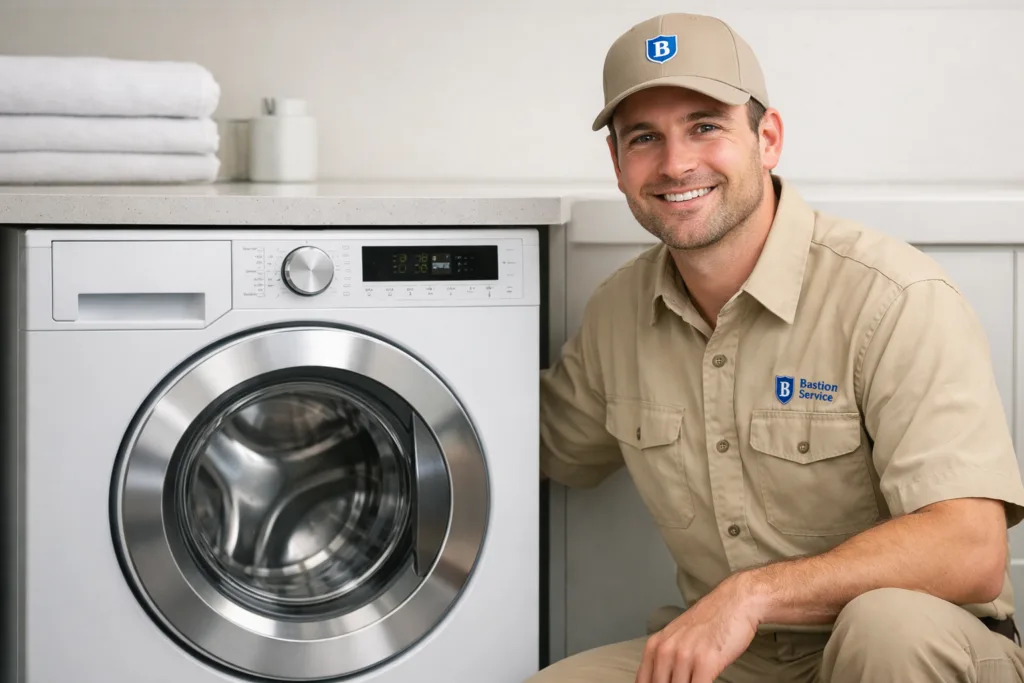
Asko Washer Repair in Santa Monica

Asko washer repair in Santa Monica for not draining, poor wash results, leaks, fill problems, heating issues, and cycle failures.

Local Santa Monica service 90-Day warranty Licensed & insured
Asko Washer repair technician in Santa Monica
Eric Connaughton review profile photo A Bouss review profile photo Terry Amos review profile photo Ladonna Yanes review profile photo Rodney McElrath review profile photo
Real Google feedback 5.0 out of 5 80+ Google reviews
  • Asko washer support in Santa Monica
  • Clear diagnosis before repair decisions
  • Warranty for labor and parts
  • Fast scheduling based on availability
Asko Washer Repair

Asko Washer repair in Santa Monica for focused household appliance problems

When a Asko washer starts acting up in Santa Monica, the most helpful first step is a clear diagnosis and a practical repair plan based on the exact symptom pattern.

Bastion Service helps Santa Monica homeowners diagnose Asko washer problems and decide whether repair is practical based on the symptom, appliance condition, and repair path.

Asko washer repair support for Santa Monica homes.

Asko washers are designed to run quietly and efficiently, so when one starts missing cycles, leaving clothes wetter than usual, or showing erratic behavior, the details matter. A washer that stops at rinse may have a very different underlying problem than one that will not unlock, and a leak during fill is diagnosed differently from a leak that appears only during spin. Paying attention to what the machine does before, during, and after the failure helps narrow the repair path.

How Asko washer problems usually show up at home

Most washer issues begin as a change in performance rather than a complete shutdown. You may notice longer cycle times, a drum that seems sluggish during spin, extra detergent left on fabrics, or a machine that occasionally pauses and then resumes. These early signs can point to drainage restrictions, water level sensing issues, door lock faults, or wear in moving components.

In Santa Monica homes, laundry routines are often disrupted by symptoms that seem small at first but become consistent over time. Catching those changes early can help prevent added strain on the pump, motor, suspension system, or control board.

Common Asko washer symptoms and what they can mean

Washer will not start

If the control panel responds but the cycle never begins, the problem may involve the door latch, start circuit, user interface, or electronic control. If the machine appears completely dead, diagnosis may shift toward incoming power, wiring, or a failed board. Because the same symptom can come from more than one source, testing is usually more useful than replacing parts based on guesswork.

Washer fills slowly or does not fill

A fill problem can be caused by restricted water flow, inlet valve trouble, a sensor issue, or a control fault that does not properly advance the cycle. Some washers fill partially and then stop, while others continue waiting for water and never move into wash. If clothing comes out poorly rinsed or detergent is left behind, the machine may not be taking in the right amount of water.

Washer will not drain

Water left in the drum often points to a clogged drain path, drain pump issue, hose restriction, or a signal problem that prevents the machine from recognizing that draining has occurred. A partial blockage may allow some loads to finish while others stop mid-cycle. When water remains trapped, the washer may also refuse to unlock or may cancel the final spin.

Clothes come out too wet

If the washer drains but laundry still comes out heavy and soaked, the issue may involve spin speed, load balance detection, suspension wear, motor performance, or a control problem. In some cases the machine avoids full spin because it senses instability or incomplete draining. This symptom is especially important because continued use can put more stress on internal components.

Leaks during wash or spin

Water on the floor can come from the door gasket, internal hoses, pump housing, drain connections, oversudsing, or a crack in a component that leaks only under pressure. The timing of the leak matters. A puddle that appears during fill points in a different direction than one that shows up near the end of the cycle. Because water can travel underneath the machine before becoming visible, the source is not always where the puddle appears.

Loud noise, banging, or vibration

Grinding, scraping, thumping, or strong vibration can indicate load imbalance, worn suspension parts, pump debris, bearing wear, or another mechanical problem. If the washer becomes noisy only at high speed, that pattern can help isolate the issue. A machine that walks out of place or repeatedly stops during spin should not be pushed through repeated cycles without inspection.

Heating problems or poor wash results

If loads do not seem as clean as usual, cycles run abnormally long, or water temperature does not match the selected setting, the washer may have a heating, sensor, or control-related fault. Premium washers rely on coordinated timing between fill, temperature, agitation, and draining, so a problem in one area can show up as disappointing cleaning results rather than an obvious mechanical failure.

Error codes and cycles that freeze

Error codes are useful clues, but they are only the starting point. A code may identify a system, such as draining or door locking, without confirming which part has failed. A washer that flashes a warning, pauses in one stage, or repeatedly shuts down during the same cycle often needs hands-on diagnosis instead of resets and repeat attempts.

When the symptom is intermittent

Intermittent washer problems can be some of the hardest to evaluate because the machine may behave normally during one load and fail during the next. If the issue appears only with large loads, only on hot cycles, or only after the machine has been running for a while, that pattern can help separate a control issue from a mechanical one. Intermittent faults rarely correct themselves for long, and they often become easier to identify once the pattern is documented.

Helpful notes include whether the washer drained fully, whether the door unlocked right away, whether an error code appeared, and whether the problem happened at the beginning, middle, or end of the cycle.

When to stop using the washer

It is usually best to stop running the washer if it is leaking, tripping power, producing a burning smell, failing to drain, or making harsh mechanical noise. Continuing to use it can turn a manageable repair into a more expensive one, especially when standing water remains in the tub or repeated spin attempts are putting stress on the drive system.

You should also avoid repeated test cycles if the machine is shaking violently, unlocking unpredictably, or leaving visible water around the base. In a household laundry area, even a small recurring leak can affect flooring and nearby surfaces over time.

Repair versus replacement for an Asko washer

For many households, the real question is whether repairing the machine is the sensible next step. Repair often makes good sense when the washer is otherwise in solid condition and the fault is limited to one repairable system. If the machine has had repeated major failures, shows broader signs of wear, or would require multiple expensive repairs at once, replacement may be the more practical choice.

A proper diagnosis helps with that decision. What looks like a serious failure may turn out to be a more contained issue, while a simple complaint can sometimes reveal deeper wear in the appliance. The value comes from understanding the actual cause before deciding how far to go.

What homeowners can check before service

Without taking the machine apart, a few basic observations can make the appointment more productive:

  • Note whether the washer fills, tumbles, drains, spins, and unlocks normally.
  • Write down any error code exactly as it appears.
  • Check whether the problem happens on every cycle or only on certain settings.
  • Pay attention to when leaks appear: at fill, during wash, during rinse, or near final spin.
  • Listen for whether unusual noise happens during tumbling, draining, or high-speed spin.
  • Notice whether poor results affect all loads or only heavier items like towels and bedding.

These details are often more helpful than a general description that the washer is “not working right.”

What to expect from a symptom-based repair approach

The most efficient washer repair starts by matching the complaint to the exact stage of failure. Instead of treating every no-spin issue the same way, the machine is evaluated for the conditions that would prevent spin, such as poor draining, imbalance detection, or component wear. The same goes for fill problems, leaks, and cycle interruptions.

For Santa Monica homeowners, that approach helps reduce unnecessary parts replacement and makes it easier to decide whether the next step should be repair, further testing, or replacement planning. When the symptom pattern is clear, the repair plan usually becomes clearer too.

Service options

Asko appliances we service in Santa Monica

Choose the Asko appliance type you need serviced in Santa Monica.

Customer reviews

Real customer feedback

Recent customer feedback for Bastion Service.

kellie snarr review profile photo
kellie snarr
Google review

“I can’t say enough good about this company. He always responds quickly and has same or next day appointments. He goes above and beyond to ensure that all problems are addressed thoroughly! Highly recommended!”

RODNEY PEETE review profile photo
RODNEY PEETE
Google review

“The technician was awesome, who did a great job in repairing our microwave, his being concerned with getting our microwave to work was his number one priority. I wish all the technicians who have assisted me in the past was as great as him .At the end he had to replace the microwave with a brand new one.”

Joshia Brooks review profile photo
Joshia Brooks
Google review

“Fast and friendly! Pleased to have him fix our stove. Would recommend!”

Stephanie Pacciardi review profile photo
Stephanie Pacciardi
Google review

“He got my kitchen and washer fixed he was Reliable and fair priced. Definitely recommend him and will use him in the future.”

Felicia M review profile photo
Felicia M
Google review

“I found Andy because my washing machine had been leaking. He came out the same day I called and diagnosed the problem pretty quickly. He ordered the necessary parts and fixed my washing machine in a matter of days. We haven’t had a problem since, we are very happy with his service and professionalism.”

jeffrey cloutier review profile photo
jeffrey cloutier
Google review

“Wow! Andrew hit all of the “check the boxes” for his workmanship: He showed up on time as discussed. He is courteous and polite! He diagnosed and explained the issue with our LG refrigerator. He Quoted us a price (very reasonable). Repaired the problem within an hour! He even cleaned up the dusty back of the refrigerator ( which hadn’t seen daylight forever!) Above and beyond customer service! I highly recommend this guy to anyone who asks me if, “I know anyone who repairs appliances?” Give Fix Tech Appliance Repair a call !!👍🏼”

FAQ

Asko Washer Repair questions

Answers about diagnosis, repair options, timing, and next steps.

What are the most common reasons an Asko washer stops draining in Santa Monica?

Common causes include a blocked drain path, a failing drain pump, a kinked hose, or a sensor or control issue. Because several problems can produce the same symptom, diagnosis is the best first step before any repair decision.

Should I keep using my Asko washer if it is leaking?

No. Continued use can worsen internal damage and allow water to affect flooring or nearby surfaces. If the leak is recurring, stop using the washer and schedule service.

Why does my Asko washer finish a cycle but leave clothes very wet?

This usually points to a spin or drainage problem. The washer may be unable to reach full spin speed because of standing water, load balance issues, worn support components, or a motor or control fault.

When does replacement make more sense than repair for an Asko washer in Santa Monica?

Replacement becomes more relevant when the washer has repeated breakdowns, multiple major issues, or broader wear that affects reliability. If the problem is isolated and the machine is otherwise in good condition, repair is often the more practical option.

Ready to schedule?

Schedule Asko Washer Repair in Santa Monica

Schedule Asko washer repair in Santa Monica with clear diagnosis, practical repair guidance, and dependable local service.

Call (323) 433-6360