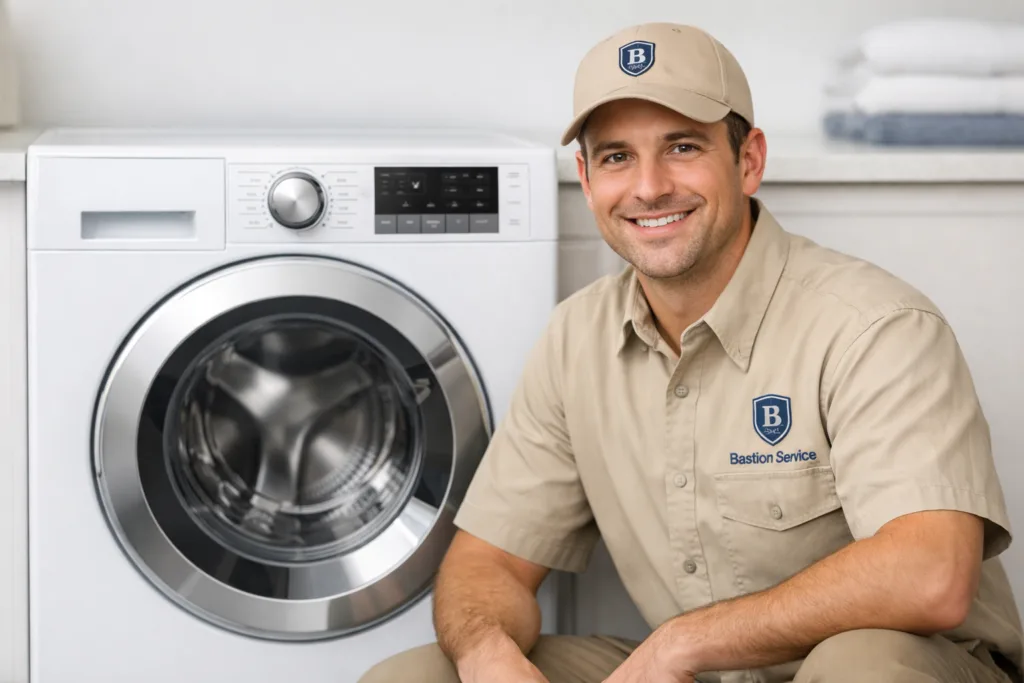
Bosch washers often show one symptom while the real fault sits somewhere else in the wash system. A machine that pauses before spin, locks the door too long, or leaves detergent residue can be reacting to drainage restrictions, inlet valve problems, sensor feedback, control issues, or wear in moving parts. The fastest way to narrow it down is to look at when the problem happens in the cycle and what changed just before it started.
Start with the exact symptom pattern
Small details matter. Does the washer fill normally and then stop? Does it drain but never reach full spin speed? Does it leak only during fill, only during drain, or only after the load finishes? Those differences help separate a pump issue from a door boot problem, a pressure sensing problem, or a control-related interruption.
For homeowners in Santa Monica, that symptom-first approach usually makes it easier to decide whether the problem looks like a limited repair or a sign of broader wear inside the appliance.
Common Bosch washer problems and what they may mean
Not draining or leaving clothes wet
If water remains in the drum at the end of the cycle, the cause may be a blocked drain path, pump obstruction, failing drain pump, kinked hose, or a condition that prevents the washer from moving into final spin. In some cases, the washer is trying to protect itself because it still senses water inside.
Typical signs include:
- Standing water after the cycle ends
- Long drain times
- A humming sound without full draining
- Clothes that come out much wetter than usual
- The door staying locked longer than normal
Running the same cycle repeatedly can overwork the pump and delay a repair that would have been simpler earlier.
Washer will not start
When the display lights up but the cycle will not begin, common suspects include the door lock system, interface controls, wiring faults, or a board that is not receiving or sending the right signals. If the washer appears completely dead, power supply problems, outlet issues, or internal electrical failures should be ruled out before assuming a major component has failed.
Leaking water
Leaks are not always dramatic. A slow drip at the front can point to a worn door boot, debris on the sealing surface, or oversudsing. Water showing up near the back or underneath may come from hose connections, internal circulation hoses, pump housing leaks, or drain problems that force water out where it should not go.
It is worth paying attention to where the water appears:
- Front edge of the machine: often related to the boot or door seal area
- Back of the machine: often related to supply or drain hose connections
- Under the center: may suggest pump or internal hose issues
- Only during fill: may point toward inlet or dispenser problems
- Only during spin or drain: may point toward drain path or movement-related leaks
Poor wash results or detergent residue
If clothing is not coming out clean, or detergent remains in the dispenser or on fabrics, the problem may involve weak water fill, cold-water-only operation when heat is expected, overloading, restricted spray action, or a cycle interruption that keeps the washer from completing its normal wash pattern.
In Bosch units, poor results can also show up as:
- Gray residue on dark fabrics
- Soap left in the dispenser drawer
- Loads that feel heavy and poorly rinsed
- Musty odor after cycles that seem incomplete
Fill problems or slow water intake
A washer that takes too long to fill, fills inconsistently, or stops early may have restricted inlet screens, a failing water valve, supply pressure issues, sensor feedback problems, or a control that is timing out because expected fill conditions are not being met. Fill problems can also create secondary symptoms, including poor washing, error codes, or cycles that stall.
Heating issues
Some Bosch washer complaints start with laundry that does not seem fully cleaned or cycles that run unusually long. If the unit is not heating water correctly when the selected cycle calls for it, the cause may involve the heating element, thermostat or sensor feedback, wiring, or control operation. Heating-related faults can affect wash quality and may also trigger interruptions partway through the cycle.
Cycle stops or recurring error codes
Error codes are useful clues, but they rarely confirm the exact failed part by themselves. A repeating code may point to a system area such as drainage, filling, heating, motor operation, or door locking. If the same code returns after resetting the washer, that usually means the underlying condition is still present.
Noise, banging, or excessive vibration
Not every loud cycle means a broken washer. Heavy items can throw a load off balance, but repeated pounding, cabinet movement, scraping sounds, or sharp banging can suggest worn suspension components, installation issues, leveling problems, or internal drum support trouble. If the machine begins moving more than it used to, it is better to stop testing it than risk added wear.
Symptoms that should not be ignored
Some washer problems are more urgent because they can damage flooring, increase repair cost, or create electrical and water risks. Service is worth prioritizing when you notice:
- Water leaking onto the floor
- A burning smell
- Grinding, metal-on-metal, or harsh knocking sounds
- The breaker tripping during use
- The drum refusing to spin while full of water
- The door staying locked with laundry trapped inside
These signs usually indicate more than a minor operating quirk.
How Bosch-specific issues differ from basic washer problems
Bosch laundry systems are known for tight control logic and protective shutdown behavior. That means a washer may stop the cycle not because every major part has failed, but because one sensor reading or one locked-out condition prevents the next step from starting. A drain restriction can interfere with spin. A latch issue can block startup. A heating fault can change cycle timing. Looking at the entire sequence matters more than replacing parts based on guesswork.
Repair or replace: what makes sense?
Many Bosch washer repairs are worthwhile when the problem is limited to a serviceable component such as a drain pump, door lock, hose, inlet valve, suspension part, or similar item. Replacement becomes a more serious discussion when the washer has multiple failures at once, structural deterioration, recurring electronics problems, or repair cost that approaches the value of a newer machine.
Good decision factors include:
- Age of the washer
- Overall condition of the tub, cabinet, and drum system
- Whether the fault is isolated or part of repeated breakdowns
- Signs of water damage, rust, or long-term neglect
- Expected reliability after the repair is completed
What to watch for at home before the washer fully fails
Washers often give early warning signs before a total no-start or no-drain condition. In Santa Monica homes, common early changes include longer cycle times, more vibration than usual, occasional unlocking delays, small amounts of leftover water, or loads that come out less clean without an obvious reason. Those shifts may seem minor, but they often point to a developing issue rather than a one-time glitch.
If your Bosch washer is no longer finishing cycles properly, leaking, filling inconsistently, or producing weaker results than it used to, the next step should be based on the symptom history, appliance condition, and repair path rather than trial and error.