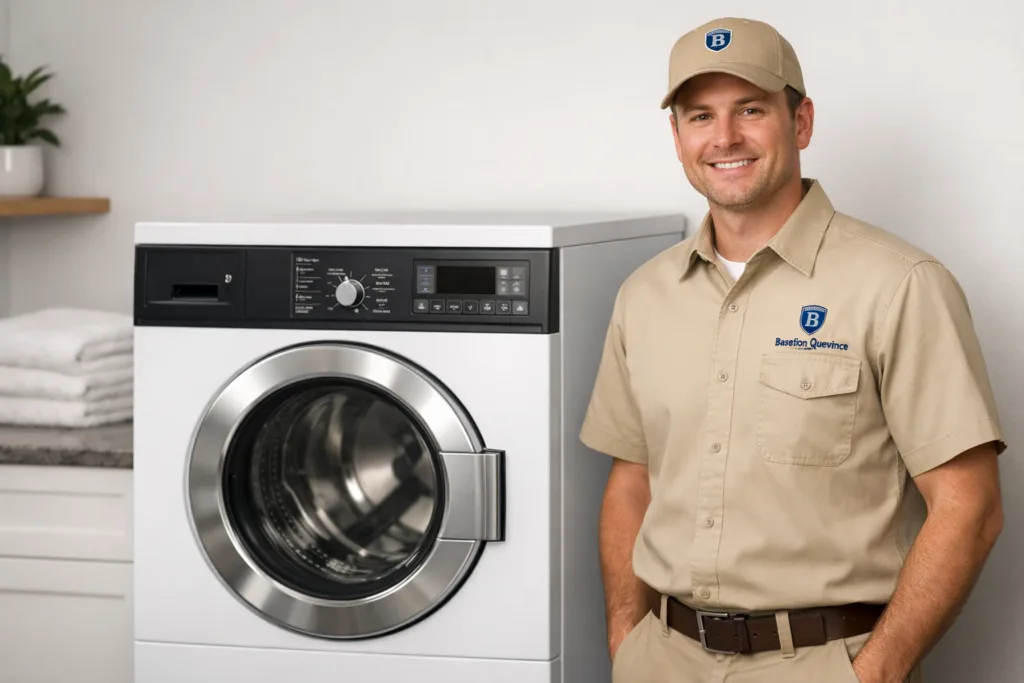
A washer problem often looks simple from the outside, but the same symptom can come from very different causes. A tub full of water might point to a blocked drain path, a failing pump, or a control issue. A machine that will not spin could be dealing with a lid lock fault, worn drive parts, suspension wear, or an off-balance condition that keeps the cycle from finishing properly. Testing the machine by symptom is what separates a repairable issue from expensive guesswork.
What symptom-based washer diagnosis should identify
In Santa Monica homes, Speed Queen washers commonly develop problems related to draining, filling, spinning, vibration, leaking, and cycle control. The useful part of a service visit is narrowing the issue to the actual failed component or condition rather than replacing parts based on assumption.
Depending on the symptom, the source may involve:
- A clogged or restricted drain hose
- A worn or failing drain pump
- A lid switch or lid lock problem
- Drive belt or motor-related wear
- Suspension or balance component failure
- Water inlet valve or supply restriction
- Pressure sensing or control faults
- Hose, pump, or tub-area leaks
That distinction matters because one outward problem can have several repair paths. A washer that pauses or ends cycles early, for example, may not need the same fix as a washer that never begins spinning at all.
Common Speed Queen washer problems in Santa Monica homes
Washer will not drain
If water remains in the tub after the cycle ends, the machine may have a blocked drain route, a failing pump, or a control problem that prevents the drain phase from completing. Homeowners sometimes notice a humming sound without actual draining, or the washer may stop with clothes still sitting in dirty water.
Standing water should not be ignored. It can create odor, add strain to the pump, and increase the chance of overflow if another cycle is attempted.
Clothes come out too wet or the washer will not spin
When laundry is still soaked at the end of the cycle, the issue is often tied to spin performance rather than washing itself. Common causes include lid lock problems, belt wear, motor or drive trouble, or suspension issues that keep the washer from reaching proper spin speed.
Sometimes the machine tries to spin but never fully ramps up. In other cases, it stops before spin begins. Repeated use in this condition can increase wear and leave every load requiring extra drying time.
Heavy shaking, banging, or walking during spin
A single uneven load can cause temporary imbalance, but repeated violent movement usually points to a mechanical or installation-related problem. Worn suspension parts, leveling issues, tub support wear, or internal damage can all produce severe vibration.
If the washer starts moving across the floor or bangs hard enough to sound different from a normal off-balance load, it is best to stop using it until the cause is checked. Continued use can damage flooring, hoses, and nearby cabinetry.
Water leaking from the washer
Leaks are most useful to diagnose when you note when they appear. A leak during fill may suggest supply hoses, connections, or inlet-related problems. A leak during drain or spin may point toward the pump, drain hose, or internal tub-area components.
Even a slow leak deserves prompt attention because washer water can spread under the unit and affect surrounding surfaces before the source becomes obvious.
Washer will not fill or fills too slowly
When a cycle starts but little or no water enters the tub, the problem may be a supply restriction, clogged inlet screens, a failing valve, pressure sensing trouble, or a control fault. Some homeowners notice unusually long cycle times, while others find the washer stopping early because the expected water level is never reached.
The key is confirming whether the problem is coming from household water supply conditions or from the washer itself.
Cycle will not start, stops mid-cycle, or has an electrical smell
If the machine does not respond when started, repeatedly cuts out during operation, or gives off a hot or electrical odor, stop using it. These symptoms can involve wiring, motor strain, seized components, or electronic control failure. This is not the kind of issue to test with load after load.
Signs the problem is getting worse
Some washer issues start small and become much more expensive when ignored. A little extra noise can turn into a failed spin system. A minor drip can become floor damage. A slow drain can become a no-drain condition that leaves the machine unusable.
It is usually time to schedule service when you notice any of the following:
- The same problem happens on multiple loads
- The washer leaves water in the tub
- Clothes repeatedly come out much wetter than normal
- New grinding, scraping, or sharp banging noises appear
- The machine leaks onto the floor
- The cycle stops at the same point over and over
- A burning or electrical smell is present
These are the kinds of symptoms that rarely improve on their own.
Simple checks homeowners can make before service
Without taking the machine apart, there are a few basic observations that can help clarify the repair path. Check whether the water supply valves are fully open, whether the drain hose appears kinked, and whether the washer is overloaded or dealing with a heavily uneven load. If the unit is shaking, confirm that it is sitting level and stable on the floor.
You can also pay attention to timing:
- Does the leak happen during fill, wash, drain, or spin?
- Does the washer hum when it should be draining?
- Does the basket try to spin and then stop?
- Does the issue happen on every cycle or only certain settings?
These details often help identify whether the problem is related to water flow, draining, drive components, or controls.
When repair usually makes sense
Many Speed Queen washer issues are repairable when the problem is limited to parts such as a pump, belt, valve, switch, hose, suspension component, or control-related failure. In those situations, restoring normal operation is often more practical than replacing the machine.
Replacement becomes a stronger consideration when there are multiple major failures, severe structural wear, major tub-related damage, or repeated breakdowns that suggest the washer is nearing the end of its useful life. The right decision depends on the failed part, the overall condition of the appliance, and whether the current issue has already caused secondary damage.
What homeowners usually want from a washer service call
Most households are not looking for a technical lecture. They want to know why the washer is failing, whether the issue is likely to worsen, and whether the repair is worth doing. For a Speed Queen washer in Santa Monica, that means matching the repair plan to the actual symptom pattern and the machine’s condition.
If your washer is leaking, stopping mid-cycle, failing to drain, or shaking hard during spin, the most helpful next step is an inspection focused on what the machine is doing right now. That makes it easier to decide whether the problem is minor, urgent, or a sign that the appliance needs more than a small fix.