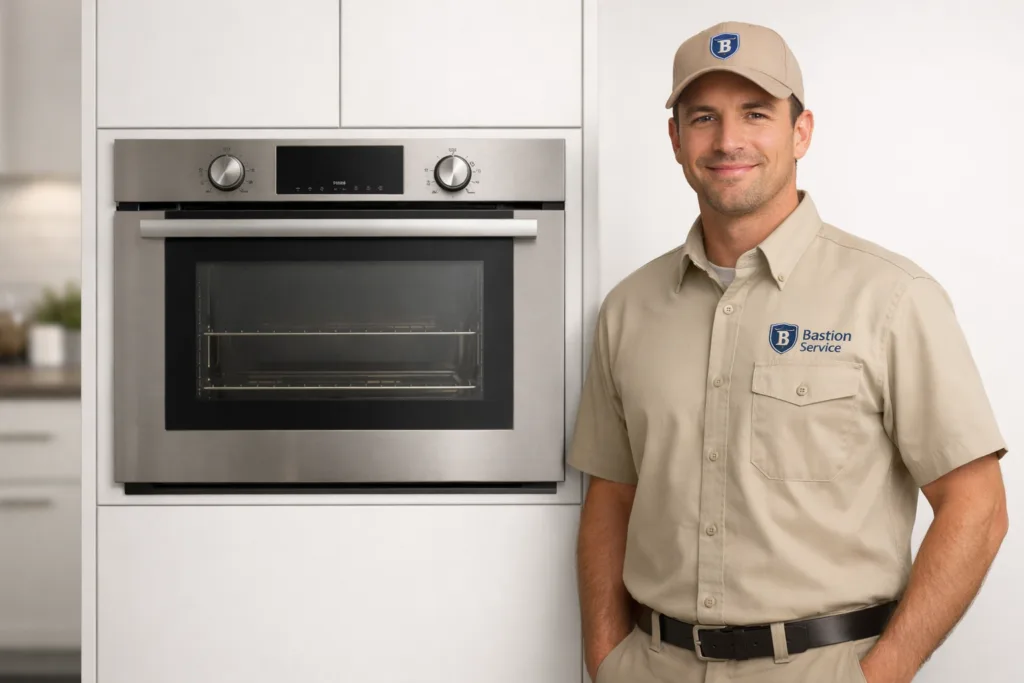
Unreliable oven performance usually shows up first in everyday cooking: longer preheat times, food that browns unevenly, or cycles that do not match the temperature you selected. With an Asko oven, those symptoms can come from heating components, sensors, controls, door sealing issues, or model-specific electrical faults, so the pattern matters as much as the symptom itself.
How Asko oven problems usually show up at home
Some failures are obvious, such as an oven that will not turn on or will not heat at all. Others are easier to miss because the appliance still seems to work, just not correctly. A unit that takes too long to preheat, shuts off before cooking is finished, or burns the top of a dish while the center stays undercooked often needs service even though the display and lights still operate normally.
For Mid-Wilshire homeowners, the most useful approach is to look at what changed. If your oven used to preheat in a normal window and now lags badly, or if your baking results suddenly became inconsistent without changing cookware or recipes, the appliance is giving you good clues about where diagnosis should start.
Common Asko oven symptoms and what they can mean
Oven will not heat
If the control panel powers up but the cavity stays cold, the cause may involve the bake element, broil element, igniter on gas models, temperature sensor, relay, control board, thermal protection component, or wiring issue. The display can look completely normal while the heating circuit fails to engage, which is why accurate testing matters more than guessing from appearance alone.
Slow preheating
Slow preheat often points to a weak heating component, sensor readings that are off, convection system trouble, or a control that is not cycling heat correctly. In daily use, this shows up as meals starting late, recipes needing extra bake time, or a noticeable gap between the set temperature and actual cooking performance.
Uneven baking
When one rack cooks faster than another, the back of the oven runs hotter than the front, or pastries brown unevenly, the issue may involve heat distribution rather than complete heating failure. Convection fan problems, partial element failure, poor door sealing, and inaccurate temperature sensing can all affect how evenly heat moves through the cavity.
Temperature swings or overheating
An oven that overshoots temperature can burn food long before the timer ends. One that swings between too hot and too cool may produce inconsistent results from one meal to the next. These problems can be linked to calibration drift, sensor faults, relay issues, or control problems that keep a heating circuit active too long or not long enough.
Control panel problems and error codes
Beeping, flashing displays, unresponsive buttons, or repeated fault codes often indicate more than a simple reset issue. Depending on the model, the fault may involve sensor communication, keypad input, door-lock feedback, or an electronic control failure. Error codes are helpful direction, but they are not a complete answer without confirming the underlying cause.
Door not closing or sealing properly
A worn gasket, bent hinge, latch issue, or alignment problem can let heat escape and make the oven work harder to hold temperature. Homeowners often notice this as longer cook times, hotter kitchen conditions near the door, or baking results that vary from what the same recipes used to produce.
Why partial operation can be misleading
One of the more frustrating oven situations is when the appliance still works just enough to seem usable. It may eventually preheat, but not within a reasonable time. It may bake acceptably on some days and poorly on others. It may handle light reheating but struggle with full-temperature cooking. That kind of partial operation often leads to repeated recipe adjustments when the real issue is mechanical or electrical inside the oven.
It is also common for a problem to affect only one cooking mode. Bake may be weak while broil still works, or convection may stop circulating heat correctly while conventional heat appears normal at first. Noting which modes fail and which still respond can shorten the path to the right repair.
Signs you should stop using the oven
Some issues are inconvenient; others should be treated as reasons to stop using the appliance until it is checked. Continued operation can worsen damage when electrical or heat-control parts are already failing.
- the oven trips the breaker during use
- the control panel cuts in and out
- the unit overheats and scorches food at normal settings
- heating elements show blistering, separation, or unusual bright spots
- the door will not close securely
- error codes return repeatedly after reset attempts
- the oven shuts off mid-cycle without explanation
If you have a gas oven and notice a persistent gas odor, stop using the appliance and address that safety issue immediately before arranging repair.
What tends to cause cooking results to change
Homeowners often describe the problem as “my oven is acting weird now,” but the shift usually follows a specific pattern. Common examples include baked dishes suddenly needing more time, roasted foods browning too quickly on top, or recipes that were reliable for months becoming unpredictable. In many cases, those changes happen because the oven is no longer measuring temperature accurately or delivering heat evenly across the cavity.
Self-clean cycles can also be a turning point. High heat does not automatically damage an oven, but it can expose a weak sensor, latch assembly, fuse, control, or wiring connection that was already close to failure. If the problem started right after self-clean, that timing is worth mentioning during service.
Repair or replace: what usually makes sense
Repair is often the better choice when the oven is otherwise in solid condition, the fault is limited to a specific system, and the appliance still suits the kitchen layout and your household cooking habits. Replacement becomes a stronger option when there are several failing systems at once, major cavity or door damage, or repeated electronic failures that push the total cost too close to the value of the unit.
For many homes in Mid-Wilshire, the decision comes down to the age and condition of the oven, whether the issue is isolated or layered, and whether the repair is likely to restore normal performance rather than simply extend a declining appliance for a short time.
What to note before scheduling service
A few simple observations can make diagnosis more efficient. Try to pay attention to what the oven does, not just the end result.
- whether the problem affects bake, broil, convection, or all modes
- whether the display stays on consistently
- how long preheating currently takes
- whether the oven reaches temperature and then falls off
- whether the issue began after a power interruption or self-clean cycle
- any fault codes, unusual sounds, or repeated beeping
That information helps separate a heating issue from a sensor problem, a control fault from a door-related heat loss issue, or a one-time interruption from a part that is failing more consistently.
Asko oven service focused on the actual symptom
Asko Oven Repair in Mid-Wilshire is most effective when the repair plan is based on how the oven is failing in real use, not on swapping parts until something changes. Whether the problem is no heat, slow preheat, uneven baking, temperature instability, or a control issue, the goal is to identify the actual fault and restore reliable cooking performance without unnecessary work.