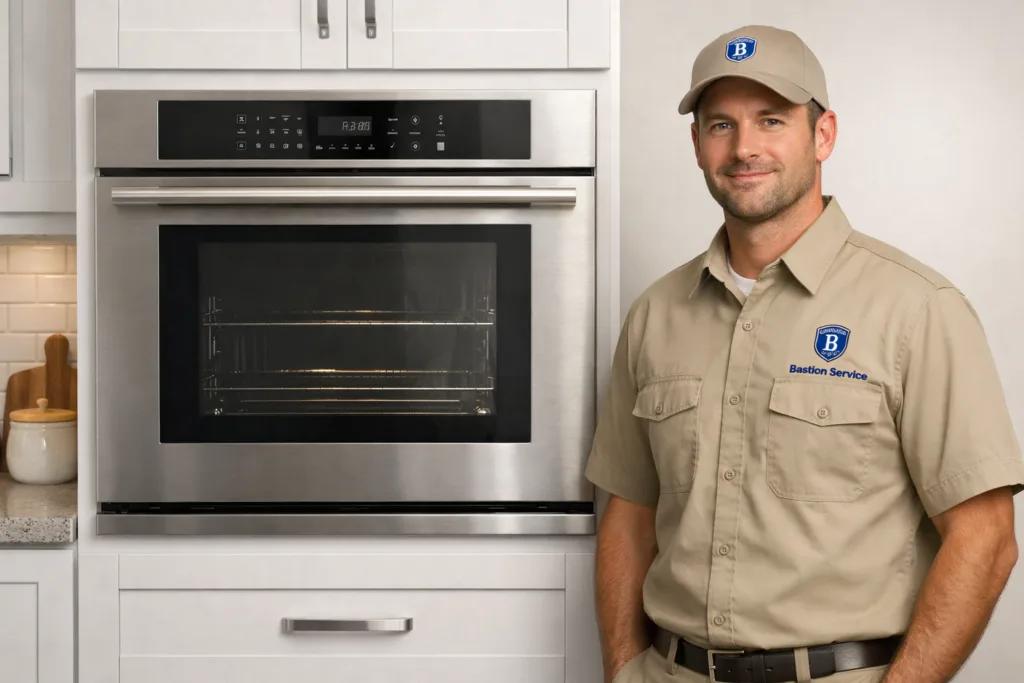
Electrolux ovens often give early warning signs before a complete failure. A temperature that drifts, a cycle that takes too long, or a control panel that responds inconsistently can all point to a developing problem. Catching the issue early can help prevent wasted meals, repeated shutdowns, and added strain on other components.
Common Electrolux oven symptoms in Mid-Wilshire homes
Most homeowners notice oven trouble during ordinary cooking rather than during a full breakdown. The pattern of the symptom matters because an oven that is slightly off temperature needs a different repair path than one that will not heat at all.
Not heating or barely heating
If the oven turns on but does not get hot enough, the failure may involve the bake element, broil element, igniter, temperature sensor, control relay, or incoming power. In some cases, the oven warms just enough to seem functional, but it never reaches the selected setting. That usually shows up as undercooked casseroles, bread that will not rise properly, or meats that take far longer than expected.
Slow preheat
A long preheat is one of the most common complaints on residential ovens. Sometimes the appliance still reaches temperature eventually, but one heating component is weak and the oven is compensating poorly. Slow preheat can also be tied to sensor inaccuracy or a control issue that is not managing the heating cycle correctly.
Uneven baking and temperature swings
Food that burns on the edges while staying pale in the center often means the oven is not maintaining heat evenly. This can happen when a sensor is reading incorrectly, a heating element is failing intermittently, or the control is overshooting and dropping below the set range. Mid-Wilshire households that bake regularly usually notice this quickly because recipes that once worked become unreliable.
Control panel problems
If the display is blank, buttons stop responding, settings change on their own, or the oven starts and stops unpredictably, the issue may be electronic rather than heat-related. Interface faults, wiring problems, and control board failures can all affect how the oven operates. These symptoms should not be ignored, especially if the unit works only part of the time.
Error codes, beeping, or random shutoffs
When an Electrolux oven flashes a fault code or starts beeping repeatedly, it is usually detecting a condition outside normal operation. That could mean overheating, a sensor problem, a door lock issue, or a communication fault between components. Resetting power may clear the alert briefly, but recurring codes usually indicate that the underlying problem remains.
What causes these problems on an Electrolux oven
One symptom does not always equal one failed part. An oven that will not maintain temperature, for example, could be dealing with a weak element, a drifting sensor, a failing igniter on a gas model, or a control that is no longer cycling heat properly. That is why diagnosis matters more than guessing based on a single symptom.
On many Electrolux ovens, the most common repair-related causes include:
- Weak or failed bake or broil elements
- Igniter problems on gas models
- Temperature sensor drift
- Electronic control or relay failure
- Door latch or door seal problems
- Wiring damage or loose electrical connections
Because these components affect one another, a proper inspection should look beyond the first visible failure. A burnt element may be the main problem, but control behavior and sensor readings should still make sense before the repair is considered complete.
Signs the oven should not keep being used
Some oven issues are inconvenient, while others are reasons to stop using the appliance until it has been checked. Continued operation in the wrong condition can lead to more extensive damage.
- Sparking inside the cavity
- Visible element blistering or breakage
- A burning smell coming from the oven itself
- Repeated breaker trips
- A door that will not close, lock, or unlock properly
- Frequent shutoffs during preheat or cooking
If any of these symptoms are present, it is best not to keep testing the oven through repeated cycles. What starts as a single failed part can sometimes damage wiring, controls, or adjacent components if left unaddressed.
Repair or replace?
For many Mid-Wilshire homeowners, repair is worthwhile when the issue is limited to one or two parts and the oven is otherwise in good condition. Heating components, sensors, igniters, door hardware, and some control-related failures are often repairable without replacing the appliance.
Replacement becomes a more realistic option when the oven has multiple major electrical faults, severe interior or door damage, repeated control failures, or repair cost that approaches the value of the unit. Age matters, but condition matters just as much. An older oven with one isolated failure may still be a better repair candidate than a newer one with several unresolved problems.
What a service visit should help you understand
When scheduling Electrolux Oven Repair in Mid-Wilshire, most people are trying to answer a few practical questions: what failed, whether the oven is safe to use, what repair is actually needed, and whether the fix makes financial sense. A useful visit should clarify the source of the symptom rather than just naming the symptom itself.
That usually means confirming whether the problem is in the heating system, temperature regulation, door function, or electronic controls, then comparing that finding with the appliance’s overall condition. For households that depend on the oven for daily cooking, that kind of practical repair guidance makes it easier to decide on the next step without guesswork.
Why symptom patterns matter
The way the oven fails often says a lot about the likely repair path. A unit that is always cold points in a different direction than one that works for twenty minutes and then shuts off. An oven that runs too hot is different from one that never finishes preheating. Tracking what happens before, during, and after a cycle can make the problem easier to isolate.
Helpful details include whether the issue affects bake, broil, or both; whether the display stays active during the fault; whether the door is closing tightly; and whether the problem happens every time or only intermittently. Those details can shorten the diagnostic process and help determine whether repair is practical.
Residential Electrolux oven service focused on everyday cooking
In a home kitchen, oven problems are less about technical labels and more about whether dinner cooks evenly, preheat finishes on time, and the controls can be trusted. Whether the complaint is slow heating, unreliable temperature, or a panel that will not cooperate, the goal is to restore normal cooking performance without replacing parts unnecessarily.
For Mid-Wilshire households, the most useful next step is an inspection based on the exact symptom pattern and the condition of the appliance. That keeps the decision grounded in how the oven is actually failing, not in assumptions.