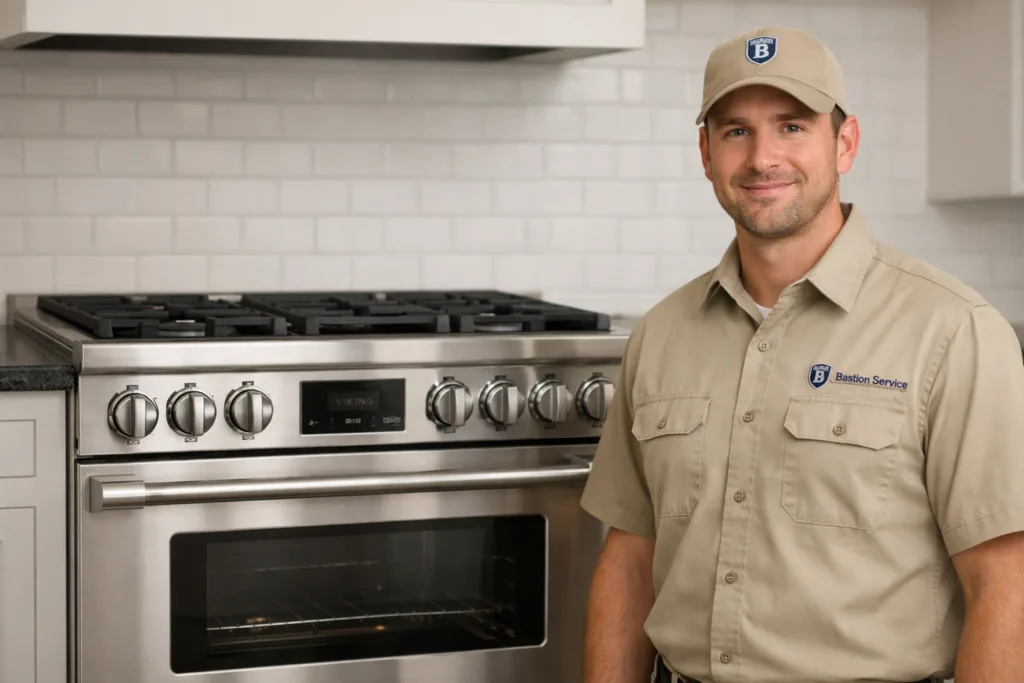
When a Viking oven stops performing the way it should, the symptom itself usually tells you where to start. An oven that will not heat at all points to a different problem than one that preheats slowly, cycles unpredictably, or cooks the top of a dish faster than the center. Looking at how the failure appears in everyday use is often the fastest way to narrow down whether the issue is related to ignition, heating elements, temperature sensing, controls, airflow, or power supply.
What different oven symptoms often mean
Not every heating complaint comes from the same part. Two ovens can both seem “not hot enough,” but the cause may be very different depending on whether the problem happens during preheat, after the set temperature is reached, or only on certain cooking modes.
Oven will not heat
If the oven powers on but never begins heating, common causes include a failed igniter on gas models, a broken bake or broil element on electric models, a temperature sensor fault, or a control problem that is not sending power where it should. If the display is active but there is no heat response, the problem is often deeper than a simple setting issue.
Slow preheat
A Viking oven that eventually gets warm but takes far too long to reach temperature may have a weak igniter, a partially failing element, poor temperature feedback, or a control issue that prevents full heating output. Slow preheat is easy to ignore at first, but it often gets worse over time and can affect every meal from baked dishes to roasted foods.
Uneven baking
If one side of a tray browns faster, cookies bake differently from front to back, or results change from one rack to another, the oven may have uneven heat distribution or inconsistent cycling. That can come from a failing element, sensor drift, fan-related problems on convection models, or a door that is not sealing tightly enough to hold stable heat.
Temperature swings
When the oven runs too hot, too cool, or alternates between the two, likely causes include a sensor that is reading inaccurately, calibration problems, sticking relays, or a control board issue. These symptoms are frustrating because the oven may still appear to work, yet cooking results become unreliable and difficult to predict.
Controls, display, or start-up problems
Some Viking oven failures show up through the interface first. Flashing displays, error messages, buttons that do not respond, or a cycle that starts and then stops can point to electronic control faults, communication issues, or unstable electrical connections. These problems may also affect heating performance even when the symptom seems to be only on the panel.
Signs the problem should not be ignored
It is common to keep using an oven that still produces some heat, but that can make a smaller repair turn into a larger one. A weak igniter may continue to degrade until ignition becomes unreliable. An overheating issue can place extra stress on nearby components. A loose electrical connection can worsen with repeated cycling.
- The oven trips the breaker or shuts off during use
- Food is suddenly burning at normal settings
- Preheat times are getting longer week by week
- The door does not close evenly or seal well
- Error codes are appearing more often
- There is a burning electrical smell during operation
If there is a persistent gas smell, stop using the oven and address the gas concern first before scheduling appliance repair. Safety should come before troubleshooting.
Common component failures in Viking ovens
Viking ovens are built for serious home cooking, but like any appliance, they rely on parts that wear over time. The most common repair paths often involve components that directly affect heat creation, temperature regulation, or control response.
Igniters
On gas ovens, a weak or failed igniter is one of the most frequent reasons for no-heat or delayed-heating complaints. An igniter can glow and still be too weak to open the gas valve properly, which is why visual inspection alone is not always enough.
Heating elements
On electric models, bake and broil elements can crack, short, or lose output. Sometimes the failure is obvious, but in other cases the element weakens without visible damage, leading to poor baking and long preheat times.
Temperature sensors
A drifting sensor can make the oven run hotter or cooler than the display suggests. This often shows up as recipes taking much longer than expected or food coming out overdone even though the selected temperature seems correct.
Control boards and relays
If the oven is receiving power but not regulating heat correctly, the control board or related relays may be at fault. These issues can produce erratic behavior, intermittent heating, or unexplained shutdowns.
Door hinges and gaskets
Heat loss from a poor door seal can create performance complaints that look like heating failure. If the door is misaligned, not closing firmly, or allowing heat to escape, the oven may struggle to maintain proper cooking conditions.
Repair or replacement: what usually makes sense
Many Viking oven problems are worth repairing when the appliance is otherwise in good condition. A failed igniter, element, sensor, switch, hinge, or single control-related issue is often a reasonable repair. The decision becomes harder when there are multiple major failures, repeated electrical faults, or signs of broad wear that affect long-term reliability.
In most homes, the better question is not whether the oven is premium or not, but whether the current problem appears isolated or part of a larger pattern. If this is the first major issue and the rest of the oven is in solid shape, repair is often the sensible path. If breakdowns have become frequent and performance has been slipping in several ways at once, replacement may deserve a closer look.
What homeowners in Mid-Wilshire can watch before service
A few notes from normal use can make diagnosis easier. If possible, pay attention to whether the oven fails on bake, broil, or both; whether the problem happens every time or only intermittently; and whether the display stays normal when heating fails. It also helps to notice if the oven reaches temperature eventually or never gets there at all.
For households in Mid-Wilshire that cook often, those details matter because they can separate a straightforward part failure from a broader control or wiring issue. Even simple observations about timing, sounds, error messages, or whether the door seals tightly can help define the repair path more quickly.
What a service visit should help you decide
A useful visit should answer more than just which part failed. It should clarify whether the oven can be used safely, whether the problem is isolated, and whether the repair is likely to restore consistent everyday performance. That is especially important when the oven is central to daily meals and you need reliable results rather than guesswork.
For Viking oven repair in Mid-Wilshire, the goal is to match the fix to the actual symptom pattern, restore steady heating and temperature control, and help you decide whether repair is the right next step for the condition of the appliance.