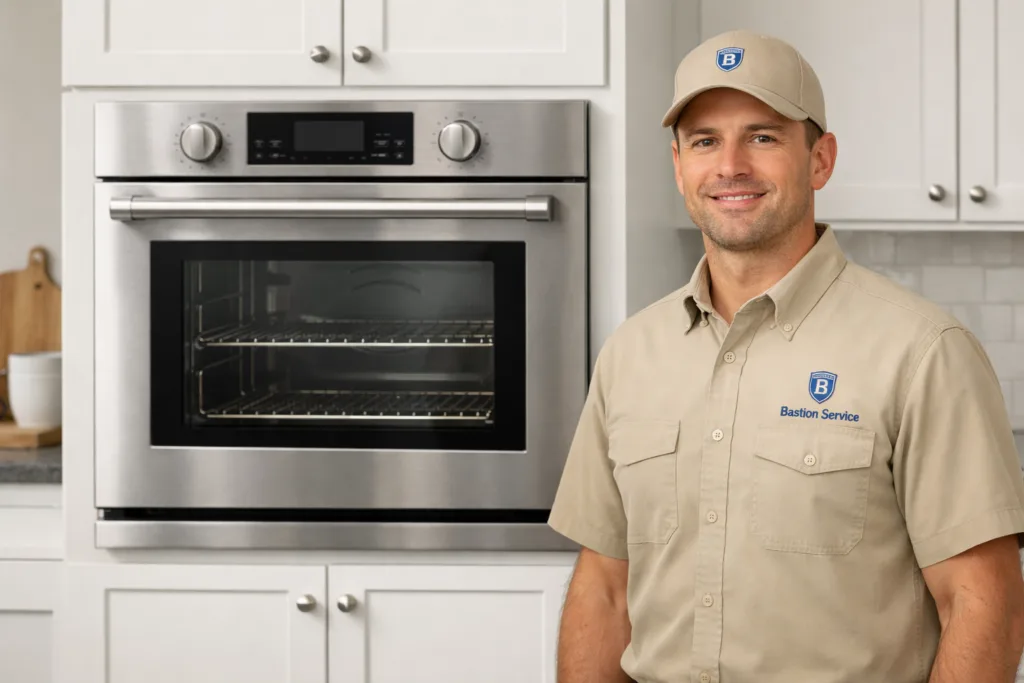
Common Thermador oven symptoms and what they can mean

Cooking problems usually start with a pattern. One meal takes too long, the next browns unevenly, and then preheat becomes unreliable. In a Thermador oven, those symptoms often point to a specific failed part or performance issue rather than simple age alone.
Not heating at all
If the oven will not heat, the cause may differ depending on whether the unit is gas or electric. Gas models often run into igniter problems, while electric models may have a failed bake or broil element, a wiring problem, or a control issue. In some cases, the display powers on normally even though the oven cannot actually produce heat, which can make the failure seem confusing at first.
Slow preheating
When preheat takes much longer than normal, the oven may still appear usable, but performance is already slipping. A weak igniter, a partially failing element, a sensor reading issue, or a control problem can all cause slow heat-up times. Homeowners often notice this first as delayed dinner prep or recipes needing extra cook time.
Uneven baking or temperature swings
If cookies burn on one rack while food on another rack stays pale, the problem may involve temperature regulation, convection airflow, or element performance. Some ovens also drift away from the set temperature without showing an obvious error. That can lead to unpredictable baking results, especially with recipes that depend on steady heat.
Display problems, error codes, or failure to start
A blank panel, flashing code, beeping control, or cycle that will not begin can indicate an electronic control fault, touch panel issue, latch problem, or power supply interruption. If the oven shuts off during preheat or resets on its own, the timing of that behavior can help narrow down the source of the fault.
Door and latch issues
An oven door that will not close tightly can let heat escape and affect cooking results. Worn hinges, a damaged gasket, or a latch problem may also interfere with self-clean or normal operation. After a self-clean cycle, some Thermador ovens develop lock or control problems that make the unit seem completely unresponsive.
Why symptom patterns matter
Two ovens can show the same surface complaint and need completely different repairs. An oven that does not reach temperature may need an igniter, a sensor, a relay, or a control board repair. An oven that heats too much may have a calibration problem, a stuck relay, or a sensor that is no longer reading accurately.
That is why homeowners in Mid-Wilshire usually benefit from paying attention to details such as whether the problem happens on every cycle, only during preheat, only in bake mode, or after using self-clean. Small differences in behavior often point to very different repair paths.
Signs the oven should not keep being used
Some oven problems are inconvenient. Others are a reason to stop using the appliance until it is checked. You should stop using the oven if you notice:
- A strong gas smell
- Delayed ignition or repeated clicking before lighting
- Breaker trips during use
- Visible sparking, burning smells, or scorched wiring signs
- Overheating that burns food quickly at normal settings
- A door that will not stay shut during operation
If there is a persistent gas odor, leave the area if necessary and contact the gas utility or emergency service first. For non-emergency performance issues, scheduling service promptly can help prevent additional damage to controls, wiring, or heating components.
Repair issues often found in household Thermador ovens
Residential ovens tend to develop a smaller set of repeat problems over time. On Thermador units, common repair findings include:
- Failed or weakening igniters on gas models
- Burned-out bake or broil elements on electric models
- Temperature sensors that read inaccurately
- Electronic control or relay failures
- Convection fan or motor problems
- Door hinge, gasket, or latch wear
- Wiring faults related to heat exposure
Some of these failures stop the oven completely, while others cause gradual performance changes that are easy to dismiss at first. That is why recurring undercooked food, unusual browning, or repeated error messages are worth taking seriously even if the oven still turns on.
How to decide if repair is worth it
The answer depends on the age of the oven, the overall condition of the appliance, the cost of the failed part, and whether the issue is isolated or part of a larger pattern. A single sensor, igniter, hinge, or element problem may make repair a sensible option. If the oven has multiple active faults, repeated electronic failures, or clear wear across several systems, replacement may become the better long-term choice.
For many Mid-Wilshire households, the real question is not just whether the oven can be fixed, but whether the repair is likely to restore reliable everyday use. A proper inspection helps separate a straightforward parts failure from a more expensive control or wiring problem.
What to note before scheduling service
A few details can make troubleshooting much faster. Before service, it helps to write down:
- Whether the oven is gas or electric
- If the issue happens in bake, broil, convection, or all modes
- Any error code shown on the display
- Whether the oven starts normally but loses heat later
- If the problem began after a power outage or self-clean cycle
- Whether the symptom is constant or intermittent
These notes are especially useful when the oven fails only sometimes. Intermittent faults can be harder to catch unless the symptom pattern is clear.
Practical expectations for homeowners in Mid-Wilshire
Most people simply want to know what failed, whether the oven is safe to use, and whether the repair makes financial sense. Those answers come from matching the symptom to the actual cause instead of guessing based on one visible issue.
If your Thermador oven has stopped heating properly, begun baking unevenly, or started showing control problems in Mid-Wilshire, the most useful next step is service based on the exact behavior of the appliance. That gives you a clearer idea of the repair path, likely parts involved, and whether the oven is worth fixing now.