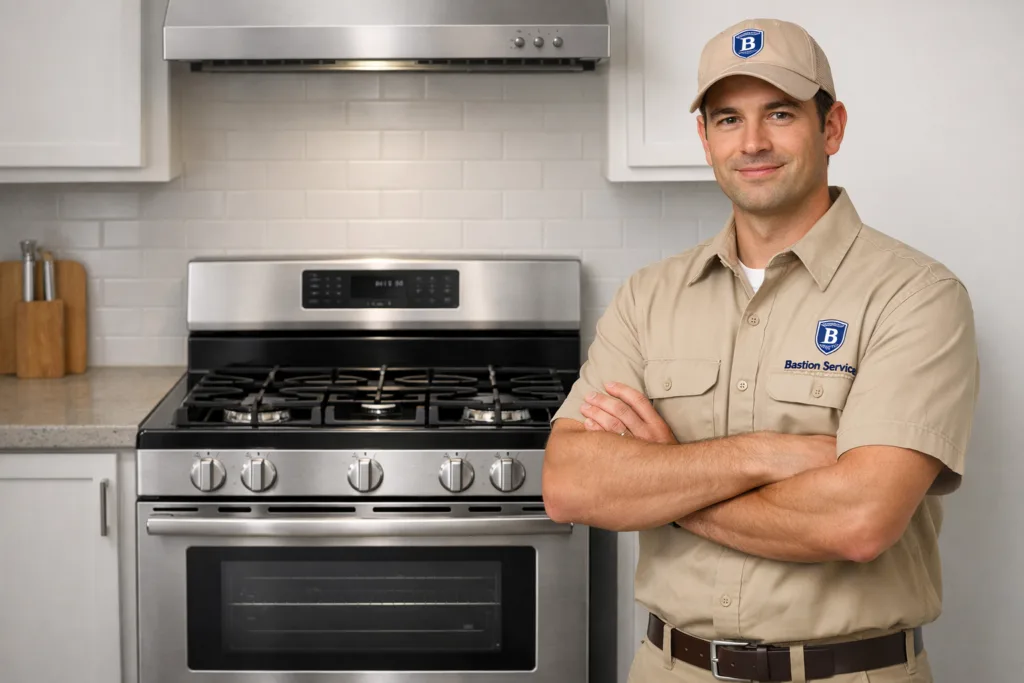
Cooking problems with a Maytag range rarely stay minor for long. An oven that takes too long to preheat, a burner that clicks without lighting, or a surface element that heats unpredictably can affect both safety and day-to-day use. The most useful starting point is to match the symptom to the system involved so the repair decision is based on what is actually failing.
Start with the symptom pattern
Many range issues look similar at first, but they do not come from the same cause. An oven that runs cold may be dealing with a weak igniter on a gas model, a failed element on an electric model, a sensor problem, or a control issue. A burner that will not respond may involve the switch, ignition components, wiring, or the burner itself. Looking at when the problem happens, whether it is constant or intermittent, and whether other functions are affected helps narrow the fault much faster.
This matters because replacing parts based on assumption can waste time and money. A symptom-based inspection helps identify whether the issue is isolated or part of a larger wear pattern inside the range.
Common Maytag range problems in Palms homes
Oven not heating
If the oven stays cool or never reaches the set temperature, the cause depends on the type of range. On gas models, a weak igniter is one of the most common reasons for slow or incomplete heating. On electric models, a failed bake or broil element may stop the oven from generating enough heat. A bad temperature sensor or relay problem can also cause the oven to misread or mishandle the heating cycle.
Typical signs include:
- Very long preheat times
- Food that stays pale or undercooked
- Heat that cuts in and out during baking
- An oven that seems warm but never fully hot
Oven temperature is off
Sometimes the oven does heat, but the results are inconsistent. Cookies may burn on one rack while casseroles stay cool in the center, or the same recipe may come out differently from one day to the next. That can point to a drifting temperature sensor, a control calibration problem, a weak igniter, or an element that is failing without completely burning out.
Uneven baking is not always caused by cookware or rack position. If temperature swings have become more noticeable over time, the range may need service rather than another adjustment in cooking habits.
Gas burner clicks but will not ignite
Repeated clicking is often linked to burner head blockage, moisture around the igniter area, a spark ignition problem, or a switch issue. If one burner acts up while the others work normally, the problem may be local to that burner assembly. If several burners show the same symptom, the diagnosis may move toward shared ignition components.
A burner that eventually lights after several tries should not be treated as normal. Delayed ignition and constant clicking usually mean something is no longer operating as it should.
Weak, uneven, or unstable burner flame
When a gas flame looks patchy, low, or uneven around the burner, the issue may be a clogged burner port, alignment problem, or a component affecting ignition and flame spread. If cleaning does not change the pattern, a deeper inspection may be needed. Uneven flame can make everyday stovetop cooking slower and less predictable, especially when simmering or trying to maintain a steady temperature.
Electric burner not heating correctly
On electric Maytag ranges, a surface element that stays cold, overheats, or cycles erratically may point to a bad element, receptacle damage, a failing infinite switch, or wiring trouble. In some cases, the burner works only on certain settings. In others, it gets too hot regardless of the selected level.
Signs to watch for include:
- Burner works sometimes but not every time
- Heat level does not match the setting
- Element cuts out during cooking
- Visible scorching near the receptacle area
Control panel or display problems
A blank display, flashing error code, unresponsive keypad, or erratic oven settings can all affect how the range operates. Control issues may show up as failed bake commands, broil problems, timer malfunctions, or settings that change on their own. Because electronic faults can overlap with heating complaints, it is important to determine whether the issue is in the control itself or in another component feeding bad information to it.
Door not closing properly
An oven door that will not seal well can lead to heat loss, longer cook times, and poor temperature stability. Hinges, springs, alignment, and gasket wear can all contribute. Homeowners sometimes notice this first as a baking complaint rather than a door complaint, especially if the oven seems to run but results keep getting worse.
What intermittent symptoms often mean
Intermittent problems are common with ranges and can be more revealing than a full failure. A burner that works every third try, an oven that preheats normally one day and slowly the next, or a display that cuts in and out may point to a component that is weakening rather than completely dead. Loose connections, heat-sensitive controls, failing switches, and aging ignition parts often create this pattern.
These issues are worth addressing early. Once intermittent faults become constant, they can be harder on other components and more disruptive to daily cooking.
When continued use can make the repair bigger
Some problems are mostly inconvenient, but others can worsen with repeated use. A weak gas igniter may continue to struggle until heating becomes unreliable. A damaged electric burner receptacle can deteriorate further each time the burner is used. If a control problem causes inconsistent oven cycling, that may also affect cooking results long before the range stops working entirely.
It is wise to pause normal use and schedule service if you notice:
- Burners that click constantly
- Breakers tripping during range use
- Burners or oven functions that work unpredictably
- Visible sparking, scorching, or signs of overheating
- Recurring fault codes on the display
Repair or replace?
For many households in Palms, the real decision is whether the range still makes sense to repair. In many cases, the answer is yes when the problem is limited to one heating, ignition, or control-related component and the appliance is otherwise in good shape. A single failed part on a solid Maytag range is often very different from a unit showing multiple unrelated problems at once.
Replacement becomes more likely when the range has heavy wear, repeated electronic failures, multiple nonworking functions, or damage affecting more than one major system. Condition matters just as much as age. A range with a clean cabinet, sound cooktop, and one clear fault may be a better repair candidate than a newer unit with several unresolved issues.
What homeowners should pay attention to before service
A few details can make diagnosis easier. It helps to note whether the problem affects the oven, the cooktop, or both; whether the issue happens every time or only sometimes; and whether the symptom changed gradually or appeared all at once. If the range shows an error code, loses power intermittently, or behaves differently on certain settings, those clues can help identify the failed system more quickly.
Useful observations include:
- Whether the oven reaches temperature but cooks unevenly
- Whether one burner or all burners are affected
- Whether clicking continues after ignition
- Whether preheat has become slower over weeks or months
- Whether the display resets, flashes, or stops responding
How service helps restore everyday kitchen use
Range problems do more than interrupt meals. They make timing harder, reduce confidence in baking results, and can turn simple stovetop cooking into trial and error. In households that cook often, even one unreliable burner or an oven that runs off-temperature can become a daily frustration.
Maytag range repair in Palms is most helpful when it identifies the exact failing part or system, explains whether the issue is likely to spread, and gives homeowners a realistic picture of whether repair is worthwhile. That kind of practical repair guidance makes it easier to move forward with confidence instead of guessing at the next step.