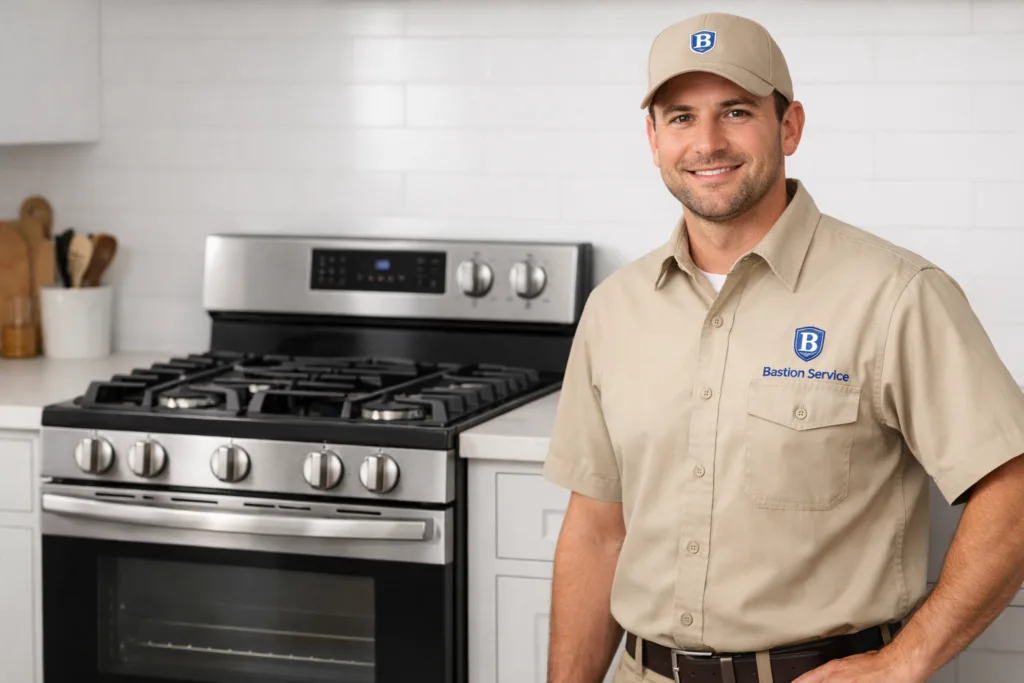
Range problems tend to show up in everyday ways first: dinner takes longer than usual, one burner becomes unreliable, the oven temperature feels off, or the control panel starts acting unpredictably. With Samsung models, those symptoms can stem from heating parts, ignition components, sensors, wiring, or electronic controls, so the most useful next step is to match the repair path to the exact behavior of the appliance.
Common Samsung range problems homeowners notice
In Palms homes, range issues often affect either the oven cavity, the surface burners, or the controls that coordinate both. Some failures are obvious, such as a burner that will not turn on. Others are more subtle, such as food cooking unevenly even though the display appears normal. Paying attention to the pattern helps narrow down what is happening.
Oven not heating properly
If the oven will not preheat, heats very slowly, or never seems to reach the selected temperature, the cause may involve the bake element, broil element, igniter on gas models, temperature sensor, or the main control. A range can also appear to heat normally at first and then drift off temperature during longer cooking cycles. That kind of inconsistency often shows up as undercooked centers, overbrowned tops, or baking results that change from one use to the next.
Overheating is a separate symptom and usually points in a different direction. When an oven runs too hot, burns food quickly, or does not cycle down as expected, temperature sensing or control regulation may be at fault. Continued use in that condition can make cooking unreliable and may place unnecessary stress on other components.
Uneven cooking and hot spots
Uneven results do not always mean the entire appliance has failed. In some cases, the oven is heating but not distributing that heat correctly. A weak element, inaccurate sensor feedback, convection-related problems on applicable models, or a control issue can all create hot and cool zones. Homeowners often notice this when cookies brown more on one side, casseroles need extra time in the center, or meals only turn out correctly after rotating pans.
Burners clicking, not igniting, or heating inconsistently
Surface burner issues vary by model type. On gas ranges, constant clicking, delayed ignition, weak flame, or repeated failure to light can point to trouble with the igniter, burner head alignment, spark system, or related components. On electric ranges, a burner that stays too low, gets too hot, cycles erratically, or does not heat at all may involve the element, switch, wiring, or connection points.
If ignition is inconsistent, it is best not to ignore it. Repeated clicking and delayed burner response usually do not improve on their own. If there is a strong or persistent gas odor, stop using the appliance and address the safety concern before arranging repair.
Control panel and display problems
Samsung ranges can also develop electronic faults that look like heating problems at first. A flashing display, unresponsive keypad, random beeping, locked controls, or recurring error codes may indicate a communication fault, sensor problem, control board issue, or interface failure. Because one electronic problem can affect multiple cooking functions, these symptoms are best evaluated as a system rather than by replacing parts based on guesswork.
What specific symptoms can indicate
The same complaint can have more than one cause, which is why symptom-based diagnosis matters. A few examples:
- Oven will not heat at all: possible element, igniter, sensor, control, or power-related problem.
- Oven heats but does not hold temperature: possible sensor drift, control issue, or failing heating component.
- One burner does not work: possible burner element, igniter, switch, or wiring fault.
- Burner clicks constantly: possible moisture, misalignment, ignition component problem, or switch issue.
- Error code appears during cooking: possible sensor fault, communication issue, or control failure.
- Range works intermittently: possible loose connection, heat-related electrical issue, or failing board.
That overlap is why a proper inspection matters more than assuming every heating issue needs the same repair.
Signs the problem is getting worse
Some range issues stay minor for a while, but others tend to escalate with daily use. Service is worth scheduling when you notice symptoms like:
- Preheat times getting longer week by week
- Burners that only work after repeated attempts
- Temperature swings that are becoming more noticeable
- Controls freezing or resetting during use
- Clicking that continues after ignition
- Cooking results changing even though recipes and settings have not
These are often signs that a component is weakening rather than failing all at once. Addressing the issue earlier can help prevent a broader breakdown across connected parts.
When repair usually makes sense
Repair is often the better option when the range is otherwise in good condition and the problem is limited to one system, such as a surface burner, oven heating circuit, sensor, or control-related fault. Many Samsung range problems are isolated enough that a targeted repair can restore normal cooking without replacing the entire appliance.
Replacement becomes more likely when there are multiple major failures, extensive electronic issues, a history of repeated problems, or visible overall wear that suggests the unit is nearing the end of its useful life. For most households, the deciding factors are the age of the range, the condition of the appliance as a whole, and whether the repair is likely to return it to stable everyday use.
Helpful steps before scheduling service
Before arranging Samsung range repair in Palms, it helps to note what the appliance is doing as specifically as possible. A few details can make the problem easier to identify:
- Whether the issue affects the oven, cooktop, or both
- If the problem happens every time or only intermittently
- Any error code shown on the display
- Whether the symptom began suddenly or gradually
- If one burner or cooking mode still works normally while others do not
Even simple observations like “the right front burner sparks but does not light” or “the oven says preheated but food stays pale” can help separate ignition issues from heating or control problems.
Residential range service focused on everyday kitchen use
For homeowners in Palms, a malfunctioning range affects routine meals, baking, and weeknight cooking almost immediately. The goal of service is not just to make the appliance turn on again, but to restore predictable performance so burners ignite correctly, oven temperatures stay consistent, and controls respond the way they should.
If your Samsung range is showing error codes, heating unevenly, clicking constantly, or failing to cook the way it used to, the smartest next step is a practical repair plan based on the actual symptom pattern. That keeps the decision straightforward and helps determine whether the issue is a focused repair or a sign that replacement should be considered.