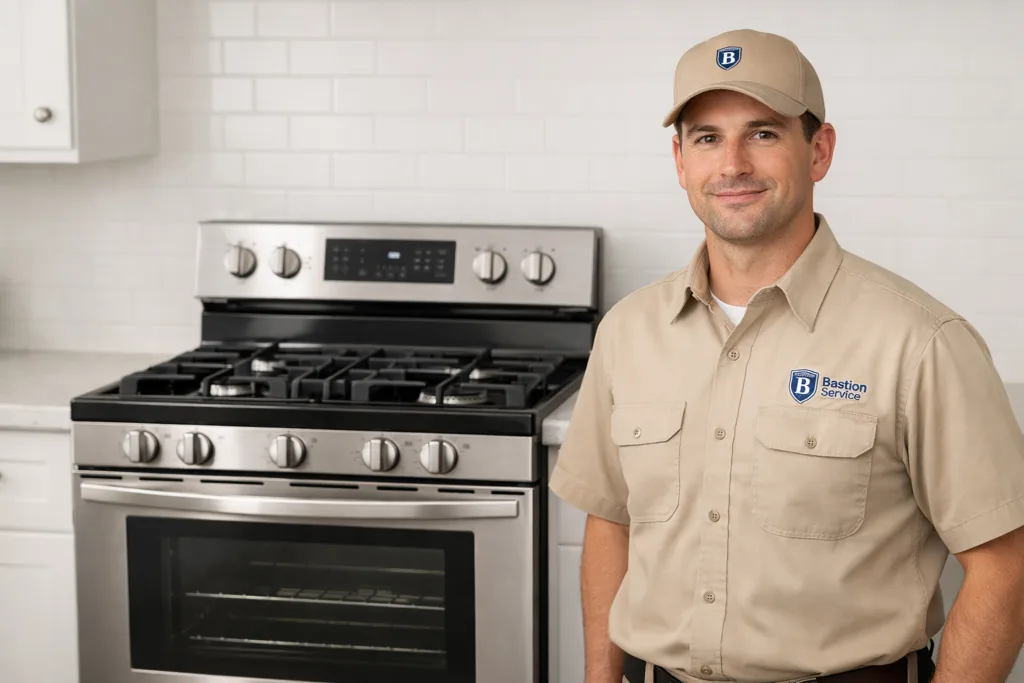
Range problems tend to fall into a few recognizable patterns, and those patterns matter because the same Whirlpool symptom can have more than one cause. A burner that will not ignite, an oven that runs cool, or controls that act unpredictably may be tied to different components depending on whether the range is gas or electric and how the failure shows up during normal cooking.
Common Whirlpool Range Problems in Palms Homes
Many household complaints start with surface cooking. On electric models, a burner may stay cold, heat only partway, or cycle erratically. On gas models, the burner may click repeatedly, light late, or fail to light at all. In some cases the issue is isolated to one burner, while in others the problem points to a shared ignition, wiring, or control fault.
Oven issues are just as common. Homeowners may notice slow preheating, uneven baking, food coming out undercooked, or temperatures that swing more than expected. A Whirlpool range can also appear to run normally while still cooking poorly, which is why symptoms like longer bake times or repeated need for temperature adjustments should not be ignored.
Some service calls involve the control side of the appliance rather than heating parts. A blank display, unresponsive keypad, error code, or bake cycle that will not start can all interrupt daily use even when the rest of the range looks intact.
What Specific Symptoms Often Point To
Burner clicks but does not light
On a gas Whirlpool range, repeated clicking without ignition can come from burner cap misalignment, blocked burner ports, moisture around the ignition area, or a problem in the spark system. If the clicking continues after the burner is turned off, the range should be checked promptly.
Electric burner will not heat
When an electric surface element stays cold, the fault may be the element itself, the receptacle it plugs into, the switch controlling heat output, or wiring damage beneath the cooktop. If one burner fails while others work normally, the problem is often localized rather than a full power issue.
Oven takes too long to preheat
Slow preheat is often an early warning sign. On gas ranges, a weak igniter can delay ignition and reduce heat strength. On electric models, a failing bake element or relay issue may cause the oven to climb in temperature too slowly. This symptom often gets worse gradually rather than all at once.
Oven temperature is off
If the oven reaches heat but does not hold it well, the cause may involve the temperature sensor, control calibration, cycling problems, or weakened heating performance. Homeowners usually notice this as uneven baking, scorched bottoms, or recipes that suddenly need extra time.
Display or keypad problems
When the control panel flashes, fails to respond, or starts the wrong function, the issue may be in the touchpad, user interface, control board, or power supply to the range. These problems can affect more than convenience because the controls also manage timing, temperature, and safety functions.
Signs the Problem Should Not Be Ignored
Some Whirlpool range issues are annoying but manageable for a short time. Others should be treated as urgent. Service is worth scheduling sooner if you notice any of the following:
- Burners sparking continuously or igniting with a delay
- An electrical burning smell or visible sparking
- The oven overheating or failing to shut off correctly
- Breaker trips when the range is used
- Error codes that keep returning after reset attempts
- Controls locking up during normal operation
These symptoms can point to faults that affect both performance and safe operation. Continued use may increase damage to switches, wiring, ignition components, or electronic controls.
Why Symptom-Based Diagnosis Matters
It is easy to assume a visible part is the problem, but ranges often prove otherwise. For example, poor oven heating may seem like a bad sensor when the real issue is a weak igniter or failing control relay. A burner that will not heat may look like a bad element but actually trace back to the switch or connection below it.
That is why the most useful first step is to match the exact symptom pattern to the most likely failure points. A proper diagnosis helps determine whether the repair is straightforward, whether multiple parts have been affected, and whether the appliance is a good candidate for repair.
Repair or Replace?
Many Whirlpool range problems are repairable, especially when the failure is limited to a burner element, igniter, sensor, switch, receptacle, or control-related part. For a household in Palms, repair is often the better choice when the range is otherwise in solid condition and the issue is confined to one system.
Replacement may make more sense when the range has several unrelated failures at the same time, significant wiring damage, or ongoing electronic problems that suggest broader age-related wear. The key question is not simply whether a part can be changed, but whether the repair is likely to restore stable daily cooking.
What Homeowners Can Notice Before Service
A few details can make troubleshooting faster. If you are deciding whether to schedule service, it helps to note:
- Whether the problem affects one burner or multiple burners
- Whether the issue happens every time or only intermittently
- Whether the oven is too cool, too hot, or uneven
- Any recent error codes on the display
- Whether the problem started suddenly or worsened over time
These observations often narrow the likely cause and help distinguish a heating failure from a control or power issue.
Whirlpool Range Repair in Palms for Everyday Cooking Problems
For most homeowners, the goal is simple: get the range back to dependable use without guessing at parts. Whether the problem is a burner that will not cooperate, an oven that cannot hold temperature, or controls that interrupt cooking, the right repair path starts with identifying the actual failure rather than treating every symptom the same way.
In Palms homes where the range is used daily, early attention to ignition trouble, heating drift, or control faults can prevent a smaller issue from turning into a more disruptive breakdown.