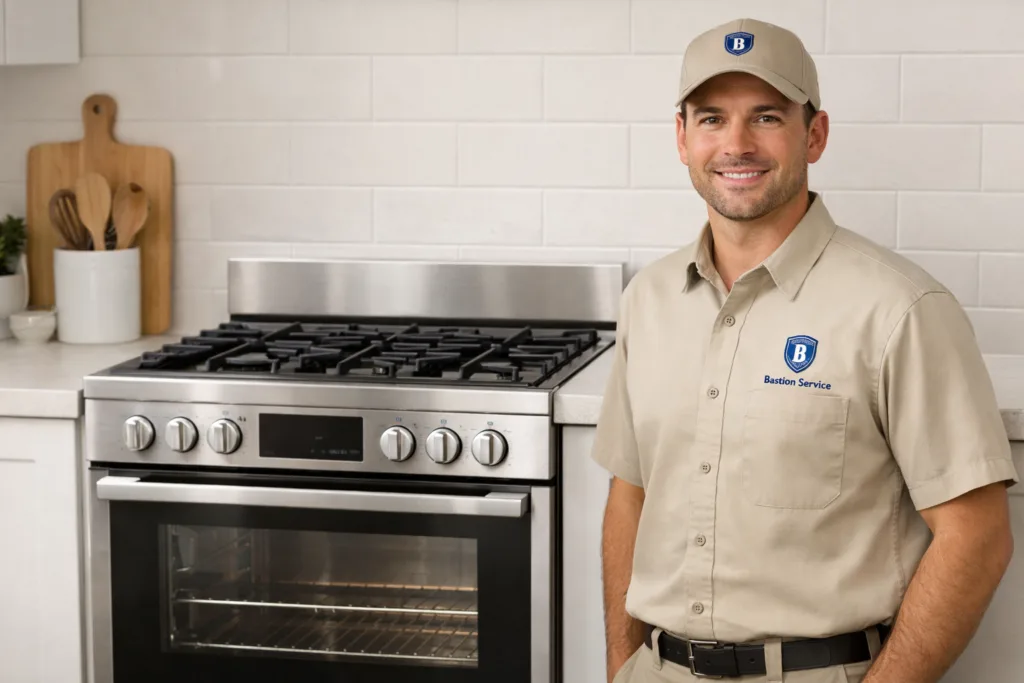
Range problems rarely stay confined to one inconvenience. A burner that clicks for several seconds before lighting, an oven that overshoots the set temperature, or a display that stops responding can all affect everyday cooking and make meal prep unpredictable. With Blomberg models, the most useful approach is to match the repair plan to the exact symptom rather than assume every heating issue has the same cause.
How Blomberg range problems usually show up
Many household range complaints start small. You may notice longer preheat times, one burner acting differently than the others, or baking results changing without any recipe changes. Those early signs often point to wear in ignition parts, temperature sensing issues, burner assembly problems, or electronic control faults.
In Palms homes, it helps to separate the problem by function:
- Cooktop only: ignition trouble, weak flame, one burner not working, constant clicking
- Oven only: no heat, slow preheat, uneven baking, inaccurate temperature
- Whole range behavior: display issues, control failures, intermittent power, multiple functions acting up at once
That distinction can save time because a surface burner issue and an oven heating issue may come from completely different components.
Common symptoms and what they may indicate
Burner clicks but does not ignite
This is one of the most common gas range complaints. Sometimes the cause is simple, such as a burner cap that is out of position, moisture after cleaning, or debris blocking the gas path. In other cases, the issue may involve the spark ignition system, switch harness, or a component that is no longer sending a reliable spark.
If the clicking is constant even after the burner is off, that can point to moisture intrusion or a failing ignition-related part. If there is a strong or lingering gas smell, stop using the appliance and address safety first.
Oven is not heating properly
A Blomberg oven that will not heat at all, heats too slowly, or stalls below the selected temperature may have a failed igniter on gas models, a heating element problem on electric models, a bad sensor, or a control issue. Sometimes the oven appears to start normally but cannot maintain heat through the full cooking cycle, which leads to undercooked food and inconsistent baking.
When the problem is intermittent, homeowners often describe it as “working sometimes” or “taking forever to preheat.” That pattern still deserves attention because partial failure often becomes total failure later.
Food cooks unevenly
If one side of a tray browns faster, the bottom scorches, or recipes suddenly need extra time, the range may not be regulating temperature correctly. A weak heating component, drifting sensor, poor door seal, or calibration problem can all create uneven performance. These symptoms are easy to blame on cookware or recipe timing, but repeated inconsistency usually means the appliance should be tested.
Weak burner flame or poor cooking performance
When a burner no longer brings pots to temperature like it used to, the cause may be clogged burner ports, burner parts that were reassembled incorrectly after cleaning, or an internal fault affecting normal gas flow and ignition behavior. Weak performance can be frustrating on its own, but it can also be an early warning sign before full ignition failure develops.
Display or control panel problems
A blank screen, flashing display, keypad that does not respond, or settings that change unexpectedly may indicate a power supply problem, damaged interface, wiring fault, or failing control board. Because modern ranges depend on electronic communication between controls and heating systems, a control problem can look like an oven problem even when the heating components themselves are still intact.
When you should stop testing the range
Some issues should not be repeatedly tested at home. Continued attempts to light a burner, forcing an oven through multiple preheat cycles, or using a range that overheats can add wear and make the original problem harder to isolate.
Use extra caution if you notice any of the following:
- Persistent gas odor
- Clicking that does not stop
- Burners lighting unevenly or delayed ignition
- Oven running much hotter than the selected temperature
- Controls shutting off or behaving unpredictably
- Tripped breakers or signs of intermittent power loss
These symptoms go beyond normal cooking inconvenience and are better handled with proper diagnosis.
What can cause range trouble after cleaning or heavy use
Homeowners often notice new problems after a spill, deep cleaning, or a period of heavy cooking. Moisture around igniters, misaligned burner caps, residue in burner ports, and heat stress from extended oven use can all change how the range behaves. Self-clean cycles can also expose weak sensors, door-lock components, and electronics that were already near failure.
That does not always mean the cleaning caused the failure by itself. In many cases, it simply exposed a part that was already worn.
Repair or replacement: what usually makes sense
Many Blomberg range issues are worth repairing when the fault is limited to a specific part or system, such as an igniter, element, temperature sensor, switch, interface, or control-related component. If the appliance is otherwise in good shape and fits your kitchen well, repair is often the more practical choice.
Replacement may make more sense when several major functions are failing at once, when the unit has ongoing repeat problems, or when the cost of correcting multiple issues approaches the value of the range. The best decision usually comes after the fault is identified clearly and the condition of the appliance is considered as a whole.
What to note before scheduling service
A few details can make troubleshooting faster and more accurate. Before service, write down what the range is doing and whether the problem is constant or intermittent. Useful notes include:
- Whether the issue affects the oven, the cooktop, or both
- Whether one burner is affected or all burners
- Whether the oven heats at all or just heats poorly
- Any display behavior, flashing codes, or unresponsive buttons
- Whether the problem began after a spill, outage, cleaning, or self-clean cycle
Basic cleaning of removable burner parts may help if they are visibly out of place, but homeowners should avoid disassembly or repeated reset attempts when the appliance is showing unstable operation.
Service focused on the symptom, not guesswork
Blomberg Range Repair in Palms is most useful when the real failure is identified first, whether that means an ignition issue, an oven temperature problem, or a control fault affecting normal operation. When the symptom pattern is understood clearly, it becomes much easier to decide whether repair is the right next step and what will restore more reliable cooking in your home.