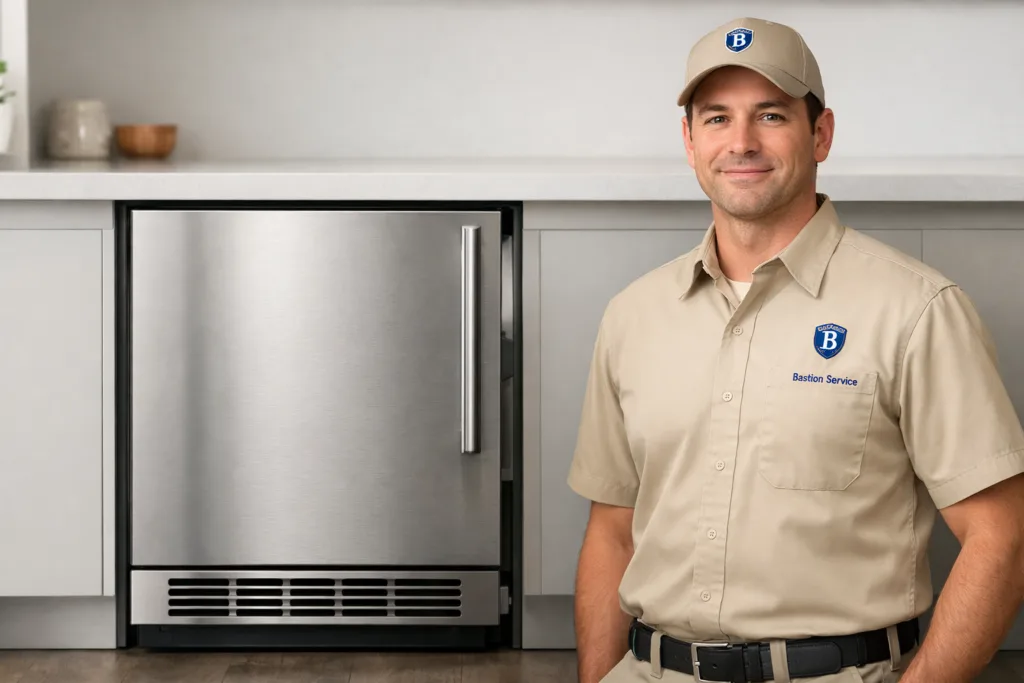
Ice makers usually give warning signs before they stop working completely. A Marvel unit that makes fewer cubes, drops wet ice, leaks under the cabinet, or starts cycling oddly often has a problem in the water supply, freeze cycle, drain path, or control system. Looking at the symptom pattern first helps narrow down whether the issue is simple wear, a maintenance-related problem, or a failed component that needs repair.
Start with the exact symptom, not just the loss of ice
Two ice makers can show the same outward problem for very different reasons. An empty bin may come from a water inlet issue, but it can also point to temperature trouble, a harvest failure, or a control problem. That is why symptom-based troubleshooting matters so much with compact built-in units.
No ice production
If the machine powers on but the bin stays empty, likely causes include low water flow, a blocked fill path, a faulty inlet valve, a sensor or control issue, or a freeze cycle that never completes properly. In some cases the unit cools, but not enough to form and release normal cubes. When there is no ice after a normal cycle window, the appliance usually needs service rather than repeated resets.
Slow ice production
Slow output often points to a system that still runs but is operating out of range. Restricted water supply, weak cooling performance, scale buildup, or temperature instability can all stretch out the time between batches. This problem is easy to ignore at first, but it often gets worse before it gets better on its own.
Small, hollow, or clumped ice
Odd cube size usually means the fill amount is inconsistent or freezing is incomplete. Thin or undersized cubes can happen when water pressure is low or the fill cycle is interrupted. Clumped ice may mean batches are partially melting in the bin, which can suggest poor temperature control or an issue with how the unit is cycling.
Water leaking from the unit
Leaks should be treated as urgent, especially with a built-in appliance. Water may be coming from a loose line connection, an overfill condition, a blocked drain, or a component that is no longer sealing properly. Even a small leak can lead to flooring damage, cabinet swelling, and moisture problems if it continues.
Buzzing, clicking, or repeated cycling noises
Some operating sound is normal, but new noises usually mean something has changed. Buzzing can point to valve strain, clicking may relate to control or cycling problems, and grinding or rattling can happen when ice forms where it should not. If the sound changes are paired with low production or leaking, the unit should be checked before more parts are affected.
Common causes behind Marvel ice maker problems
Marvel ice makers rely on a small group of systems working in the right sequence. When one stage falls out of range, the entire machine can seem unreliable even if it still turns on. In Mid-City homes, the most common repair paths often involve one or more of the following:
- Water inlet valve problems
- Restricted or inconsistent water supply
- Drain or pump-related issues on applicable models
- Scale or mineral buildup affecting fill or flow
- Temperature control or sensor faults
- Harvest cycle failures
- Fan or cooling performance issues
- Worn seals, fittings, or internal components
Because several different failures can produce similar symptoms, replacing a part based on guesswork often leads to extra cost without fixing the actual cause.
What a proper diagnosis should confirm
A useful service visit should do more than confirm that the ice maker is not working. It should identify where the process is breaking down: water entry, freezing, release, storage, or drainage. That makes it easier to tell whether the problem is isolated or part of a broader performance decline.
For residential Marvel ice maker repair in Mid-City, this usually means checking water delivery, internal temperature behavior, ice formation, release timing, drain function where applicable, and visible signs of wear or buildup. It is also important to rule out cases where the machine appears dead but is actually dealing with a fill, sensor, or cycling problem.
When homeowners should stop using the ice maker
Some problems allow limited use for a short time, but others should not be ignored. Shut the unit off and arrange service if you notice any of the following:
- Standing water under or inside the appliance
- Repeated leaking during or after a cycle
- Harsh mechanical noises that were not present before
- Ice melting and refreezing into solid clumps
- A unit that runs constantly without normal ice production
Continued operation in these conditions can increase wear on valves, pumps, fans, and control components. It also raises the risk of water damage around the appliance enclosure.
When service is worth scheduling right away
It makes sense to schedule service when basic cleaning does not restore normal operation, when reset attempts fail, or when the same symptom keeps returning. Leaks and no-ice complaints should usually be addressed quickly. Slow production, poor cube quality, and unstable cycling are also worth checking before they turn into a full shutdown.
In many Mid-City households, an undercounter ice maker is part of daily kitchen use, entertaining, or routine convenience. Once performance becomes inconsistent, waiting often means more disruption and a harder repair path later.
Repair or replace?
Many Marvel ice maker problems are repairable when the cabinet and sealed systems are otherwise in decent condition and the fault is limited to a specific serviceable part or operating issue. Water-related faults, drainage issues, control failures, and certain performance problems can often be corrected without replacing the unit.
Replacement becomes more reasonable when the appliance has multiple recurring failures, major cooling problems, significant internal wear, or repair costs that no longer make sense for the age and condition of the machine. Built-in placement can also affect the decision, since matching the opening and finish may matter just as much as the repair estimate.
Helpful steps before your appointment
If service is needed, a few details can make diagnosis faster:
- Note whether the issue is no ice, slow ice, leaking, clumping, or unusual noise
- Pay attention to whether the problem is constant or intermittent
- Check if the unit still powers on and cools
- Look for visible water around the front, underneath, or inside the bin area
- Avoid repeated resets that can blur the symptom history
The more specific the pattern, the easier it is to determine whether the issue is tied to fill, freeze, harvest, or drainage.
What Mid-City homeowners should expect from a repair decision
The goal is not only to get ice flowing again, but to understand why the problem happened and whether the fix is likely to hold. A straightforward diagnosis should clarify the failed component or operating condition, the urgency of the repair, and whether the appliance is a good candidate for continued use after service.
For households in Mid-City, that gives a clearer answer on whether to proceed with repair now, pause use until parts are addressed, or start planning for replacement if the machine shows broader wear.