
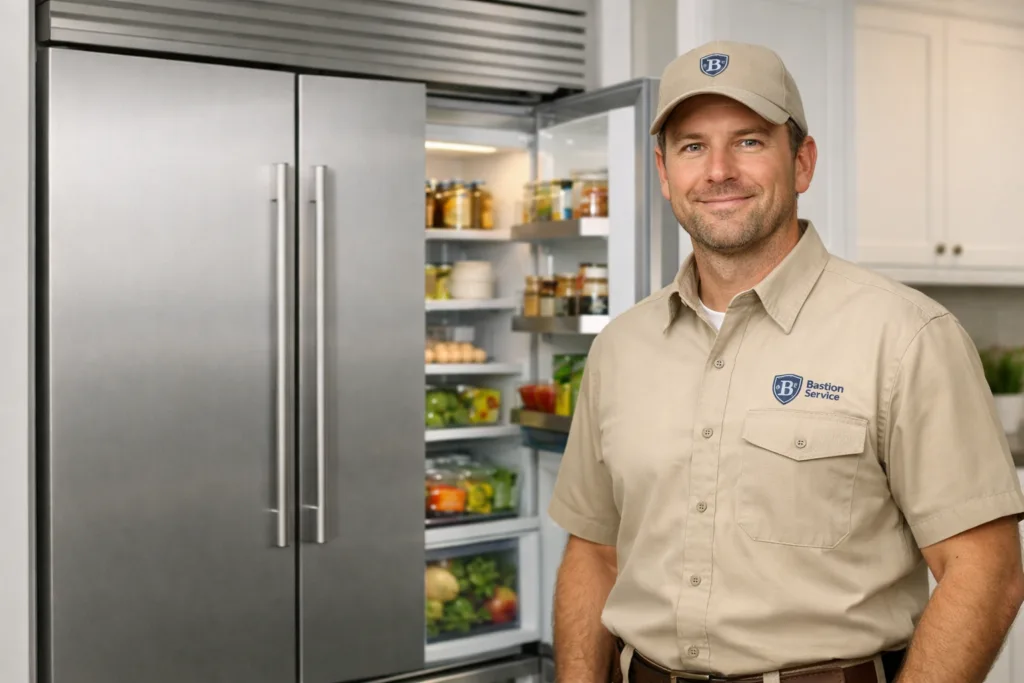





Temperature problems in a Marvel appliance rarely tell the whole story on their own. A refrigerator that feels warm, a freezer that starts frosting over, an ice maker that slows down, or a wine cooler that drifts above the set point can all come from very different causes. The useful first step is to look at the pattern of the symptom rather than assume a single failed part.
For specific Marvel appliance paths in Culver City, review Marvel Refrigerator Repair in Culver City, Marvel Freezer Repair in Culver City, and Marvel Ice Maker Repair in Culver City.
How Marvel cooling problems usually show up at home
Most household issues begin with one of a few noticeable changes: unstable temperature, interior moisture, unusual sound, reduced ice production, or longer run times. In built-in and specialty cooling appliances, those signs can be tied to airflow restrictions, fan trouble, gasket leaks, sensor errors, drain issues, control faults, or a deeper sealed-system problem.
It helps to notice whether the change was sudden or gradual. A sudden loss of cooling may point more toward an electrical or control issue, while a gradual decline can suggest airflow blockage, condenser contamination, fan wear, or a system losing efficiency over time. Intermittent performance often means the appliance is still operating, but not consistently enough to protect food or maintain proper storage conditions.
Marvel refrigerator symptoms worth checking early
Uneven cooling from shelf to shelf
If one area stays cold while another turns noticeably warmer, the problem may involve blocked internal airflow, a weak fan, inaccurate sensing, or a door that is not sealing tightly. This is one of the more common situations where the appliance still appears to work, but food quality suffers because temperatures are no longer consistent.
Watch for:
- Warmer items near the door or top shelf
- Cold spots or partial freezing in the back
- Frequent cycling without reaching the set temperature
- Condensation appearing near the gasket
Water inside the cabinet or on the floor
Leaks are often traced to a clogged drain path, condensation entering around a worn gasket, or frost melting in the wrong place. Even a small amount of recurring water matters because it can damage shelving, create odor, and affect surrounding cabinetry or flooring.
Constant running or new clicking sounds
A refrigerator normally cycles on and off, so a change in sound or run time usually means something has shifted. Continuous running may indicate dirty condenser surfaces, poor heat release, airflow trouble, or cooling-system strain. Repeated clicking can sometimes point to a start or control issue that should be evaluated before the unit stops cooling altogether.
Marvel freezer issues that can lead to food loss
Heavy frost buildup
Frost is often more than a cosmetic problem. It can come from a door seal leak, poor door alignment, a defrost problem, or warm air entering the compartment. As frost builds, airflow drops and the freezer has to work harder to maintain temperature.
Food softening even though the freezer still feels cold
This is a common sign of temperature swing rather than total failure. A freezer can remain cold to the touch while still spending too much time above the proper range for frozen storage. Causes may include fan issues, sensor or control faults, blocked vents, or compressor-related performance loss.
If you notice soft ice cream, partially thawed food edges, or inconsistent firmness from one day to the next, the problem is already affecting real storage conditions.
Marvel ice maker problems often start small
Low ice production or no ice at all
When output drops, the issue may be related to water supply, fill timing, scaling, sensing, or cabinet temperature. Because several faults create the same result, replacing parts without diagnosis can easily miss the real cause.
Small, cloudy, or irregular cubes
Changes in cube quality usually suggest inconsistent water flow, mineral buildup, or freezing irregularities. This kind of symptom often appears before the machine stops producing entirely, so it is worth treating as an early warning rather than a minor inconvenience.
Water pooling near the unit
Leaks around an ice maker should not be ignored. A loose connection, blocked drainage path, overfill condition, or internal freeze-up can all create recurring moisture. Continued operation may increase cabinet damage and lead to more extensive component wear.
Marvel wine cooler performance problems
Cabinet running warmer than the setting
Wine coolers depend on consistency, so even a modest temperature drift matters. The source may be restricted airflow, fan trouble, poor door sealing, thermostat issues, or declining cooling performance. If bottles never seem to reach the intended temperature, or the interior varies noticeably from top to bottom, the unit should be checked before the problem becomes a full no-cool failure.
Condensation or excess interior moisture
Moisture usually means warm air is entering the cabinet or humidity is no longer being managed properly. Gasket wear, alignment problems, and control issues are all possible causes. Over time, excess condensation can affect labels, shelves, and the overall storage environment.
Rattling, buzzing, or vibration
Because wine coolers are often installed in quiet living spaces, new noise tends to stand out quickly. Sometimes the cause is simple, such as leveling or panel contact. In other cases, it points to a worn fan or strain in the cooling system. A sound change that persists is worth attention, especially if it appears alongside temperature drift.
When a symptom suggests more than normal wear
Some performance changes are minor at first, but a few signs usually mean the appliance should not be left to “see if it fixes itself.” Pay closer attention if you notice:
- Repeated leaking
- Heavy or fast-returning frost
- Food not staying safely cold
- New persistent clicking, buzzing, or grinding
- An appliance that runs almost constantly
- Controls that do not respond normally
These symptoms can move from inconvenient to expensive if the appliance keeps operating under strain. In a home setting, that may mean spoiled food, damaged flooring, or a repair that grows from a limited component issue into a larger cooling failure.
Repair or replacement depends on the cause, not just the symptom
Many Marvel units are worth repairing when the cabinet is in good condition and the problem is tied to a serviceable component such as a fan, control, sensor, gasket, drain issue, or water-related part. Replacement becomes more likely when there is major cooling-system failure, severe corrosion, repeated breakdown history, or a repair cost that no longer makes sense for the appliance.
A warm wine cooler, a noisy refrigerator, and a leaking ice maker can each range from straightforward repair to a more serious system concern. That is why symptom pattern, age, overall condition, and part availability matter more than the surface complaint alone.
What to note before scheduling service in Culver City
Homeowners in Culver City can make diagnosis faster by writing down a few details before service is scheduled:
- The model number if it is easy to access
- When the symptom first appeared
- Whether the issue is constant or intermittent
- Any recent power interruption or cleaning
- Temperature changes, leaks, or unusual sounds
- Whether the door has been sealing normally
Those observations help separate a minor operating issue from a more serious cooling problem. For Marvel refrigerator, freezer, ice maker, and wine cooler concerns in Culver City, the most useful path is a symptom-based evaluation followed by a repair plan that fits the actual condition of the appliance.


