




Appliance problems rarely begin as a total failure. More often, a KitchenAid unit starts running a little louder, cooling less evenly, draining more slowly, or taking longer to finish normal tasks. Paying attention to those early changes can help prevent food loss, water damage, or a repair that grows more complicated than it needed to be.
For specific KitchenAid appliance paths in Palms, review KitchenAid Refrigerator Repair in Palms, KitchenAid Freezer Repair in Palms, and KitchenAid Ice Maker Repair in Palms.
For homeowners in Palms, the most useful first step is separating the symptom you can see from the failure causing it. The same outward problem can come from very different components, which is why guessing based on a single noise or error pattern often leads to frustration.
What KitchenAid appliance issues usually look like at home
Most household appliance calls start with a performance complaint rather than a complete shutdown. A refrigerator may still run while not holding temperature. A dishwasher may power on but leave standing water. An oven may heat, but not accurately enough for reliable cooking. These are the kinds of changes that interrupt daily routines long before the appliance stops altogether.
- Cycles that start but do not finish normally
- Intermittent cooling, heating, draining, or ice production
- Buzzing, grinding, rattling, clicking, or unusually loud operation
- Leaking water, excess condensation, or moisture buildup
- Displays, touch controls, or sensor functions that respond inconsistently
- A problem that seems minor at first but becomes more frequent over time
Those symptoms may come from wear, blockage, airflow trouble, ignition faults, drain restrictions, seal failures, or electronic control issues. A good diagnosis narrows the problem to the system actually failing instead of the one that merely looks suspicious.
Symptom-based guidance by appliance type
Refrigerator and freezer problems
KitchenAid refrigerators and freezers often show trouble through warmer compartments, frost buildup, water under the unit, louder fan noise, or food that spoils faster than expected. Sometimes the freezer appears cold enough, yet ice cream softens or frost accumulates on packages. In other cases, one shelf stays cold while another does not.
These patterns can point to airflow restrictions, defrost issues, door gasket leaks, fan motor problems, clogged drains, sensor faults, or more serious cooling-system concerns. If temperatures are drifting or moisture is collecting where it should not, waiting too long can lead to food waste and extra strain on the appliance.
Ice maker problems
An ice maker that stops producing, makes hollow cubes, leaks, or creates slow, inconsistent batches may not be failing for just one reason. Water supply issues, fill problems, low temperatures, sensor faults, and refrigerator cooling problems can all affect ice production.
If the ice changes in size or quality, or the bin starts clumping and melting between cycles, that often means the issue is already affecting normal operation. Early service can help prevent a small water or temperature problem from turning into a bigger one.
Dishwasher problems
KitchenAid dishwashers commonly develop symptoms such as poor cleaning, standing water, leaks near the door, unusual wash noise, or a cycle that pauses and never completes. Some machines seem to run normally but leave residue on dishes or fail to dry well. Others stop draining fully after the final cycle.
Possible causes include filter or drain restrictions, pump wear, spray arm blockage, latch problems, water inlet issues, and control failures. A leaking dishwasher deserves prompt attention because repeated use can affect nearby flooring, baseboards, or cabinetry.
Cooktop and range problems
Cooktop and range issues often show up as burners that click repeatedly, ignite slowly, heat unevenly, or fail to respond to control changes. On electric models, one element may overheat or cycle unpredictably. On gas models, weak flame, delayed ignition, or burner behavior that changes from one use to the next can suggest component wear or ignition trouble.
If a burner does not operate normally, continued use can make cooking less predictable and may place added stress on related parts. Repeated clicking, inconsistent heat, or controls that do not match burner performance are all good reasons to have the unit checked. If there is a strong gas odor, stop using the appliance and treat it as a safety issue first.
Oven and wall oven problems
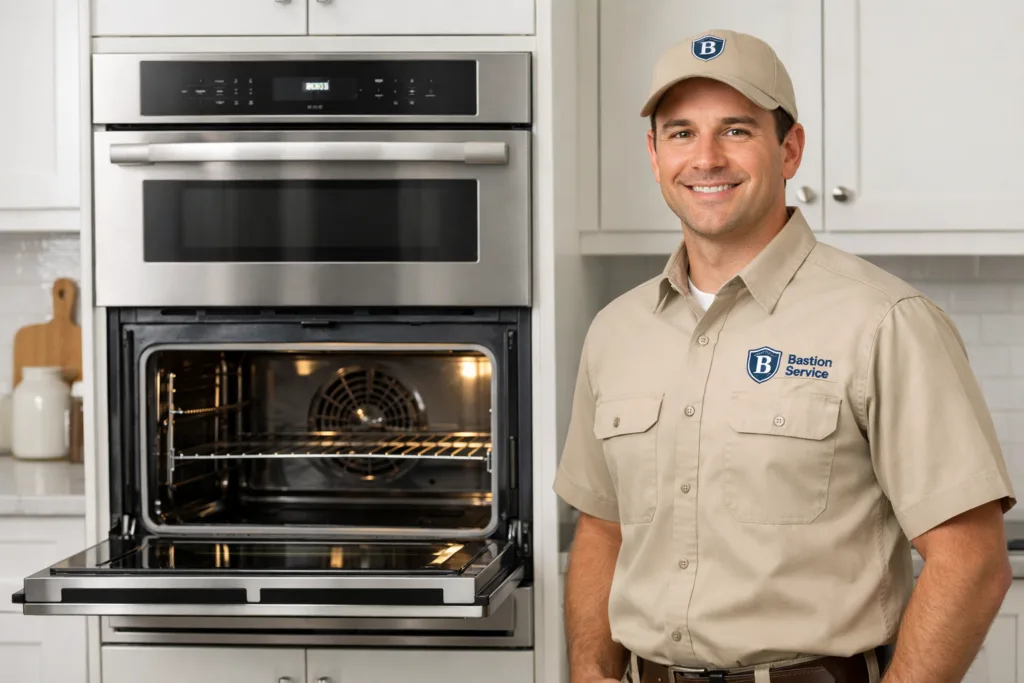
KitchenAid ovens and wall ovens often show trouble through slow preheating, uneven baking, temperature swings, shutdowns during operation, or doors that no longer seal well. A homeowner may first notice that familiar recipes suddenly take longer, cook unevenly, or brown too quickly on one side.
These symptoms can be related to heating elements, temperature sensors, control boards, door seals, relays, or calibration problems. Because oven issues can hide behind what seems like simple underperformance, it helps to evaluate the full pattern rather than replacing one part based on temperature alone.
Wine cooler problems
Wine cooler performance depends on stability. When a KitchenAid wine cooler begins running too warm, cycling too often, collecting condensation, vibrating more than usual, or failing to seal properly, even a modest change can affect long-term storage conditions.
Common causes include fan issues, airflow restrictions, control problems, and door-seal wear. If the unit is no longer holding a steady temperature, it is worth addressing before the fluctuation becomes constant.
Why symptoms can be misleading
One of the reasons appliance repair can be frustrating is that the same symptom may come from multiple failures. Poor refrigerator cooling might involve a fan, a sensor, a defrost problem, blocked airflow, or a larger sealed-system issue. A dishwasher that stops mid-cycle could have a drain problem, a door-latch fault, or an electronic control issue. An oven that seems too cool may actually be heating normally at times and failing only under certain conditions.
That is why symptom tracking matters. Homeowners can often help shorten the diagnostic process by noting when the issue appears, whether it happens every cycle, what sounds changed, and whether any moisture, frost, or error display showed up at the same time.
Signs you should stop waiting
Some issues can be monitored briefly, but others should be addressed sooner rather than later. It makes sense to schedule service when the appliance is no longer dependable in daily use or when the symptom is creating a secondary risk.
- Cooling is inconsistent enough to affect food storage
- The dishwasher leaks or leaves water in the tub repeatedly
- The oven or range no longer heats predictably
- The same problem keeps returning after cleaning or resetting the unit
- Noises, odors, or moisture are getting worse
- You are changing household routines to work around the appliance
In Palms homes, the practical question is usually simple: is the appliance still doing its job reliably, or are you managing around it every day? Once a unit starts disrupting meals, cleanup, or food storage, delay often becomes more costly than action.
Repair or replace: how to evaluate the next step
Not every repair is the right choice, and not every problem means replacement. The smarter decision usually depends on the type of failure, the appliance’s overall condition, whether breakdowns have become frequent, and whether the repair corrects the underlying issue instead of only buying a little more time.
Repair is often reasonable when the fault is limited, the appliance is otherwise in solid shape, and expected performance can be restored without chasing multiple unrelated problems. Replacement becomes more worth considering when several systems are wearing out at once, major failures keep returning, or the cost of restoring the unit approaches the practical value of keeping it.
What helpful service looks like for a household appliance problem
A useful appointment is not just about naming a bad part. It should explain what the symptom pattern suggests, what component or system appears to be responsible, and whether the recommended repair matches the age and condition of the appliance. That gives homeowners enough information to make a confident decision rather than approving work based on guesswork.
For KitchenAid appliance repair in Palms, that approach matters across refrigerators, freezers, ice makers, dishwashers, cooktops, ranges, ovens, wall ovens, and wine coolers alike. When the problem is diagnosed accurately, it becomes much easier to decide whether repair is the sensible next step and how quickly the issue should be addressed.


