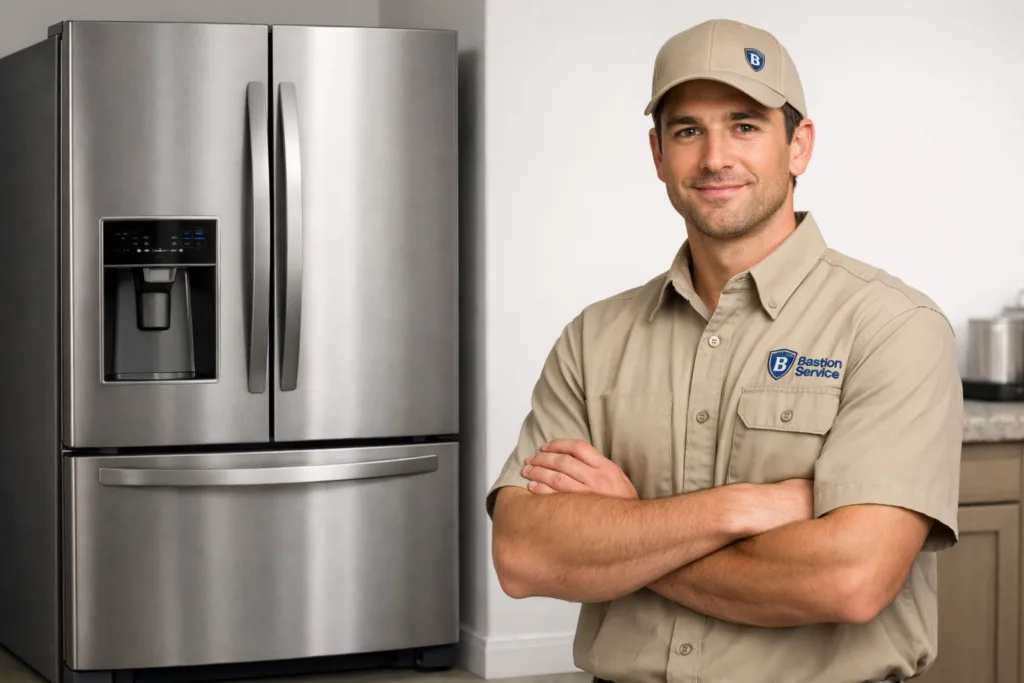
A Kenmore refrigerator that starts warming, leaking, frosting over, or running louder than usual can affect food storage quickly. The most useful way to approach the problem is by matching the visible symptom to the system that is likely failing, since similar cooling complaints can come from very different causes.
How Kenmore refrigerator problems usually show up
Most household refrigerator issues fall into a few patterns: weak cooling, temperature swings, airflow trouble, frost buildup, water leaks, or unusual noise. In many cases, the refrigerator is still running, lights are still on, and the failure looks partial rather than complete. That is why symptom-based diagnosis matters. A fresh food section that warms up while the freezer seems colder than normal points in a different direction than a unit that is warm in both compartments.
Kenmore refrigerators rely on a combination of fans, controls, thermistors, defrost parts, door seals, drain paths, and sealed cooling components. When one part falls out of range, the first symptom you notice may not be the root cause.
Cooling problems and temperature swings
If food is spoiling early or drinks are not staying cold, the refrigerator may be losing cooling capacity, circulating air poorly, or reading temperature incorrectly. Common symptom patterns include:
- The freezer stays fairly cold, but the refrigerator section turns warm
- The unit runs constantly but still does not reach normal temperature
- Items near one vent freeze while the rest of the shelf feels warm
- Temperatures drift up and down through the day
These complaints can be tied to restricted airflow, an evaporator fan problem, a failing damper, sensor issues, dirty condenser coils, or a defrost failure that blocks circulation with ice. In some cases, the problem is more serious and involves the compressor or sealed system. A refrigerator that never seems to shut off but still cannot hold temperature should not be ignored for long, because extended runtime adds wear and can lead to more food loss.
When the freezer works but the refrigerator is warm
This is one of the most common residential complaints. Homeowners often assume the refrigerator is “half working,” but that pattern usually means cold air is not moving correctly from the freezer side into the fresh food section. Frost-covered evaporator coils, a weak fan, blocked vents, or a damper problem are all possibilities. If produce drawers turn warm while frozen food still seems solid, airflow and defrost components are worth checking closely.
When everything feels too warm
If both sections are losing temperature, the issue may be broader. Causes can include control failure, compressor starting trouble, condenser airflow problems, or a sealed cooling issue. If the cabinet is warm and the unit is clicking, humming without cooling, or shutting off and retrying, service should be scheduled sooner rather than later.
Frost buildup and airflow restrictions
Heavy frost inside a Kenmore refrigerator or freezer often points to a defrost problem or warm air entering where it should not. Frost can form on the back panel, around vents, near drawers, or around the door opening. Once that ice buildup grows, normal airflow drops and temperatures become uneven.
Possible causes include:
- Defrost heater or defrost control problems
- Thermistor or sensor faults
- A door gasket that is torn, loose, or not sealing evenly
- A door left slightly ajar because of alignment or overloaded shelves
Recurring frost is more than a cosmetic issue. It can reduce cooling performance, increase energy use, and create a cycle where the refrigerator runs longer without stabilizing temperature.
Water leaks, condensation, and interior moisture
Water around a refrigerator can come from several different places, and the repair depends on where the moisture is collecting. A puddle under crisper drawers often suggests a clogged or frozen defrost drain. Water near the back of the appliance may point to a supply line, connection, or valve issue on models with water or ice service. Condensation on shelves or around the gasket may mean warm air is entering the cabinet and creating excess moisture.
Watch for these signs:
- Water pooling beneath drawers
- Ice forming in the bottom of the freezer
- Drips near the dispenser or water line area
- Persistent moisture around the door opening
Leaks are worth addressing early, especially in Rancho Palos Verdes homes where repeated moisture can affect surrounding flooring, trim, and cabinetry.
Noises that should not be ignored
Refrigerators are never completely silent, but new sounds paired with poor performance often mean a mechanical issue is developing. A buzzing fan, repeated clicking, rattling from behind the unit, or a grinding sound inside the freezer can all help narrow down the fault.
Noise becomes more important when it appears with symptoms such as:
- Slow cooling
- Long run times
- Intermittent shutoff
- Frost returning after manual defrosting
- Sections warming unevenly
For example, clicking near the compressor area may indicate startup trouble, while a scraping or whirring sound inside the freezer can point to a fan contacting ice buildup. Treating the sound as part of the symptom pattern usually leads to a better repair decision than focusing on noise alone.
Signs the problem is getting worse
Some refrigerators fail all at once, but many give warnings first. Homeowners in Rancho Palos Verdes often notice small changes before a full loss of cooling:
- Ice cream softens even though the freezer still looks cold
- Milk spoils sooner than expected
- The motor seems to run almost nonstop
- Fresh food freezes near one vent
- Puddles appear, then disappear, then return
- Frost is cleared manually but comes back quickly
These intermittent symptoms often mean a component is weakening rather than completely failed. That stage is often the best time to have the refrigerator evaluated, before the complaint becomes harder to reproduce or causes larger food-storage problems.
Repair or replace?
Whether a Kenmore refrigerator is a good repair candidate depends on the confirmed failure, the age of the unit, its overall condition, and the type of part involved. Many common issues are repairable, including fan motors, defrost parts, drain problems, door gaskets, controls, and some temperature-sensing components.
Replacement becomes more likely when the refrigerator has a major sealed-system or compressor-related issue, especially if the unit is older or has multiple developing problems at the same time. The key question is not just what it costs to restore operation today, but whether the repair supports reliable performance afterward.
Situations that often support repair
- Single-part failures affecting airflow or defrost
- Drain clogs or leak-related service
- Door seal problems
- Fan or control issues on an otherwise solid refrigerator
Situations that may push the decision toward replacement
- Major sealed cooling failures
- Compressor-related problems on an older unit
- Repeated breakdowns with declining temperature performance
- Extensive wear beyond the current symptom
What a focused service visit should accomplish
A useful service visit should identify whether the complaint is being caused by airflow restriction, defrost failure, control trouble, moisture intrusion, fan problems, or a larger cooling-system fault. That matters because the right repair path for a leaking refrigerator is different from the right path for one that is warm and clicking, even if both started the same week.
Homeowners should expect the issue to be evaluated in relation to the exact symptom pattern, including where the temperature problem is happening, whether frost is present, whether water is collecting inside or outside the cabinet, and whether noise changes during operation. That kind of review makes it easier to decide if the refrigerator is a good candidate for repair and how urgent the problem has become.
When to stop waiting
It makes sense to schedule service when the refrigerator is no longer keeping safe temperatures, the freezer is thawing, leaks are recurring, frost buildup keeps returning, or the unit is making unusual sounds while performance drops. Delaying too long can turn a smaller failure into a larger one, especially when excess runtime stresses other components.
If your Kenmore refrigerator in Rancho Palos Verdes is showing a repeated symptom instead of a one-time glitch, it is usually time to have the cause identified rather than continuing to adjust settings and hope it recovers on its own.