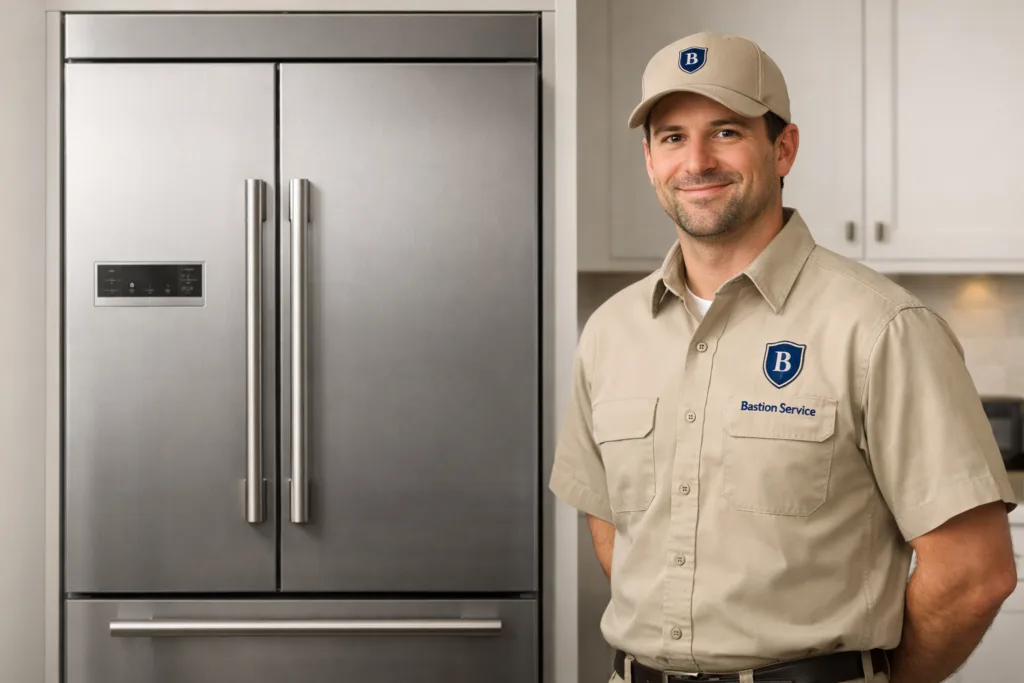
Refrigerator problems rarely stay small for long. If a Dacor unit is warming, leaking, frosting over, or making a new noise, the most useful step is to match the symptom pattern to the likely system involved before deciding on repair.
How Dacor refrigerator issues usually show up
Most service calls start with one noticeable change: food is not as cold, the freezer seems inconsistent, water appears under the unit, or the refrigerator begins running longer than normal. What matters is that several different faults can create the same surface symptom. A temperature problem, for example, may come from airflow restriction, a defrost failure, a fan issue, a sensor problem, or a more serious sealed-system condition.
That is why symptom details matter. Whether the fresh food section is warm while the freezer still works, whether frost keeps returning after you clear it, or whether the noise happens only during certain cycles can all point in different directions.
Common symptoms and what they may indicate
Fresh food section not staying cold
If drinks feel cool but not cold, produce spoils early, or temperatures swing during the day, the issue may involve poor internal airflow, a failing evaporator fan, frost buildup behind panels, or a control problem. In many cases, homeowners notice that the refrigerator compartment warms first even though the freezer seems less affected.
Freezer cold but refrigerator warm
This pattern often suggests that cold air is being created but not moving correctly into the fresh food section. Ice blocking the evaporator area, a failed fan motor, blocked vents, or a defrost system problem are all common possibilities. If this continues, cooling performance usually gets worse rather than better.
Water under the refrigerator or inside drawers
Leaks can come from a clogged defrost drain, condensation problems, an ice maker supply issue, or a door that is not sealing well enough to control moisture. Water under crisper drawers often points to drainage trouble, while water around the front or underneath the cabinet may need a broader inspection.
Frost buildup inside the unit
Frost on interior panels, around drawers, or near vents usually means moisture is getting where it should not or that the refrigerator is not completing defrost cycles correctly. Door gasket wear, airflow problems, and failed defrost components are all worth checking when frost keeps returning.
New clicking, buzzing, rattling, or fan noise
Not every refrigerator sound means a major failure, but a change in sound should not be ignored. A fan blade hitting ice can sound very different from a compressor struggling to start, yet both may be described as clicking or buzzing. The timing of the noise often helps identify the source.
Ice maker problems
If the refrigerator is cooling but ice production slows down, stops completely, or becomes inconsistent, the problem may involve temperature conditions, water flow, valve operation, or an ice maker assembly issue. Since ice production depends on proper cooling, these complaints should be evaluated along with overall refrigerator performance.
Signs the problem may be getting worse
Some units still appear to run even while cooling performance declines. That can make it easy to wait too long. It is smart to schedule service if you notice any of the following:
- Food spoiling earlier than normal
- Soft frozen items or partial thawing
- Long run times without reaching temperature
- Recurring frost after manual clearing
- Leaks that return after cleanup
- Repeated clicking, grinding, or loud fan noise
- Cabinet walls feeling unusually warm
These symptoms suggest the refrigerator is no longer operating normally and may place extra strain on major components if left alone.
Why accurate diagnosis matters
Replacing parts based on guesswork is expensive and often ineffective. A warm refrigerator does not automatically mean a thermostat issue, and frost does not automatically mean a bad gasket. Dacor refrigeration can involve closely related airflow, control, and cooling systems, so the real cause has to be confirmed before the repair path is chosen.
For homeowners seeking Dacor Refrigerator Repair in El Segundo, this matters most when the symptom could point either to a straightforward parts repair or to a larger refrigeration-system problem. Knowing which category the issue falls into helps you make a better decision about cost and next steps.
When to limit use until service is completed
Sometimes continued use can create more damage. If temperatures are clearly unstable, the refrigerator is repeatedly clicking without fully cooling, or a fan is making loud contact noise, it may be best to reduce use until the unit is assessed. This is especially true when frost is blocking circulation or when water leakage is reaching the floor.
Lowering the control setting or shifting food around may help temporarily, but it does not fix the underlying issue. In some cases, those workarounds only delay action while the problem spreads.
Repair or replacement?
Many refrigerator problems are still practical to repair, especially when they involve fan motors, drains, door gaskets, sensors, valves, or certain control-related components. Repair becomes less attractive when the unit has a major sealed-system failure, repeated expensive breakdowns, or a combination of age and declining reliability.
The better approach is to base the decision on the actual fault, the condition of the appliance, and the likely long-term result after repair. That prevents overcommitting to a failing unit and also avoids replacing a refrigerator that only needs a targeted fix.
What to note before scheduling service
A few observations can help narrow the cause faster:
- Whether the freezer is still holding temperature
- Whether the problem appeared suddenly or gradually
- Whether frost is visible on back panels or around vents
- Whether doors are closing and sealing normally
- When the noise happens and how often
- Whether leaking occurs constantly or only at certain times
- Whether the issue started after a power interruption
These details are often more helpful than a general description that the refrigerator is simply “not working right.”
A practical service approach for El Segundo homeowners
In El Segundo homes, refrigerator service is most effective when it focuses on real operating conditions rather than assumptions. That means checking temperature behavior, airflow, frost patterns, drain function, fan operation, and door sealing, then determining whether the fault is mechanical, electrical, control-related, or part of the cooling system itself.
That kind of step-by-step evaluation gives homeowners a clearer picture of whether the problem is isolated and repairable or whether the refrigerator is entering a more costly stage of failure.