
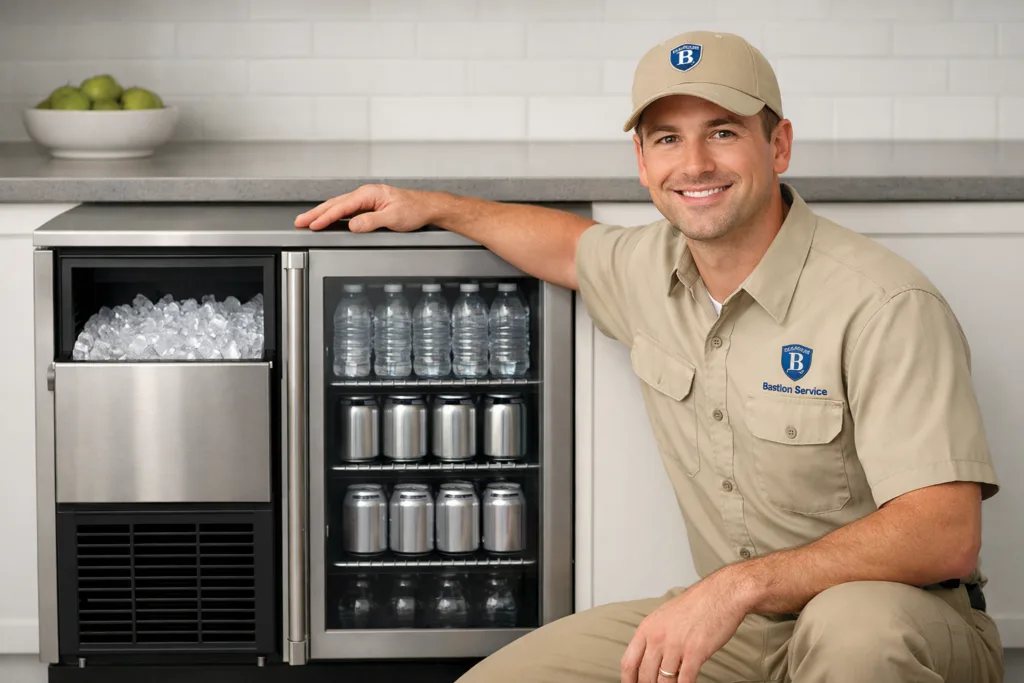





EdgeStar cooling appliances are often chosen for compact kitchens, secondary storage, entertaining spaces, and specialty use at home. When one starts acting up, the same outward symptom can come from very different internal causes. A refrigerator that feels warm, an ice maker that suddenly slows down, or a wine cooler that develops condensation may each need a different fix depending on airflow, controls, drainage, seals, or cooling performance.
For specific EdgeStar appliance paths in Cheviot Hills, review EdgeStar Refrigerator Repair in Cheviot Hills, EdgeStar Freezer Repair in Cheviot Hills, and EdgeStar Ice Maker Repair in Cheviot Hills.
Start with the symptom pattern
The most useful way to evaluate an EdgeStar appliance problem is to look at what changed first. Did cooling fade gradually or stop all at once? Is the unit running constantly, cycling too often, or staying silent? Is moisture appearing inside the cabinet, under the appliance, or around the door? Those details help separate a simple maintenance-related problem from a part failure or a more serious system issue.
For households in Cheviot Hills, early attention matters because small cooling problems can turn into food loss, water damage, frost buildup, or added wear on the appliance. Testing the actual fault is far more reliable than replacing parts based only on a guess.
EdgeStar refrigerator problems homeowners notice most
Refrigerator not cooling well
If the fresh food section feels warm, temperatures swing throughout the day, or items near the back freeze while other areas stay too warm, common causes include blocked airflow, fan trouble, sensor or thermostat issues, frost buildup, or a door that is not sealing tightly. In some cases, the refrigerator is still running but no longer moving cold air correctly where it is needed.
Watch for signs like spoiled food sooner than expected, drinks that never get fully cold, or a compressor that seems to run longer than normal. Those clues usually point to a real cooling problem rather than a temporary fluctuation.
Water inside or under the refrigerator
Water leaks are easy to dismiss at first, especially if they appear only occasionally, but they should be taken seriously. Moisture can come from a blocked drain path, excess condensation, frost melting in the wrong area, or a poor door seal that lets warm air enter the cabinet. Even a minor recurring leak can damage surrounding surfaces and lead to odor issues inside the appliance.
New clicking, buzzing, or rattling sounds
Every refrigerator makes some operating noise, but a noticeable change usually means something has shifted from normal. Fans can strike ice, internal panels can vibrate, and starting components can click repeatedly when the system is struggling. If the sound is new and cooling performance also seems off, both symptoms should be considered together.
Common EdgeStar freezer issues
Food softening or partial thawing
When frozen items lose their firmness, stick together, or develop frost and thaw patterns, the freezer may not be maintaining a stable low temperature. Possible reasons include restricted airflow, a control problem, frost accumulation around evaporator components, or a door that is not closing as well as it should. This is one of the clearest signs that service should not be delayed.
Heavy frost buildup
Excess frost is more than a cosmetic issue. It can reduce usable storage space, interfere with airflow, and make the freezer work harder for longer periods. Repeated frost often points to warm air infiltration, sealing problems, or a defrost-related failure. If the frost returns quickly after clearing, the underlying condition usually remains unresolved.
Freezer runs almost nonstop
A freezer that rarely seems to rest may be compensating for lost cooling, dirty heat-dissipating surfaces, internal frost restriction, or aging components. Constant operation increases energy use and can accelerate wear. If the cabinet temperature is rising while runtime increases, that combination deserves prompt inspection.
EdgeStar ice maker symptoms and what they often mean
No ice production
An ice maker that stops producing can fail for several reasons, including water supply interruption, filling problems, mineral buildup, freezing in the wrong place, or faults during the harvest cycle. Since the water system, freezing system, and control sequence all have to work together, no-ice complaints usually require step-by-step diagnosis rather than a single assumed fix.
Small, hollow, or cloudy ice
If ice quality changes before production stops entirely, that early warning should not be ignored. Undersized or misshapen cubes often suggest water flow restrictions, scale buildup, inconsistent freezing conditions, or supply problems. Catching this stage early may prevent a complete no-ice failure.
Leaks, overflow, or standing water
Water around an ice maker can come from drainage trouble, supply issues, leveling problems, or internal component faults. Because moisture can affect flooring and nearby cabinetry, this is one of the problems that should be handled quickly rather than monitored for weeks.
EdgeStar wine cooler problems that affect storage conditions
Cabinet running warm
A wine cooler does not need to feel as cold as a refrigerator, but it does need to maintain a stable environment. If the cabinet drifts above the selected setting, cools unevenly, or struggles during normal use, possible causes include fan issues, sensor faults, control problems, poor door sealing, or cooling system trouble. The main concern is consistency, not just whether the interior feels somewhat cool.
Condensation on the glass or shelves
Visible moisture can point to sealing issues, airflow imbalance, or humidity entering where it should not. In a wine cooler, condensation often appears before owners notice a more obvious temperature problem. That makes it a useful early symptom rather than a minor nuisance.
Vibration or louder operation
Wine coolers are commonly placed where sound is easier to notice, so unusual vibration, fan noise, or repeated cycling often gets attention early. If the appliance sounds different and the interior temperature also seems less stable, it may be developing a component issue that is easier to address before performance drops further.
Signs the appliance should not just be “watched for a while”
- The cabinet is no longer holding a safe or steady temperature.
- Water is leaking onto the floor or into surrounding materials.
- The appliance clicks repeatedly, struggles to start, or runs without much cooling effect.
- Frost buildup returns quickly after being removed.
- Ice production has become unreliable or stopped completely.
- The unit has a burning smell, trips power, or will not power on consistently.
These patterns usually indicate more than a temporary fluctuation. Waiting may increase repair cost or reduce the chance of preserving food and avoiding surface damage in the home.
When continued use can make the problem worse
Some homeowners keep a struggling unit running because it still works a little. That can be risky. A refrigerator with weak cooling may spoil food before total failure becomes obvious. A freezer that runs continuously may keep straining while the temperature still rises. An ice maker with an active leak can damage nearby materials, and a wine cooler that cycles erratically may no longer protect contents the way it should.
If the appliance is leaking steadily, making severe new noises, losing cooling rapidly, or showing any electrical irregularity, normal use should usually be paused until the problem is evaluated.
Repair or replace?
The right decision depends on the age of the unit, the failed part category, the overall condition of the appliance, and whether performance has been declining for some time. Problems involving fans, switches, controls, seals, drains, or other accessible components are often more straightforward to address. More serious cooling-system or compressor-related failures may call for a closer cost comparison.
For many homeowners in Cheviot Hills, the key question is whether the repair is likely to restore stable daily use at a reasonable value. That is where proper diagnosis matters most. It helps distinguish a targeted repair from a situation where replacement makes more sense.
What a service visit should help you understand
A worthwhile appointment should explain which system is failing, why the visible symptom is happening, and whether the appliance can continue operating safely in the short term. It should also clarify whether the issue appears isolated or whether there are signs of broader wear affecting long-term reliability.
That kind of symptom-based evaluation is especially helpful with EdgeStar refrigerators, freezers, ice makers, and wine coolers, where similar complaints can trace back to very different causes. For households in Cheviot Hills, the goal is not just getting an appliance running again, but making an informed repair decision based on the actual condition of the unit.


