




Dacor appliances are built for performance, but the way a problem appears at home is not always the way it starts internally. A refrigerator that seems to be “running fine but not cooling enough,” a dishwasher that leaves water at the bottom, or an oven that suddenly bakes unevenly can each involve more than one system. Looking at the full symptom pattern helps separate a straightforward repair from a larger issue involving controls, airflow, drainage, ignition, or temperature regulation.
For specific Dacor appliance paths in Marina del Rey, review Dacor Refrigerator Repair in Marina del Rey, Dacor Freezer Repair in Marina del Rey, and Dacor Dishwasher Repair in Marina del Rey.
How Dacor appliance problems usually show up
Many service decisions become easier once the symptoms are grouped correctly. In Marina del Rey homes, the most common complaints tend to fall into a few categories: temperature problems, water problems, ignition or heating problems, noise changes, and electronic control issues. Those categories matter because they point toward different parts of the appliance.
For example, an appliance that still powers on but does not complete its job normally often has a different type of fault than one that is completely unresponsive. A unit that works inconsistently from one cycle to the next may indicate a control, sensor, or connection issue rather than a hard mechanical failure. That distinction can save time and avoid replacing parts based on guesswork.
Refrigerator and freezer symptoms worth watching closely
Dacor refrigerator and freezer problems often become more urgent than other appliance issues because food safety is involved. A refrigerator compartment that feels warmer than usual, soft frozen items, heavy frost, pooling water, or a machine that runs almost constantly are all signs that cooling performance should be checked promptly.
What warming temperatures can mean
If the refrigerator section warms while the freezer still seems partly normal, the issue may involve airflow, a fan problem, frost blocking circulation, or a sensor-related fault. If both sections are warming, the cause may be broader, including compressor-related behavior, start components, defrost trouble, or control failures. Not every cooling complaint means the sealed system has failed, which is why symptom-based diagnosis is important.
Frost, leaks, and unusual sounds
Frost buildup can point to a defrost problem, door sealing issue, or airflow restriction. Water under or inside the unit may come from a blocked drain path, condensation issue, or ice-maker-related leak. Buzzing, clicking, or sudden changes in sound can indicate fans, relays, or other components struggling to operate normally.
Freezer performance is especially important to monitor. If items are no longer staying fully frozen, continued use can lead to food loss even when the appliance still appears to be running.
Dishwasher problems that often have more than one cause
Dacor dishwashers commonly show trouble through poor cleaning, standing water, leaks, unusual noise, failure to start, or dishes that come out wet at the end of the cycle. These symptoms are easy to notice, but the root cause may be in the wash system, drain system, heating circuit, latch, or controls.
Poor cleaning and wet dishes
If dishes come out with residue or food particles, the problem may involve spray arm blockage, circulation weakness, loading-related interference, or buildup affecting water movement. If dishes are clean but still wet, the issue may be tied to heating performance, rinse aid use, or a drying-related component rather than the wash system itself.
Standing water and leaks
Standing water at the bottom of the tub often points to a drain restriction, drain pump issue, or trouble in the drain path. Leaks may come from a door gasket, hose connection, pump seal, or alignment problem that allows water to escape during operation. When water is reaching the floor, service should not be put off, since repeat leaking can affect cabinetry and nearby surfaces.
Cooktop and range issues often start with ignition or heat control
Dacor cooktops and ranges can develop problems that seem minor at first, such as delayed ignition, repeated clicking, weak burner performance, or heating that feels slower than normal. These symptoms often become more disruptive with continued use, especially if moisture, residue, wear, or electrical faults are involved.
Gas burner concerns
Burners that click repeatedly, ignite inconsistently, or produce an uneven flame may involve the igniter, burner cap alignment, switch, or related ignition components. If ignition behavior changes after spills or cleaning, moisture or residue may be part of the pattern, but persistent problems should still be checked. Any strong or recurring gas odor should be treated as a safety concern first, not as routine appliance behavior.
Electric heating and control response
On electric models, a burner that will not heat properly, cycles unpredictably, or runs hotter than expected may point to an element, switch, sensor, relay, or control issue. If the control panel responds intermittently, the problem may be electronic rather than limited to the heating surface itself.
Oven and wall oven performance problems
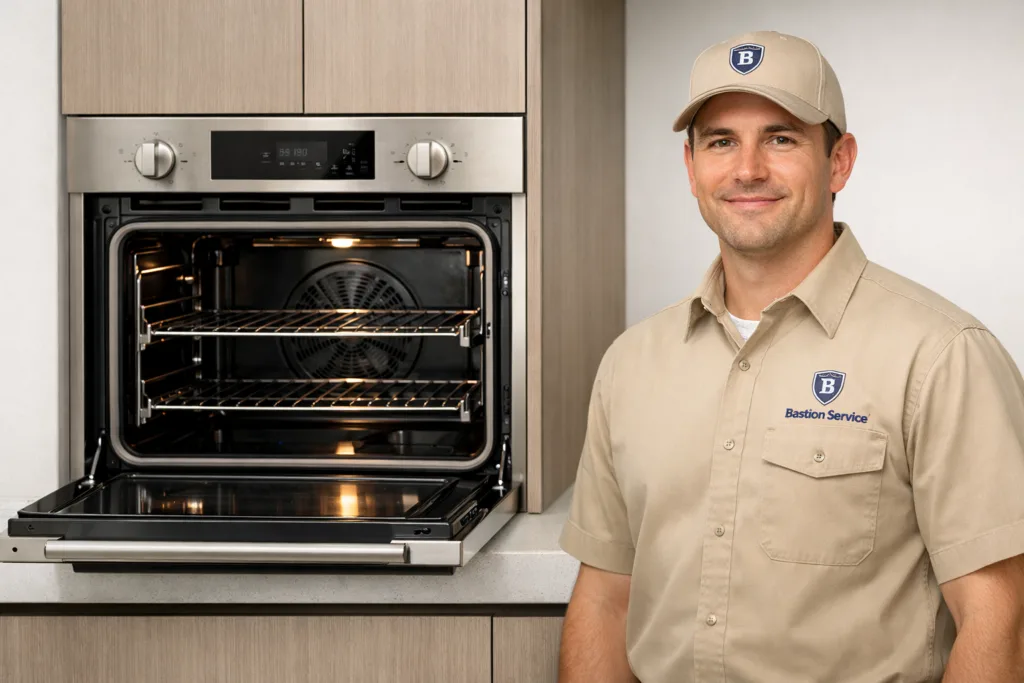
Dacor ovens and wall ovens often show trouble through slow preheating, uneven baking, error messages, inaccurate temperatures, or a unit that will not start a cycle. These complaints may seem simple on the surface, but cooking performance depends on multiple parts working together.
Uneven baking and temperature swings
If one rack browns faster than another or food comes out inconsistent from the same recipe, the issue may involve a temperature sensor, heating element, convection component, relay, or electronic control. An oven that reaches the set temperature and then drops off noticeably can produce poor results even though it appears to preheat normally.
Door, latch, and control issues
Some wall oven and oven problems involve the door not closing correctly, a faulty latch during self-clean functions, or controls that stop responding. These symptoms can interrupt normal use even when the heating system is still partly functional. When error codes appear repeatedly, they help narrow the diagnosis, but they do not always identify the failed part by themselves.
What symptom patterns usually suggest
Homeowners often describe appliance trouble by the most obvious effect, but the failed part may be elsewhere. A few patterns are especially useful when deciding how urgent a repair may be:
- No power or intermittent power: may indicate supply problems, wiring issues, a failed interface, or a control board fault.
- Unusual noise: grinding, buzzing, rattling, or clicking can point to fans, pumps, motors, relays, or loose internal components.
- Leaks or moisture: may come from blocked drains, worn seals, cracked lines, condensation problems, or defrost-related issues.
- Weak heating or uneven temperatures: often involve sensors, igniters, elements, relays, or control failures.
- Stops mid-cycle or behaves inconsistently: can indicate electronic control problems, overheating components, or connection faults.
That is why the most helpful first step is matching the actual behavior of the appliance to the system most likely involved, instead of assuming the visible symptom tells the whole story.
When a Dacor appliance should be checked sooner rather than later
Some issues can wait for a scheduled appointment, while others should be addressed quickly. Prompt service is usually the better choice when:
- The refrigerator or freezer is no longer holding a safe temperature.
- The dishwasher is leaking, not draining, or tripping power.
- The cooktop or range has unreliable ignition or unstable burner performance.
- The oven or wall oven has major temperature inaccuracy, repeated electronic errors, or refuses to start.
- You notice overheating, burning smells, sparking, or repeated shutdowns.
Continuing to use an appliance with one of these symptoms can turn a manageable repair into a larger one, especially when water, heat, or electrical components are involved.
Repair or replace?
Many Dacor appliances are still good candidates for repair when the failure is isolated and the rest of the unit is in solid condition. That is often true for igniters, sensors, switches, door hardware, drain components, fan motors, and a range of control-related issues. Replacement becomes a more serious consideration when there are multiple failures at once, major internal damage, or a high-cost problem combined with heavy wear.
For most households in Marina del Rey, the decision comes down to the same practical questions: what exactly failed, how well the appliance has been performing otherwise, how urgent reliable operation is, and whether the repair cost makes sense compared with the condition of the unit overall.
What homeowners usually need from service
Most people do not need a long technical explanation. They need to know why the appliance changed behavior, whether it is safe to keep using, and what the next step should be. That is especially true when a refrigerator threatens food storage, a dishwasher is leaking into the kitchen, or an oven is no longer cooking reliably for daily meals.
For Dacor appliance repair in Marina del Rey, useful service means evaluating the symptom pattern across refrigerators, freezers, dishwashers, cooktops, ovens, wall ovens, and ranges, then identifying whether the problem is routine, urgent, or potentially better solved by replacement. When that process is done well, repair decisions become much easier and more cost-aware.


