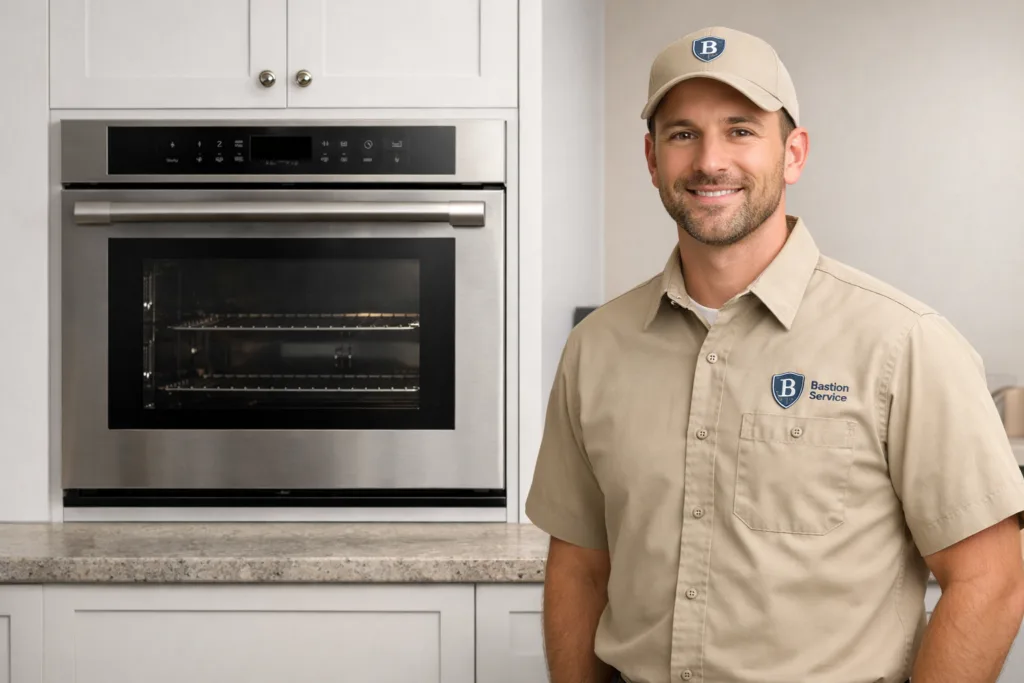
Dacor ovens are built for precise cooking, so small changes in performance tend to show up quickly in everyday use. If yours has started missing temperature, baking unevenly, or acting unpredictably, the symptom pattern usually tells a lot about where the problem is developing.
In Mar Vista homes, the most useful approach is to look at what the oven is doing during preheat, how it cycles once it reaches temperature, and whether the issue is consistent or intermittent. That often helps separate a heating failure from a sensor, control, door, or power-related problem.
Common Dacor oven problems homeowners notice first
Not heating at all
If the oven stays cold, the cause may be different depending on whether it is electric or gas. Electric models may have a failed bake or broil element, a control issue, or a wiring fault. Gas models may have an igniter problem, gas flow issue, or a control component not sending power where it should. In some cases the display works normally, lights come on, and the oven appears to start, but heat never develops inside the cavity.
Slow preheat
A Dacor oven that eventually gets hot but takes much longer than normal often points to a component that is still working, just not working correctly. A weak igniter, partially failing element, sensor drift, or relay problem can all stretch out preheat time. This is one of the easier symptoms to dismiss at first, but it often gets worse over time.
Uneven baking
When cookies brown more on one side, casseroles stay cool in the middle, or one rack cooks faster than another, the issue may be related to heat distribution rather than total heat loss. Convection fan problems, weak heating output, sensor inaccuracies, or door seal leaks can all affect consistency. Homeowners sometimes blame pans or recipes before realizing the oven is no longer maintaining stable conditions.
Temperature swings
Some cycling is normal, but large swings are not. If the oven overshoots the setting, then drops too low, or never seems to settle into steady operation, the sensor and electronic control become likely suspects. This kind of problem can make roasting unreliable and baking especially frustrating because results change from one meal to the next.
Overheating
An oven that runs too hot can scorch food, damage cookware, and place stress on surrounding components. Common causes include a bad temperature sensor, stuck relay, or control failure that does not regulate the heating cycle properly. If the interior seems excessively hot for the selected setting, it is better to stop using the oven until it is checked.
Error codes or control issues
Flashing codes, a frozen display, beeping without a clear reason, or buttons that do not respond normally usually point to the control system, connected sensors, or wiring. While the code itself is helpful, it does not always identify the exact failed part. It is often a starting clue rather than the final answer.
What certain symptoms can suggest
One reason oven problems can be frustrating is that similar symptoms may come from different causes. A few examples:
- The oven will not reach temperature: possible heating element, igniter, sensor, or control issue.
- The oven says it is preheated too early: possible sensor misread or control calibration problem.
- Food burns on top but stays underdone inside: possible broil or bake imbalance, poor cycling, or convection problem.
- The oven shuts off mid-cycle: possible overheating protection, electrical interruption, or failing control.
- The door does not close well: possible hinge, gasket, alignment, or latch issue affecting heat retention.
Because of that overlap, replacing a part based on guesswork can turn into a second repair call when the original symptom returns.
Why Dacor ovens benefit from symptom-based diagnosis
Premium ovens often use tightly integrated controls, sensors, and cooking modes, which means one failure can affect several functions at once. A temperature complaint may not come from the heating component itself. A preheat complaint may be tied to sensing or control logic. A door problem can even create what seems like a heating problem by letting heat escape.
That is why a clear diagnosis matters before deciding on repair. It helps answer whether the issue is isolated, whether it has affected other components, and whether the repair is likely to restore normal cooking performance without chasing multiple possible causes.
When to stop using the oven
Some faults are mostly inconvenient, while others can create safety concerns or lead to more damage. It makes sense to stop using the oven and schedule service if you notice any of the following:
- The oven overheats or seems much hotter than the selected setting
- There is a new burning smell that does not fade after cleaning residue
- The oven trips power repeatedly
- Error codes return after resetting the unit
- The door will not shut properly during operation
- The oven shuts off during cooking without explanation
- Controls respond unpredictably or the display resets on its own
These symptoms can indicate a problem that will not improve with continued use. In some cases, using the oven while it cycles incorrectly can make a smaller repair more involved.
Repair or replace?
For many homeowners in Mar Vista, the better choice depends on the specific failure and the overall condition of the oven. Repair is often reasonable when the issue is limited to one main component such as an igniter, sensor, heating element, fan motor, latch assembly, or control-related part, and the rest of the oven is in good shape.
Replacement becomes more worth considering when the oven has multiple major faults, repeated electronic issues, significant interior wear, or a repair path that does not make sense compared with the condition of the appliance as a whole. A practical repair plan should be based on what has failed, what remains in good condition, and how likely the oven is to return to reliable daily use.
What a service visit should help clarify
A focused service visit should do more than confirm that the oven is malfunctioning. It should narrow the complaint to the actual failed system, whether that is heating, sensing, airflow, door sealing, controls, or a related electrical issue. It should also explain how the symptom affects performance in normal cooking, not just whether a part tests bad in isolation.
For Dacor oven repair in Mar Vista, that means giving homeowners a realistic picture of the repair path: what is failing, what the next step is, and whether the fix is likely to restore consistent everyday baking and roasting.
Simple checks homeowners can make first
Before scheduling service, a few basic observations can be helpful:
- Note whether the problem happens on every cycle or only sometimes
- Check if the issue affects bake, broil, convection, or all modes
- Pay attention to how long preheat now takes compared with normal use
- Look for a loose door seal or a door that does not sit evenly
- Write down any error code exactly as shown
These details can make the problem easier to identify and reduce wasted time during diagnosis. If the oven is overheating, shutting off unexpectedly, or showing electrical control problems, it is best not to keep testing it through repeated cooking cycles.