




Most Dacor appliance problems start with a small change in performance before they become a full breakdown. A refrigerator may begin running longer than usual, an oven may take extra time to preheat, or a dishwasher may finish with cloudy dishes and a little water left in the bottom. Those early symptoms matter because they often point to a repairable issue before added wear affects other components.
For specific Dacor appliance paths in Hermosa Beach, review Dacor Refrigerator Repair in Hermosa Beach, Dacor Freezer Repair in Hermosa Beach, and Dacor Dishwasher Repair in Hermosa Beach.
What homeowners in Hermosa Beach usually notice first
In many homes, the first sign is not a total failure but a pattern that keeps returning. You might notice temperatures that drift, burners that click repeatedly, a control panel that responds inconsistently, or a leak that appears only during certain cycles. With Dacor appliances, the same visible symptom can come from several different causes, which is why symptom tracking is often more useful than guessing at a part.
Useful details to pay attention to include:
- Whether the problem happens every time or only occasionally
- Any recent power interruption, cleaning, or movement of the appliance
- Changes in sound, odor, heat output, or cooling performance
- Error codes, flashing lights, or controls that stop responding
- Whether the issue gets worse after the appliance has been running for a while
That information can make diagnosis faster and can help separate a simple adjustment issue from a failing sensor, motor, ignition part, drain component, or control problem.
Cooking appliance symptoms that should not be ignored
Cooktops and ranges
Dacor cooktops and ranges often show trouble through weak ignition, repeated clicking, uneven burner flame, hot spots, or burners that do not respond properly to control changes. Sometimes the cause is moisture around ignition components or burner cap misalignment. In other cases, the issue involves spark modules, switches, wiring, or gas flow problems.
If a burner clicks after ignition, lights inconsistently, or takes multiple tries to start, the problem should be evaluated before it becomes more disruptive. If there is a strong or persistent gas odor, stop using the appliance and treat it as a safety issue first.
Ovens and wall ovens
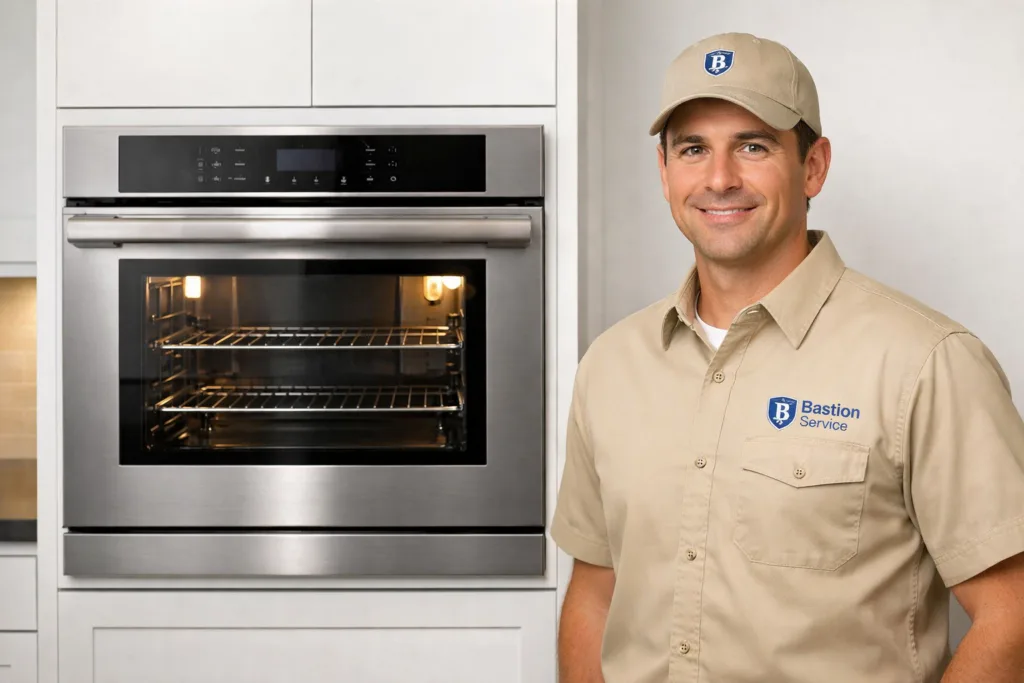
Oven problems often appear as slow preheating, uneven baking, temperature swings, broil failure, or a display that works only part of the time. Those symptoms may point to heating elements, temperature sensors, relays, convection parts, door seal wear, or electronic control faults. A unit that still heats can still be malfunctioning if it no longer holds a steady temperature.
Common signs that an oven needs attention include:
- Food browning too quickly on one side
- Preheat taking much longer than it used to
- The oven reaching temperature and then dropping off sharply
- The broiler not activating properly
- The control panel showing intermittent errors
For households that cook frequently, even moderate temperature drift can make the appliance frustrating to use and can place extra strain on heating components over time.
Dishwasher problems that usually indicate a real fault
A Dacor dishwasher that leaves residue, drains slowly, leaks, or stops mid-cycle usually needs more than a reset. The problem may involve the wash pump, drain pump, inlet valve, float system, door latch, filter blockage, spray arm obstruction, or main control. Because several systems work together during each cycle, one weak component can create multiple symptoms at once.
For example, poor cleaning and standing water may seem unrelated, but both can stem from restricted water movement or a failing pump. A leak may come from a door seal issue, overfilling, a cracked hose, or improper circulation inside the tub.
Warning signs worth taking seriously include:
- Water remaining at the end of the cycle
- Grinding, humming, or unusually loud wash sounds
- Dishes that come out dirty despite proper loading
- Water appearing under the door or beneath the unit
- Cycles that pause, stall, or fail to complete
Ignoring these symptoms can lead to cabinet damage, floor damage, or a more expensive repair if the motor or control system is affected next.
Refrigerator and freezer issues that affect food storage
Dacor refrigerators and freezers often give advance warning before they stop cooling properly. Fresh food may feel less cold, frost may collect in places it did not before, the ice maker may slow down, or fans may become noticeably louder. A unit that runs constantly without maintaining stable temperature is a strong sign that something is no longer working as intended.
Possible causes include airflow restrictions, evaporator fan problems, dirty condenser conditions, defrost faults, door gasket leaks, thermistor problems, or sealed-system concerns. Because cooling issues can escalate quickly, it helps to act early when temperature performance changes.
Watch for symptoms such as:
- Milk or produce spoiling earlier than expected
- Soft frozen food or partial thawing in the freezer
- Heavy frost on the back wall or around drawers
- Water pooling under crispers or near the door
- A compressor sound that has become louder or more constant
When food safety is involved, waiting too long can turn a manageable repair into both a larger appliance issue and avoidable food loss.
Why diagnosis matters before replacing parts
It is tempting to assume the most obvious part has failed, but appliance symptoms are often misleading. An oven that will not heat may not need a heating element. A dishwasher that will not drain may not need a new pump. A refrigerator leak may be caused by a blocked drain rather than a cracked water line. Replacing parts based only on the symptom can waste money and leave the original problem untouched.
A sound repair decision usually comes down to a few practical questions:
- What component has actually failed
- Whether that failure has affected any related parts
- If continued use can cause damage or create a safety concern
- Whether the overall condition of the appliance supports repair
That approach is especially important with premium household appliances, where fit, finish, and built-in kitchen design can make repair the better option when the fault is isolated.
When continued use can make the problem worse
Some issues remain stable briefly, but others become more expensive if the appliance keeps running in a compromised state. A refrigerator with airflow trouble may overwork fans or the compressor. A dishwasher with a small leak can damage nearby surfaces. An oven with a faulty sensor may cycle erratically and put excess stress on heating circuits. A cooktop with ignition trouble can become less reliable with each use.
Stop using the appliance and arrange service promptly if you notice:
- Burning smells or visible sparking
- Repeated breaker trips
- Persistent gas odor
- Water escaping onto the floor
- Rapid loss of cooling or heating performance
Even when the appliance still powers on, these symptoms suggest that normal operation should not continue without inspection.
Repair or replace: what usually drives the decision
For many Hermosa Beach homeowners, the choice is not based on age alone. The more important factors are the type of failure, overall condition of the appliance, likelihood of recurring problems, and the cost of restoring dependable operation. A single targeted repair can make good sense when the appliance is otherwise in strong condition. Replacement becomes more likely when there are multiple system failures, major cooling-system concerns, or repeated control-related problems.
Built-in refrigeration and premium cooking products also raise layout considerations. If the appliance fits the kitchen well and the issue is limited to one repairable system, repair is often the more sensible path. If the unit has broad wear across several major components, replacement may be easier to justify.
A household-focused approach across Dacor appliance categories
Dacor problems do not all look the same, even within the same kitchen. One household may be dealing with a refrigerator that cannot hold temperature, while another may be trying to pinpoint why a wall oven bakes unevenly or why a dishwasher keeps stopping mid-cycle. Looking at the full symptom pattern across refrigerators, freezers, dishwashers, cooktops, ovens, wall ovens, and ranges is the best way to decide what kind of repair makes sense.
For homeowners in Hermosa Beach, the goal is straightforward: identify the actual fault, understand whether the appliance is safe to keep using, and choose the repair direction that best matches the condition of the unit. When symptoms are taken seriously early, many problems are easier to resolve and less disruptive to daily life.


