




Dacor appliances often show early warning signs before they stop working completely. A refrigerator may begin running longer than usual, an oven may need extra time to preheat, or a dishwasher may finish a cycle with water still at the bottom. Paying attention to those changes helps homeowners in Pico-Robertson decide when a small issue may be turning into a larger repair.
For specific Dacor appliance paths in Pico-Robertson, review Dacor Refrigerator Repair in Pico-Robertson, Dacor Freezer Repair in Pico-Robertson, and Dacor Dishwasher Repair in Pico-Robertson.
Symptom patterns matter because the same complaint can come from very different causes. Poor cooling can be tied to airflow, defrost trouble, door sealing, or controls. Weak burner performance may involve ignition parts, switches, or blocked burner components. Looking at the full pattern of behavior usually tells more than the symptom alone.
How Dacor Problems Usually Show Up at Home
Premium kitchen appliances are expected to perform consistently, so even minor changes tend to stand out quickly. In many homes, the first sign is not total failure but inconsistency: food not baking evenly, dishes not coming out clean, or freezer items softening around the edges.
Useful clues include:
- Temperatures that drift instead of holding steady
- New clicking, humming, buzzing, or grinding sounds
- Water where it should not be, including under or inside the appliance
- Controls that lag, flash errors, or stop responding
- Cycles that run longer, stop early, or do not complete properly
These signs do not always point to a major failure, but they usually mean the appliance is no longer operating as intended.
Refrigerator and Freezer Symptoms to Watch
Dacor refrigerators and freezers usually become a priority as soon as food preservation is affected. Homeowners may notice warm fresh-food sections, frost accumulation, leaking water, noisy operation, or an ice maker that stops keeping up.
Several different faults can create similar results. A warm refrigerator does not automatically mean a sealed-system problem. It may be related to an evaporator fan, dirty or restricted airflow, defrost failure, sensor issues, or a door that is not sealing well. A freezer that still seems cold but cannot hold temperature consistently can also point to uneven airflow or frost blocking circulation.
Schedule service promptly when:
- Milk, meat, or leftovers are no longer staying cold enough
- Frost builds back soon after being cleared
- The unit runs almost constantly without stabilizing
- Water collects under drawers or on the floor
- Clicking or buzzing is repeated along with poor cooling
With refrigeration problems, waiting often costs more because food loss and moisture buildup can happen quickly.
Dishwasher Problems That Should Not Be Ignored
A Dacor dishwasher can seem functional while still showing signs of trouble. Cloudy glasses, residue on dishes, slow draining, or unusual pump noise often appear before a no-start or leak complaint.
Poor washing results may come from spray arm blockage, circulation issues, detergent dissolution problems, or water-heating faults. Standing water after a cycle may indicate a drain restriction, pump problem, or issue in the drain path. If the dishwasher stops mid-cycle, the cause may involve the latch, controls, or electrical components rather than the motor itself.
Leaks deserve fast attention. Even a small recurring drip can affect flooring, cabinet panels, and the area beneath the machine. If water appears near the door or under the unit more than once, it is worth treating as a repair issue rather than a one-time spill.
Cooktop and Range Performance Issues
Dacor cooktops and ranges commonly reveal trouble through ignition changes, uneven heating, or controls that do not behave normally. A gas burner that clicks repeatedly without lighting may have a burner cap alignment issue, moisture around the igniter, a dirty ignition path, or a failing spark component. Electric heating problems can show up as elements that cycle badly, heat too slowly, or stay at the wrong intensity.
Range issues also affect oven performance, so homeowners may notice both surface and baking complaints at the same time. If a control panel responds inconsistently, the problem may not be isolated to one cooking function.
Stop using the unit and move quickly toward service if you notice:
- Sparking, smoke, or breaker trips
- Burners that do not shut off normally
- Persistent ignition failure
- A strong or repeated gas odor
If there is a persistent or strong gas smell, do not continue troubleshooting the appliance. Leave the area if needed and contact the gas utility or emergency service first.
Oven and Wall Oven Heating Complaints
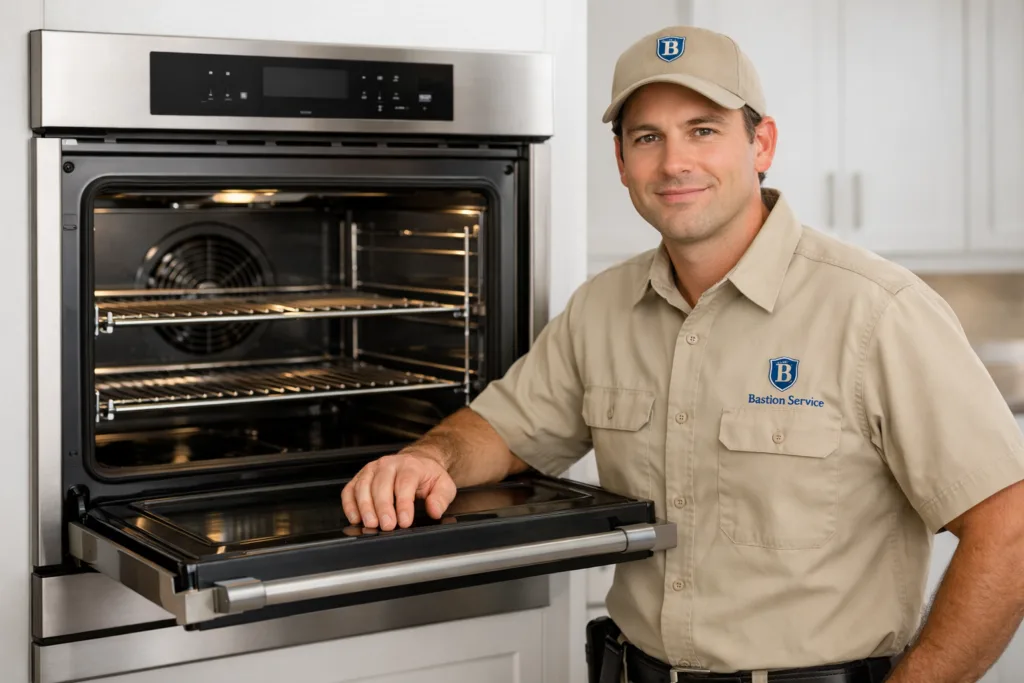
Dacor ovens and wall ovens often develop issues gradually. A homeowner may first notice that familiar recipes need more time, baked goods brown unevenly, or broiling results become inconsistent. In other cases, the problem is more obvious, such as an oven that will not heat, overheats, or shuts off unexpectedly.
Common causes can include a weak igniter, failed bake or broil element, sensor drift, relay trouble, door-related heat loss, or a control problem. Because several of these faults can produce similar cooking results, replacing parts based only on the symptom can miss the real cause.
Watch for patterns such as:
- Slow preheat followed by weak baking performance
- Food that is burned on top but underdone in the center
- Large swings between set temperature and actual cooking results
- Error displays or canceled cycles
- Doors that do not close tightly or lock correctly
When heat is not being controlled properly, continued use can place extra stress on components and make cooking results less predictable.
Why Accurate Diagnosis Saves Time
Many appliance failures overlap in the way they look from the outside. A dishwasher that will not start might be dealing with a latch problem, not a pump failure. A refrigerator that seems warm may have an airflow fault rather than a compressor issue. An oven that bakes unevenly may be suffering from sensor inaccuracy rather than a bad element.
That is why the most effective repair path starts with identifying the failed system instead of guessing at parts. For homeowners, the practical questions are simple: is the appliance safe to keep using, is the issue likely to spread, and is repair likely to restore normal daily use?
When Repair Usually Makes Sense
In many Pico-Robertson homes, repair is the better choice when the appliance is otherwise in good condition and the current problem is limited to a specific component or system. This is often true with premium kitchen equipment, where a single ignition, sensor, drain, or control issue can feel serious but still be repairable.
Repair tends to be worth strong consideration when:
- The appliance has been performing well until the current fault
- The symptom points to a defined mechanical or electrical issue
- Cabinet fit or built-in installation makes replacement more disruptive
- The overall condition is still solid
Replacement becomes more likely when there are repeated major failures, severe cooling-system concerns, or multiple expensive issues appearing at once.
What Homeowners in Pico-Robertson Should Do Before Service
A few basic observations can make the service visit more productive. Note whether the problem is constant or intermittent, whether it began suddenly or developed over time, and whether any error codes appeared. If safe to do so, check whether the issue affects every function or only one mode, such as bake but not broil, or upper rack cleaning but not draining.
It also helps to notice what changed just before the problem started. A power interruption, a self-clean cycle, a drainage backup, or moisture around a cooktop can all provide useful context. That information often shortens the time needed to narrow the fault.
Choosing the Right Next Step
Most households do not need a long technical explanation. They need to know what the symptoms suggest, whether the appliance should stay in use, and what repair direction makes sense for the condition of the unit. For Dacor refrigerator, freezer, dishwasher, cooktop, oven, range, and wall oven problems, the best next step is usually to address unusual performance early rather than wait for full failure.
When heating, cooling, draining, ignition, or control response changes noticeably, scheduling an evaluation is often the simplest way to prevent extra disruption in the kitchen and avoid a problem that becomes more expensive than it needed to be.


