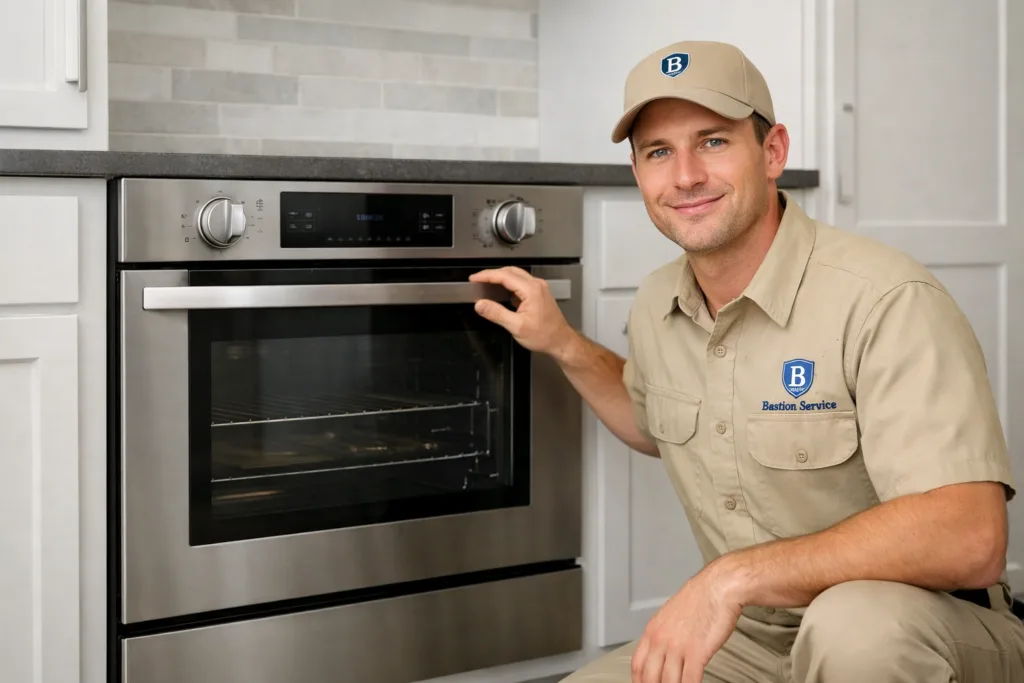
Many oven complaints start with the same basic frustration: meals take longer, baking results change, or the appliance works one day and not the next. With Samsung ovens, the visible symptom does not always point to a single failed part. A heating problem, sensor issue, control fault, or door-seal problem can all affect temperature and cooking performance in different ways, so the best next step is to match the repair approach to the exact pattern you are seeing.
Common Samsung oven symptoms and what they may mean
Some problems are obvious right away, while others build gradually over weeks or months. Paying attention to how the oven behaves during preheat, baking, broiling, and shutdown can help narrow the cause faster.
Oven not heating at all
If the cavity stays cold, there may be a failed bake element, broil element, thermal cutoff issue, wiring problem, or control board fault. On some models, the display may still appear normal even when the heating circuit is not working properly. If the oven powers on but never begins to warm, that usually points away from a simple user-setting issue and toward a component that needs testing.
Slow preheat or weak heat
When preheat takes much longer than it used to, the oven may still be heating, but not efficiently. A weakened element, sensor reading problem, or relay issue can cause the cavity to climb in temperature too slowly. Homeowners often notice this first with weeknight meals that suddenly need extra time or with recipes that once came out reliably but now need frequent adjustment.
Uneven baking and temperature swings
If cookies brown more on one side, casseroles stay cool in the center, or roasting results vary from one use to the next, the oven may not be regulating heat accurately. Possible causes include a drifting temperature sensor, convection fan problems on equipped models, a worn door gasket, or control issues that cause the heating cycle to overshoot or undershoot the target temperature.
Broiler not working correctly
A broiler that does not turn on, heats weakly, or cycles oddly can indicate an element failure, selector problem, or control issue. Because the broil function is often used less than the bake function, homeowners sometimes discover the problem only when switching cooking methods for a specific meal.
Display, keypad, or error code problems
Flashing codes, an unresponsive touch panel, or a display that resets or goes blank can point to an interface problem, loose connection, control board issue, or incoming power concern. When the oven responds inconsistently to commands, the repair path often depends on whether the fault is isolated to the controls or also affecting heating and timing functions.
Door not closing or sealing properly
A door that sits unevenly, pops open slightly, or does not seal tightly can lead to heat loss and poor cooking results. Hinges, springs, latch parts, and gaskets all affect how well the oven retains heat. This kind of issue can seem minor at first, but longer cook times and inconsistent temperatures often follow.
Why symptom patterns matter
Two ovens can both seem to have a temperature problem for completely different reasons. One may have a failing sensor that misreads the cavity temperature, while another may have a control board that is not sending power correctly to the heating element. That is why symptom details are useful, including:
- Whether the problem affects bake, broil, or both
- Whether preheat completes normally or stalls
- If the display shows an error code
- Whether the issue is constant or intermittent
- If the oven shuts off mid-cycle or trips the breaker
- Whether the door closes securely and holds heat
Those details help determine whether the problem is likely mechanical, electrical, or control-related, and whether repair is likely to be straightforward or more involved.
Signs the oven should be serviced sooner rather than later
Some problems are mostly inconvenient. Others can lead to additional part failures if the appliance keeps being used in a compromised state. It makes sense to arrange service if you notice any of the following:
- The oven cannot maintain a stable cooking temperature
- Preheat times have become much longer than normal
- Food repeatedly comes out undercooked or scorched
- The control panel freezes, flickers, or stops responding
- The appliance shuts off during cooking
- The breaker trips when the oven is in use
- The door will not close fully or latch properly
In homes around Inglewood, these issues tend to become most noticeable during regular family cooking, baking, or holiday meal prep, when consistency matters and the oven is used more heavily.
When continued use can make the problem worse
An oven that runs too hot, too cool, or erratically can place extra strain on its heating and control systems. Longer run times caused by heat loss or weak heating can wear components faster. Intermittent electrical faults can also become more difficult to isolate if the appliance continues cycling through partial failures.
If you smell overheating insulation, see sparking, or notice repeated breaker trips, it is wise to stop using the oven until it has been checked. Even if the issue seems to come and go, inconsistent electrical behavior is not something to ignore.
Repair or replace: what usually makes sense
For many households in Inglewood, the decision comes down to the oven’s age, overall condition, repair history, and the specific failed part. Repairs are often reasonable when the issue involves a single heating element, sensor, hinge, gasket, or latch component. A targeted repair can restore normal use without much disruption.
Replacement becomes more worth considering when the oven has repeated control failures, multiple worn components, or a repair cost that is hard to justify against the condition of the appliance overall. If the unit has already had several issues in a short period, it helps to weigh the next repair against the likelihood of more service needs later.
What a service visit should help clarify
A helpful visit should identify whether the fault is in the heating circuit, temperature-sensing system, door hardware, control assembly, or power supply path. It should also answer a few practical questions that matter to homeowners:
- Is the problem isolated to one failed component or part of a larger issue?
- Is the oven safe to keep using before repair is completed?
- Is the expected repair likely to restore normal cooking performance?
- Does the condition of the appliance support repair, or is replacement the better value?
For Samsung Oven Repair in Inglewood, the goal is not just to replace parts, but to understand why the oven stopped performing the way it should and whether the repair path makes sense for the household.
Simple observations homeowners can make before scheduling service
You do not need to disassemble anything to gather useful information. A few basic checks can make the symptom description more accurate:
- Note whether the issue happens every time or only occasionally
- Check if both bake and broil functions are affected
- Watch whether the oven appears to preheat but still cooks poorly
- Look for a door that sits unevenly or does not seal tightly
- Write down any error code exactly as shown
- Pay attention to unusual clicking, buzzing, or shutdown behavior
These observations can make it easier to separate a performance problem from a control or power problem and help avoid misdiagnosis.
Focused help for Samsung oven issues in Inglewood homes
Samsung ovens combine heating components, sensors, electronics, and door hardware that all have to work together for reliable cooking. When one part of that system starts failing, the symptom can show up as uneven baking, slow preheat, no heat, or unstable controls. Bastion Service helps homeowners in Inglewood sort out those symptoms, understand the likely repair path, and make an informed decision based on the appliance’s actual condition rather than guesswork.